Pharma and biotech companies are pouring billions into supercomputers, agentic AI, autonomous discovery labs and AI-driven manufacturing. But for many companies, investment and usage are outstripping corporate governance, finds a new report from the life sciences AI firm ACTO.
More than a third of companies either have no defined internal AI governance or rely on one-time IT approvals. Life sciences leaders also can’t agree on who’s responsible for an AI agent’s actions. Some say it’s the end-user, while others pin responsibility on legal and compliance, vendors or IT. And 23% say their organizations don’t monitor or discuss employee use of unauthorized AI agents at all.
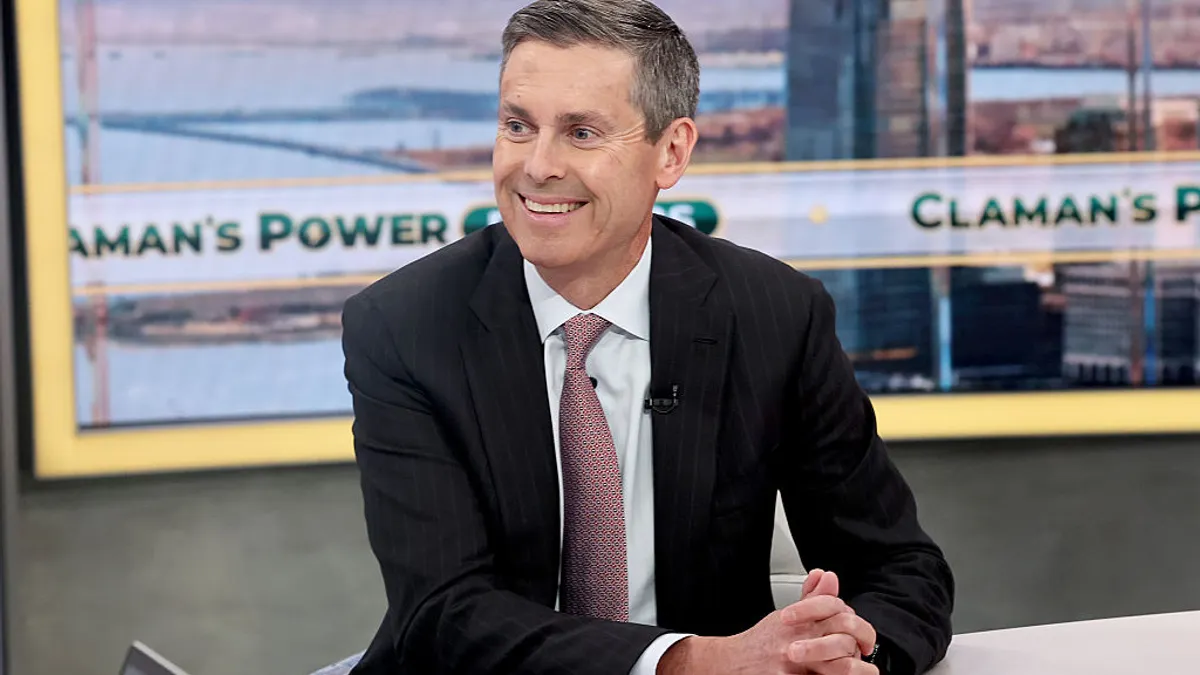
“It's presently a Wild West,” said Parth Khanna, co-founder and CEO of ACTO. “In terms of governance, every company has their own definition.”
ACTO surveyed 135 life sciences leaders and conducted eight executive roundtables involving 80 participants across North America and Europe for its Responsible AI in Life Sciences Report 2026.
The survey found that despite the full-speed-ahead approach, 58% of respondents believe the industry still lacks clear standards for responsible AI use, and 54% are concerned about how AI is being used within their own organizations.
The rogue agent reality
News of rogue AI agents targeting government websites and “escaping” their confines to collude with each other has sent shockwaves in recent months. For pharma, though, the risks look different.
“In the real world, it’s probably more mundane than that, but still risky,” Khanna said.
For instance, a medical science liaison might use an AI agent to draft clinical summaries. If that agent introduces errors, the liaison might inadvertently present inaccurate data to a key opinion leader.
And in one real-life example relevant to AI-fueled pharma research, an AI chemistry agent made a tiny drug R&D mistake, moved forward with its bad data and reached an incorrect conclusion.
“How do you hold a machine accountable? That’s very important to how we think about bringing AI into the organization and the governance.”

Parth Khanna
CEO, co-founder, ACTO
Despite these risks, Khanna said some life science companies have made enterprise-wide licenses available for anyone in the company to create and build agents.
“That’s led to a shadow workforce, a shadow AI,” he said. “But there’s no way of measuring or knowing the output of that AI. Is it good? Is it not good? Are there risks embedded in the output?”
And these disparate agents aren’t always able to talk to or learn from each other.
Now, some companies are “trying to figure out how they contain that and roll that back,” he said.
As for who’s responsible for an AI agent’s errors, pharma leaders acknowledged that “only humans can be held accountable” when agents go astray, Khanna said.
“How do you hold a machine accountable? So that's also very important to how we think about bringing AI into the organization and the governance,” he said. “We also want to make sure that the systems are built in a way that it does not create undue risk for humans that are going to be held accountable.”
The two camps of AI governance
Life science company leaders generally fall into two camps in their approach to AI, according to Khanna.
“There’s one group of leaders that looks at AI adoption as a technology problem,” he said. “And then another group that is looking at this as a human capital question.”
Those approaching it from a human capital angle and considering factors like job redesign and human responsibility and centricity are “actually doing better in terms of AI adoption and outputs,” the ACTO findings showed.
“They're garnering more trust from their teams in actually bringing AI into the organization. They are able to better quantify both value and ROI,” Khanna said.
These leaders also communicate that increased AI and agent capabilities won’t diminish human roles.
“When the agent capabilities expand, it's actually increasing the footprint and the impact that every human can have in the organization,” he said. “Conversely, you have some companies that are just deploying large-scale LLM-based assisted access — like Copilot or ChatGPT — and doing some prompt training and letting people figure out what the future of work and [their] role would be. They're not leading the conversation, and that's where we're seeing they're hitting a wall in terms of adoption, distrust, compliance risk and all the facets that come with that.”
Rather than slowing AI adoption, Khanna believes developing human-centric institutional guidelines and guardrails will ultimately allow companies to more effectively integrate AI tools into their workflows. Such guidelines should include governance, security, testing and certification, human centricity, value creation, and orchestration between multiple agents, systems and data.
“You are going to be forced into each of those facets of governance regardless. It's just more prudent to do it upfront as you're approaching these projects and transformation endeavors,” he said.