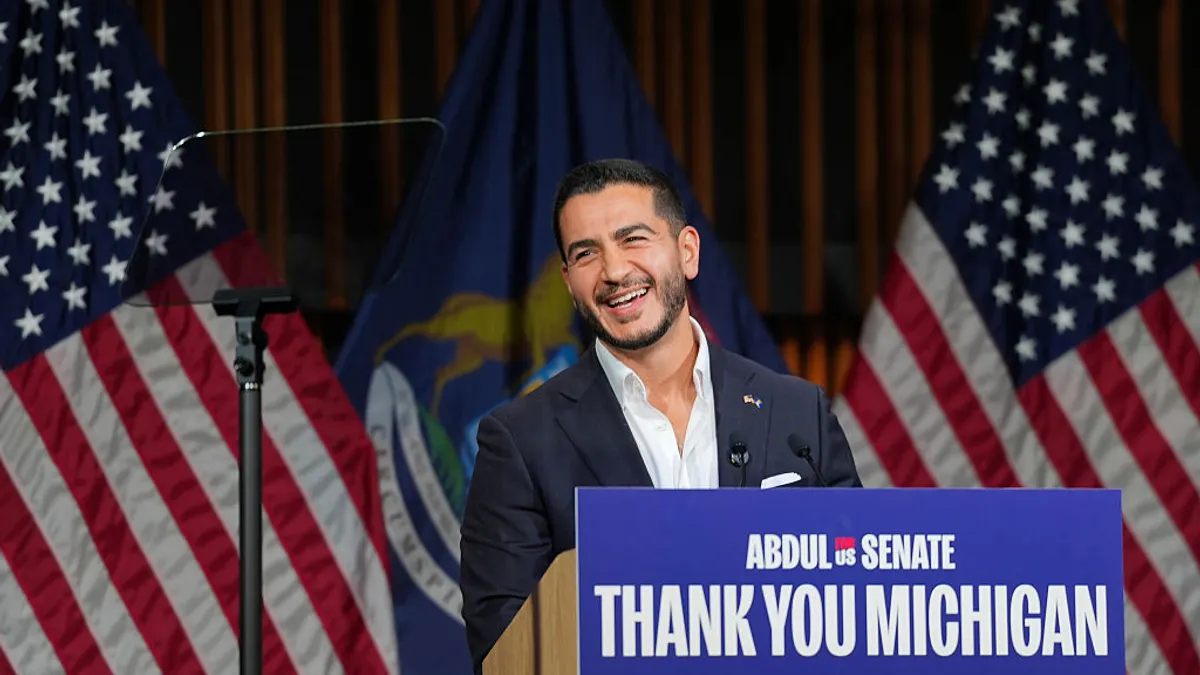
After a resounding victory in this week’s midterm elections, the Democratic Party has won control of both chambers of Congress. While the economy was the biggest issue in the election, plenty of candidates harped on the problem of healthcare costs as well. The topic is especially salient right now.
Average employer-sponsored family coverage premiums rose 5% between 2025 and 2026, a KFF survey found. And employer healthcare costs are projected to rise 9.5% in 2027 before cost-mitigation measures, according to Aon.
That added financial burden for Americans coincided with renewed interest in the “Medicare for all” idea in these midterms, especially among Democratic Congressional candidates. And because most roads in the healthcare cost debate eventually lead to drug prices, pharma also got attention from candidates on the campaign trail.
While there’s bipartisan agreement on the goal of lowering drug prices, the parties diverge when it comes to how that should be accomplished.
Under President Donald Trump, Republicans have become louder champions of most-favored nation pricing policies that link drug prices in America to what other countries pay. Democrats, on the other hand, are typically more in favor of price negotiations, such as the structure that was created for Medicare under the Inflation Reduction Act.
But drug pricing policies are well-trodden territory for both parties, and this year’s Democratic winners have set their sights on other major healthcare issues as well. Here’s the pharma and healthcare mandate these up-and-coming Democrats could be bringing to Washington.
Medicare for all?
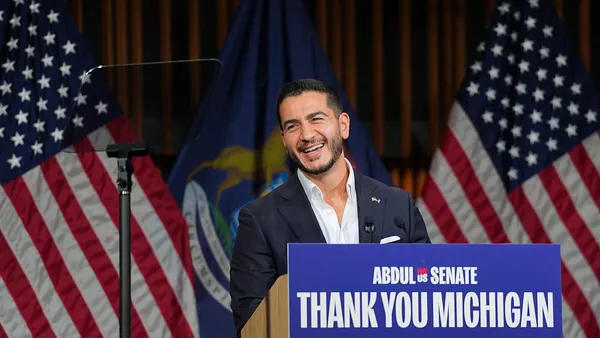
In his victory speech early Wednesday morning, Abdul El-Sayed, the new senator-elect from Michigan, opened with his frequent campaign rallying cry: Money out of politics. Money in your pocket. Medicare for all.
The “Medicare for all” idea is popular among Americans right now. A plurality of respondents (43%) said they would support a government-run health insurance plan in an Axios/Ipsos poll published a few weeks ago. Two-thirds said the government should spend more tax dollars to lower healthcare costs.
El-Sayed wasn’t the only Democratic candidate to make universal healthcare a campaign centerpiece.
Troy Jackson, who upset five-time Republican Sen. Susan Collins in Maine, has named “Medicare for all” as a top policy priority.
And Illinois’ new Democratic Sen.-elect Juliana Stratton, a vocal supporter for expanded Medicare, vowed to “fight loudly for affordable healthcare” in her victory speech this week.
Will all this renewed enthusiasm for tackling healthcare costs translate into new policies? Sweeping healthcare reform while Trump is still in office and still has veto power would be a tall order. But Democrats have indicated they’re planning to lay the groundwork for major reform down the road.
The first priority will be to reverse Trump’s more than $1 trillion in Medicaid cuts over a decade, a Senate Democrat told CBS News.
Meanwhile, the overall Congressional victory for Democrats could embolden existing party representatives who were already taking on the fight. Once the party takes control of the Senate next year, two leading Democrats — Bernie Sanders, I.-Vt., and Ron Wyden, D.-Ore. — are expected to chair key committees involved in healthcare policy.
Drug pricing policies could also get swept up in Democrats’ push for broader healthcare reform.
Wyden has already been entrenched in these legislative healthcare debates, leading a group of Democrats early this year in outlining a new plan for an eventual bill that would boost access to healthcare coverage while cutting drug costs.
RFK Jr. back in the hot seat
Federal health agencies have seen repeated leadership changes over the past two years. But Robert F. Kennedy Jr. has held onto his seat as HHS Secretary despite legislative scrutiny, public health pushback on vaccine policies and frequent turnover among other leaders in healthcare.
Is that about to change?
Dr. Annie Andrews, who scored one of the most surprising victories of the midterms after becoming the first Democratic senator elected in South Carolina since 1998, has been a consistent critic of Kennedy. While listing her legislative goals at a conference in August, Andrews told the crowd: "I believe we need to fully fund the CDC and the NIH, and I believe we need to impeach and remove RFK Jr."
El-Sayed has also expressed plans to take Kennedy to task.
In October, Kennedy appeared on the campaign trail alongside El-Sayed’s Republican opponent and levied the controversial and untrue claim that Arabs “don’t produce science” and “don’t win the Nobel Prize.” Shortly after, El-Sayed fired back at Kennedy in an interview with STAT, calling him the “most incompetent HHS Secretary we’ve ever seen.”
El-Sayed also said he’s gunning to win a seat on a Senate health committee and that he hopes to sit across from Kennedy and “actually grill him.”
Public health officials and current members of Congress have already been pushing to remove Kennedy from office, including Haley Stevens, D.-Mich., who introduced an article of impeachment against him last year.
Removing a Cabinet secretary through impeachment would require a House vote to impeach and a two-thirds Senate vote to convict — a high bar. But the fresh slate of Democratic legislators now heading to Washington could ramp up the pressure on lawmakers or Trump to address the widespread discontent with Kennedy’s tenure at HHS.
Transparency and Trump’s pharma deals
As a House of Representatives member representing New Hampshire earlier this year, Chris Pappas joined a handful of Democrats introducing the Drug Deal Disclosure Act. The bill is aimed at pulling back the curtain on the Trump administration's drug-pricing agreements with manufacturers, some of which also involve tariff relief tied to U.S. manufacturing plans. To date, the details of these deals, which have been struck with over 25 pharma companies, have remained mostly confidential.
Now, Pappas is heading for the Senate, where he’ll join a new crop of lawmakers who’ve taken up the cause. Last year, several senators introduced their own version of a Trump drug deal transparency bill.
Both bills were sent to committees and haven’t gained momentum since. And with Trump still in office, Democrats are less likely to successfully pass new legislation aimed at pharma-related disclosures.
But increased scrutiny around drug pricing policies in general could bring more attention to Trump’s so-called most-favored nation deals and pharma might not be able to dodge the issue entirely.
Even if Democrats can’t pass new legislation with Trump in office, pharma should be prepared for increased Congressional oversight, according to the law firm Fenwick.
“Democratic members positioned to chair the key health committees have already sent letters with requests for information and documents to drugmakers and health agencies,” lawyers with Fenwick wrote in a blog post this week.
“If Democrats gain control of either chamber, those requests could be renewed through committee letters and, where authorized and approved, subpoenas.”