Some of the biggest news and trends captured in PharmaVoice’s newsletter this week. Sign up here to receive the newsletter daily.
The Overton window
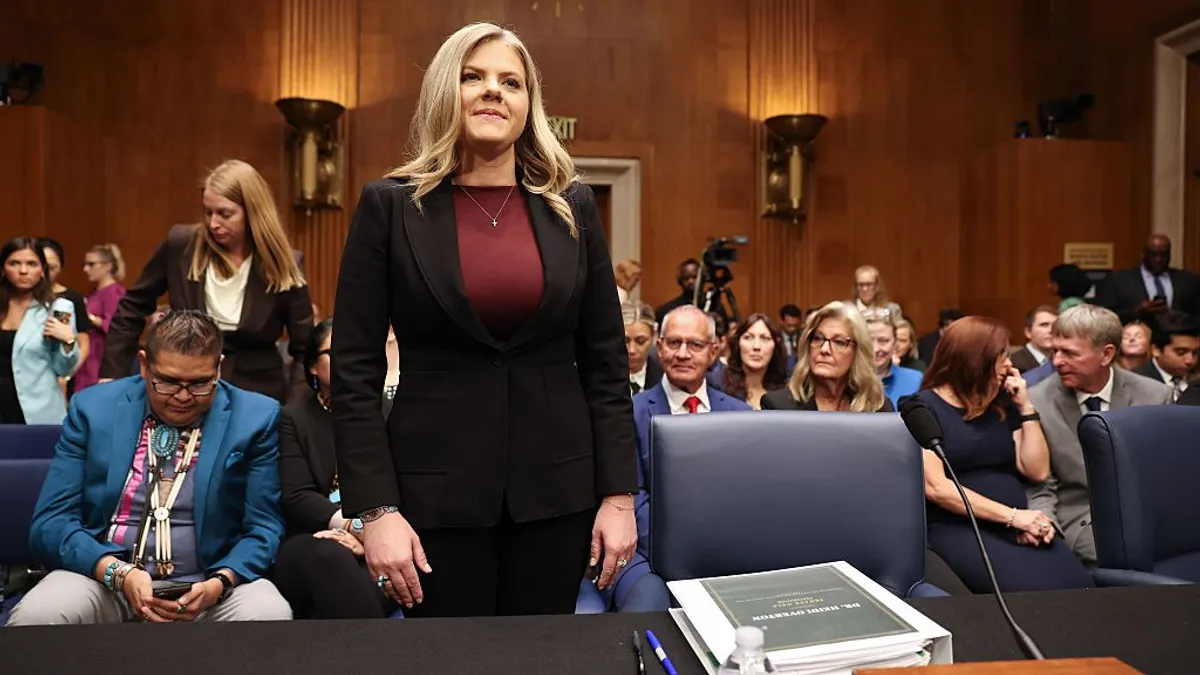
The clock is ticking on Dr. Heidi Overton’s confirmation as FDA commissioner — and her chances of success look iffy.
Republican lawmakers who just lost their elections might not be feeling particularly supportive of anything the president wants right now. A key Overton ally in the White House, former chief of staff Susie Wiles, just stepped down.
And Congress also faces a Dec. 11 government funding deadline. If it doesn’t pass another continuing budget resolution, that could lead to a shutdown that would add yet another complication to the lame duck session.
Nevertheless, the White House is pushing forward with its attempts to get Overton confirmed, Endpoints reported this week. And if she’s seated at FDA, Overton will be walking into another hornet’s nest — an agency that’s become chronically understaffed.
This week, we dug into the FDA’s hiring crisis and what it means for pharma.
A slashed U.S. IPO
Even when companies make it to Wall Street, investors don’t always give them the deal they want.
A Swiss dental health company called vVardis slashed its planned U.S. IPO by more than 12% this morning, Reuters reported. It’s now looking to raise up to $200 million, down from roughly $229 million.
And here’s an interesting detail: vVardis plans to list on the New York Stock Exchange, not Nasdaq.
Sure, a dental health business isn’t quite the same as a clinical-stage biotech. But the move underscores a basic reality of public markets: The exchange provides the venue. Investors decide what they’re willing to pay.
Nasdaq has become the default destination for U.S. biotechs — overwhelmingly so. But is that because it offers a measurable advantage, or simply because everyone else is already there?
This week, we dug into how Nasdaq became biotech’s preferred exchange, and what the latest IPO comeback tells us about the value of that relationship.
Pfizer’s obesity pitch
Sure, Lilly and Novo rule the obesity market right now. But that doesn’t mean another pharma titan can’t grab market share. At least that’s the story Pfizer is telling about the potential of its large obesity pipeline.
In particular, Pfizer has been touting the long-acting formulation of the clinical candidate berobenatide it picked up in its Metsera acquisition worth up to $10 billion as a potential “best in class” monthly injection for obesity. CEO Albert Bourla is also banking on the commercialization strategies it learned with Viagra, such as direct-to-consumer sales, to give it an edge.
“Commercial execution is our strength,” Bourla recently told Barron’s.
This week, we learned more about the newly appointed permanent CFO Pfizer has installed to help guide its transition into the obesity arena and meet its goal for revenue growth by the end of this decade.