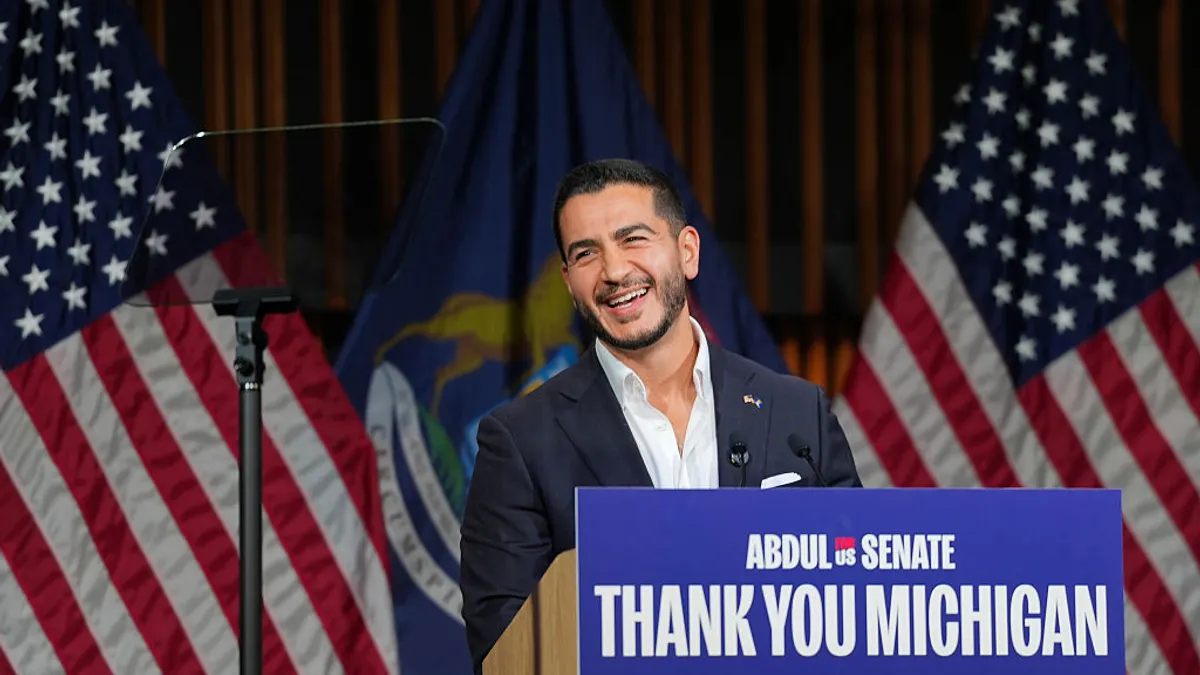
Democrats have won control of both congressional chambers in the midterm elections, setting the stage for a potential change in direction for federal health policy and leadership. But leadership at the FDA is still up in the air. Donald Trump nominated Heidi Overton for commissioner in August following Marty Makary’s resignation, but she’s awaiting confirmation.
While the power dynamics in Washington may be in flux, existing operational challenges related to staffing shortages at the FDA are unlikely to be resolved in the near term, said Nathan Downing, a managing attorney at Gardner Law. The agency has been contending with significant leadership churn and staffing shortages after a mass exodus at the agency last year, which included layoffs and early retirement offers.
There were 1,343 fewer employees at CBER and CDER combined in September of this year compared with the same month in 2024, according to FDA hiring data. In June, the agency was looking at a total hiring target for some 2,200 positions, amid reports that agency upheaval is deterring qualified applicants.
“People who were abruptly fired were a little hesitant to go back, and those are the people with the skill set that FDA would hire,” Downing said.
In addition, professionals in the field can often make more money working for private companies, he added.
There are also reports that a human resources reorganization at the agency is slowing the onboarding process for new hires, according to STAT.
What impact is this having on pharma?
Effects of reduced staffing
Staffing shortages aren’t affecting all FDA divisions to the same degree, Downing said. Cracks are visible in small work-habit changes, including emails outside traditional business hours.
“An 11:30 p.m. or 12:30 a.m. email in my inbox is not something I would have seen two or three years ago,” Downing said, noting that staffers appear to be under pressure.
“They'll sometimes, kind of acknowledge it's been tough, and they're really busy. They're professionals; they're not sitting there and saying anything inappropriate. They're just acknowledging that there's a lot going on.”
Congressional testimony at a July House Energy and Commerce Health Subcommittee hearing highlighted reports from stakeholders that FDA reviews are more inconsistent and unpredictable than in the past.
The problems they mentioned included communication challenges with the agency, which were creating additional work for sponsors trying to understand and meet FDA expectations.
Downing said it’s harder now to get informal feedback from FDA officials.
“In the past they’ve been pretty good at a quick one-off phone call to say, ‘Hey, let’s solve this issue,’” he said.
With that avenue increasingly limited, pharma companies have more burdensome alternatives.
“You may have to do another Q submission, pre-submission, pre-NDA, whatever it might be, to account for a lost one-off interaction, which adds time, and obviously that creates a financial burden,” Downing said.
Smaller drug developers may feel the burden of these slowdowns more acutely because they have less financial wiggle room to withstand delays.
Navigating agency challenges
As FDA works to stabilize staffing levels, pharma companies should be more careful when preparing submissions and engaging with the FDA, Downing said.
FDA is increasingly using AI to augment human reviews, so materials should be presented in a way that is easy for the technology to digest, according to Downing. Key data needs to stand out, because human reviewers sometimes send requests for data that’s already in the paperwork.
Organizations should also adopt what Downing calls an “appeal mindset.” In the event of a deficiency or denial, solid recordkeeping can equate to more successful appeals.
Early communication can also create a smoother process.
“Maybe you should go in early and have an informational meeting with FDA, to let them start to understand what your new product might be, if it's a drug, medical device, or a biologic,” Downing said, adding that pharma leaders should align themselves with others in the industry.
“If you're having issues that others are also having, there are organizations that you can use to create a coalition to have conversations with leadership at FDA or HHS,” Downing said. “They're willing to listen.”
Rebuilding the FDA workforce could take a year or two, Downing predicted. And the agency will continue to face competition for candidates from private industry.
“The skillsets most valuable to FDA also tend to be in high demand outside of the government,” Elizabeth Jungman, a partner at Hogan Lovells Cadwalader, said in an email.
“To attract and retain top talent, FDA will need to be able to reassure candidates and current staff that decision-making will continue to be driven by science and the law. Decision-making that reflects those principles, and rhetoric that celebrates public service, could help FDA attract highly qualified staff who have options elsewhere.”
In the meantime, fewer resources may also have a silver lining.
“One good thing about FDA being under pressure is they'll also have to look at what's really necessary in a review and what might not be,” Downing said. “And so maybe there's a chance for some efficiencies on their side as well that come out of this.”