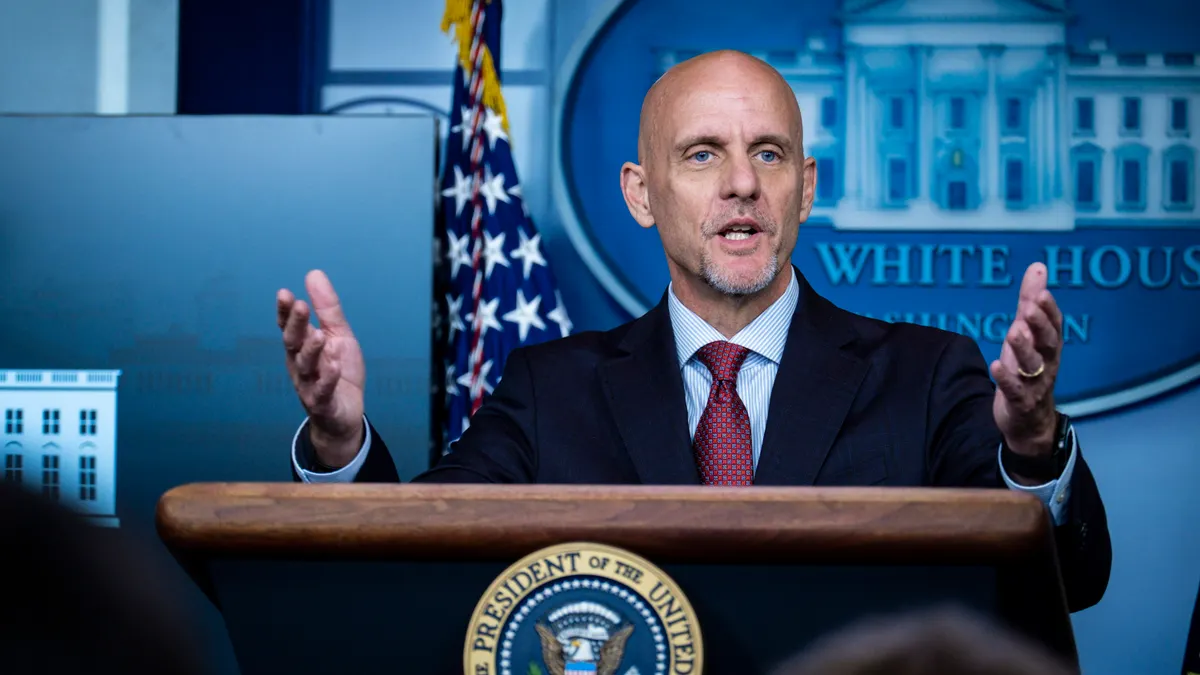
Replimune’s stock rose 7% on news that FDA Commissioner Dr. Martin Makary stepped down Tuesday. A central figure in the controversy surrounding the recent denial of the company’s melanoma drug RP1, Makary faced criticism from industry insiders who argued the agency had become inconsistent in its decision making.
The market may have viewed the agency’s change in leadership as potentially favorable for the biotech, but it remains to be seen whether it will have any tangible impact on the drug’s future.
When the FDA rejected RP1 for the second time this spring, the decision marked another flashpoint in a string of industry controversies. A number of oncologists and the Wall Street Journal editorial board strongly objected to the rejection in April.
While Makary defended the decision, which he maintained was based strictly on science, Replimune said the rejection went against positions expressed in earlier FDA meetings. At the time, the FDA team hadn’t raised objections to the absence of a particular control arm, which the company said wasn’t feasible in its patient population.
The company’s claims that the FDA contradicted its own advice mirrored similar complaints from UniQure in the wake of its Huntington’s disease gene therapy denial. UniQure, too, saw a 5% bump in its stock prices on the news of Makary’s resignation, and an analyst speculated the FDA could reconsider its position after the agency agreed to review another single-arm therapy, Ebvallo.
For Replimune, the RP1 rejection delivered a major setback. The company carried out two rounds of layoffs following the decision, and officials lamented the impact the denial might have on patients.
“A treatment desperately needed by patients will not be available. Not because the medicine failed. Because the system did,” said Replimune CEO Sushil Patel, in a press release. He also criticized the rigidity of the drug review process.
“It is deeply disappointing that the FDA has not exercised regulatory flexibility to meet patients’ needs given the data supporting strong efficacy and the favorable safety profile,” he said.
“The country's foremost melanoma specialists stood behind the RP1 data. Patients and caregivers pleaded for urgency. All of it was met with inconsistent communication and a fragmented and slow-moving regulatory process.”
The company declined to comment on Makary’s departure or provide additional details on its future plans for the drug beyond what is already outlined in a previous press release.
Replimune’s roller coaster journey
There were few issues with Replimune’s RP1 initially. It received FDA breakthrough therapy designation based on early-stage trial results and was submitted for approval in November 2024.
The drug, an oncolytic immunotherapy, uses an engineered herpesvirus combined with a specialized protein to kill cancerous cells. The company advanced it, in combination with Opdivo, to treat advanced melanoma in patients who never responded to or stopped responding to an anti-PD-1 drug. Patients who don’t respond to anti-PD-1 drugs like Keytruda or Opdivo have limited treatment options, making RP1 poised to fill an unmet need. In a phase 1/2 trial, the combination showed an overall response rate of 33.6%, which met the primary endpoint, the company reported in September 2024.
The first sign of trouble arrived in July 2025, when the FDA issued the first complete response letter, stating that the company’s trial had methodological flaws that made it inadequate to support approval.
After that initial review, Replimune worked on a resubmission based on interactions with FDA officials. A new review team, which never met with the company, took over that second review, replacing the earlier group that Replimune had worked with. The team change, according to the FDA, was made to maintain objectivity and “account for potential bias.”
In its subsequent rejection issued in April, the FDA said there wasn’t enough reliable evidence that the drug worked and cited problems with trial designs, including the company’s use of a single-arm model. It also questioned the heterogeneous patient population and its phase 3 data, which it deemed too early and limited to support approval.
Despite the setback, Replimune officials said they plan to forge ahead with an additional phase 2/3 drug candidate, RP2, which is being tested in metastatic uveal melanoma and hepatocellular carcinoma.
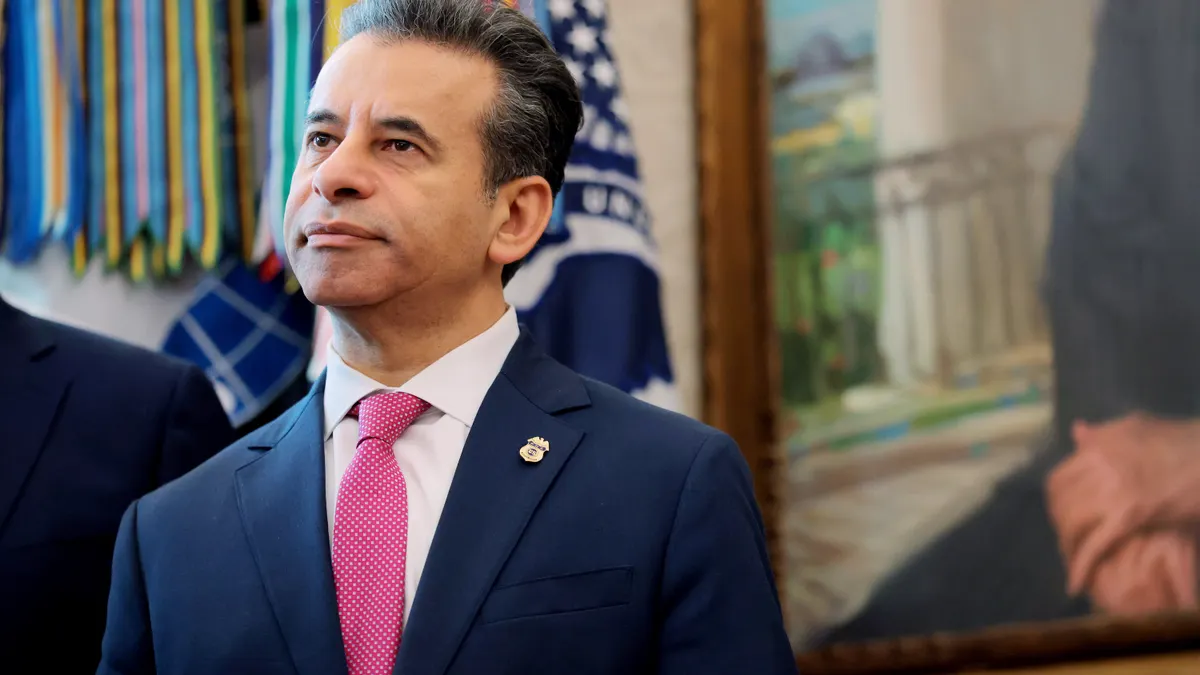
The RP1 decision was one of several at the FDA that escalated tensions during Makary’s tenure. Kyle Diamantas, a lawyer who was overseeing food regulations at the agency, will now move into the role of acting commissioner.
In the meantime, it’s unclear how Makary’s departure will affect the FDA, which has seen substantial upheaval this year.
In April, Dr. Vinay Prasad, who served as both the FDA’s chief medical and scientific officer and the director of the CBER, left following his own controversies. And CBER isn’t the only FDA division roiled by instability. Five different directors cycled through the FDA’s Center for Drug Evaluation and Research last year alone.