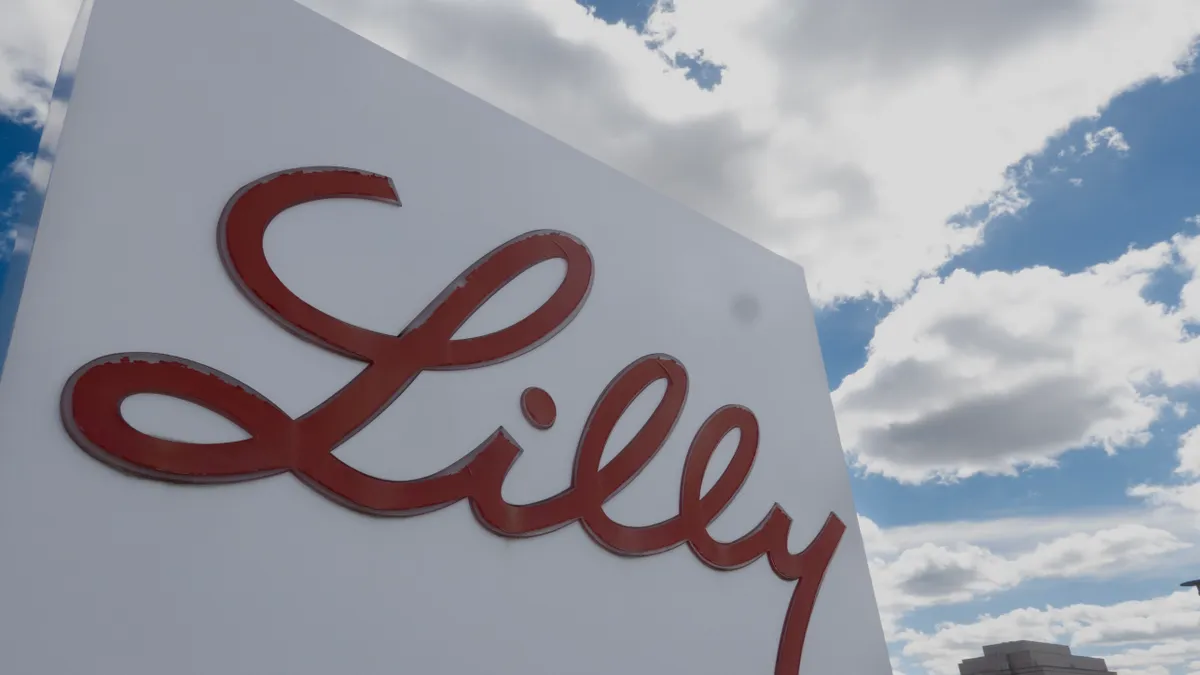
While many pharma companies are on a mission to rebuild pipelines as valuable drugs lose exclusivity, Eli Lilly is opening up an enormous lead over its industry peers.
The large pharma’s annual sales, fueled by its expanding portfolio, could reach $137 billion per year by 2032 — nearly 60% more than its closest competitor, AbbVie, according to a recent Evaluate report.
“I can’t think of a time when there was such a distance between the No. 1 pharma company and the pack,” said Dan Chancellor, vice president of thought leadership at Evaluate’s parent company Norstella.
Lilly, which has relatively limited exposure to looming patent expirations, climbed from ninth to first place this year, just ahead of Merck & Co., in terms of revenue, according to Drug Discovery & Development’s annual Pharma 50 rankings.
This future growth will be fueled not only by those original blockbuster diabetes and obesity drugs, Mounjaro and Zepbound, but its daily pill option, Foundayo, approved earlier this year, according to Evaluate. Sales projections also include the company’s investigational weight-loss options, such as retatrutide, which clinical trial data show could beat approved drugs in terms of weight loss.
Another Lilly contender dubbed eloralintide targets the pancreatic hormone amylin, which is an approach that could address some of the major tolerability issues with current weight-loss medications.
While Novo Nordisk was the early leader in the GLP-1 space, Lilly overtook its competitor last year.
“[Lilly is] the only company in the top 10 pharmas that is growing above average market rates. Every other company has below average growth rates,” Chancellor said.
Lilly’s success is linked to the novel path it’s traveled in an industry that often plays follow-the-leader, he said. Rather than investing heavily in oncology like other companies, Lilly has moved into different spaces, such as cardiometabolic disease and Alzheimer’s.
“It's a brave place to be a contrarian in the pharmaceutical industry,” Chancellor said.
Lilly also doesn’t appear to be content to coast on its current success and is investing aggressively in its pipeline. It has notched agreements that included $10.8 billion in total upfront payments in the first four months of 2026 through deals with Kelonia Therapeutics, an oncology-centered biotech, Orna Therapeutics, which specializes in autoimmune diseases, and CNS-focused Centessa Pharmaceuticals.
But while Lilly is out in front at the moment, competitors could still narrow that gap.
“Obviously we can't forecast a deal between two companies that we don't know that are talking,” Chancellor said. “There could be a deal in the works that could help bridge some of that lead.”