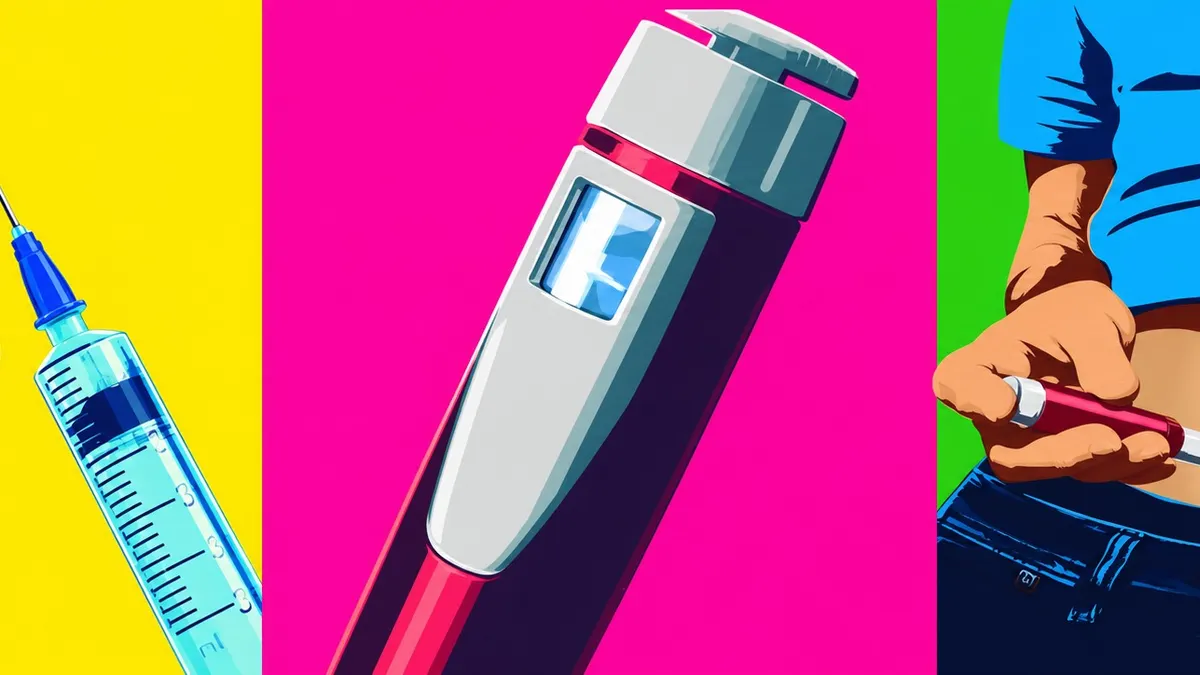
Two trillion dollars. That’s the potential value that global prescription drug sales could reach in 2032, a sum that’s being supercharged by GLP-1 weight loss drugs like Eli Lilly’s Zepbound and autoimmune treatments like AbbVie’s Skyrizi, according to a recent report by Evaluate.
Even so, not all pharmas are expected to benefit equally from this boom. Many companies will be buffeted not only by the current wave of patent expirations expected to create billions in revenue losses, but also by a second patent cliff coming on its heels, said Dan Chancellor, vice president of thought leadership at Evaluate’s parent company Norstella.
The industry is also facing substantial U.S. pricing pressures and competition from China, while patent expirations are set to put more than 8% of prescription drug sales at risk by 2032, according to the report.
Many companies have been ramping up M&A activity to offset the first wave of patent expirations in the next few years.
“We have a huge shift toward GLP-1s and immunology,” Chancellor said.
M&A targeting cardiovascular and neurology indications is also accelerating. But when it comes to pharma hitting the multitrillion-dollar sales mark, much of its success will hinge on GLP-1s.
A dominant drug class
A major factor propelling prescription drug sales toward that $2 trillion mark is tirzepatide, the active ingredient in Eli Lilly’s Zepbound. The treatment alone will be worth $70 billion by 2032, eclipsing all other drugs, according to Evaluate. Lilly’s sales in general are expected to pace far ahead of the competition that year, thanks to the success of this drug category.
“Mounjaro, Zepbound, and a third Lilly drug, oral Foundayo, will make up nearly half of total 2032 sales of the top 10 best-selling drugs,” the report states.
Another major drug category expected to contribute to that $2 trillion figure is immunology, specifically drugs targeting autoimmune diseases. Because immunomodulators have the potential to win approvals for multiple conditions, the category could outstrip the metabolic/endocrine drug class through 2032, with a compounded annual growth rate of over 9%.
By 2032, Skyrizi will be the second-largest selling drug, raking in more than $33 billion.
As other indications rise, oncology is ceding some ground, mostly due to the difficulty of maintaining the field’s frenetic growth rate, Chancellor said.
“Oncology still remains a very attractive place to be,” he said. “But within oncology there is fragmentation. It’s difficult to continue to sustain drugs that have approvals for many different indications.”
Treatments are becoming more personalized, so individual drugs tend to target smaller markets. Hot dealmaking targets include antibody drug conjugates like Daiichi Sankyo and AstraZeneca’s blockbuster breast cancer drug Enhertu. Bispecific antibody drugs, protein degraders and molecular glues are also on the rise, according to the report.
“So much of the shift and the pipeline building that pharma is doing now isn't to patch revenues in the next two or three years, but it's actually for that five- to 10-year window,” Chancellor said.
In total, companies that sell branded products could lose more than $500 billion in sales from generic drug competition between 2026 and 2032, according to the report.
“We've done an exercise where we've mapped which companies are the most active in terms of adding to their pipelines through mid- or-late stage or approved drugs, and these are the companies that are facing the biggest cliffs and have the biggest growth challenges,” Chancellor said.
Merck & Co. and AbbVie, two companies with the largest anticipated patent losses, are among the three biggest M&A spenders in the past two years, according to the report. Lilly is also on that list, but for a different reason: It has the cash thanks to revenue from the success of its obesity drugs. Unlike many other companies, its patent exposure is limited.
But the industry’s momentum is also facing threats from multiple directions. The U.S. market has been roiled by chaotic federal policies, including tariffs, and is facing durable pricing pressures thanks to the Inflation Reduction Act and most favored nation pricing deals. Leadership turnover at the FDA also has companies guessing about how well the regulatory environment will support new drug approvals.
And not all concerns are domestic. China’s rapid rise on the international stage is another factor to watch. Some investors view the nation’s rise on the global stage as a threat to Western companies.
“China-Western licensing deals may indeed undercut some Western-built biotechs: If pharma can access assets directly from China, why pay for them packaged inside a start-up?” the report states.
Wary congressional leaders are increasingly asking questions about China’s pharma ties and proposing measures to make the U.S. more competitive, including a recent HHS move to accelerate drug research.
But for the moment, China is still a more favorable environment in many ways for pharma R&D.
“I feel like the direction of travel is only going in one direction at the moment, which is moving out of countries where research costs are inflating and into markets that were able to accelerate it,” Chancellor said.