After a few sluggish years, pharma M&A and the overall market are rebounding. But investors are still playing it safe.
In fact, a recent newsletter poll of PharmaVoice readers found that 28% believed that the “ease of fundraising” is the No. 1 way to measure the biotech market’s health.
"Fundraising is still not easy ... [and] I think this is not specific to us,” Dr. Alexander Gebauer, co-founder and executive chairman of Galimedix Therapeutics, told PharmaVoice at the BIO convention this month. “Many, many companies are struggling right now."
A recent Evaluate report described biotech investment in the first quarter of 2026 as cautious but steady compared with last year. Venture capital dollars in biotech totaled $7.94 billion in the first quarter compared to $8.04 billion in Q4 of 2025. But investors are being selective, the report’s authors said.
Even in a tepid environment some companies have attracted sizable funding rounds. Isomorphic Labs, for example, announced a massive $2.1 billion series B round in May, marking the second major round of external funding for the London-based AI drug discovery company. It previously raised $600 million in the spring of 2025.
But as a subsidiary of Google’s parent company, Alphabet, Isomorphic has big backers, and is hardly a traditional small and scrappy biotech.
The company emerged from Google DeepMind, which developed the transformative AlphaFold technology. AlphaFold predicts both protein shapes and how drug candidates bind to them, providing a critical edge in designing new medicines. Isomorphic already has established partnerships with several major drug companies, including Novartis, Eli Lilly and Johnson & Johnson.
While Isomorphic’s performance shows that AI-driven platforms are still appealing to investors, several other traditional biotechs have raised significant funds this year, including the three below.
More funds for ophthalmology
Ollin Biosciences announced $330 million in series B financing at the end of June as it looks to take the lead in two common ophthalmology conditions with its next-generation VEGF/Ang2 bispecific antibody, OLN324. The company’s funding round, one of the largest series B rounds in the last two years, was co-led by TCGX, a biotech-focused investment firm, along with its founding investor, Arch Venture Partners.
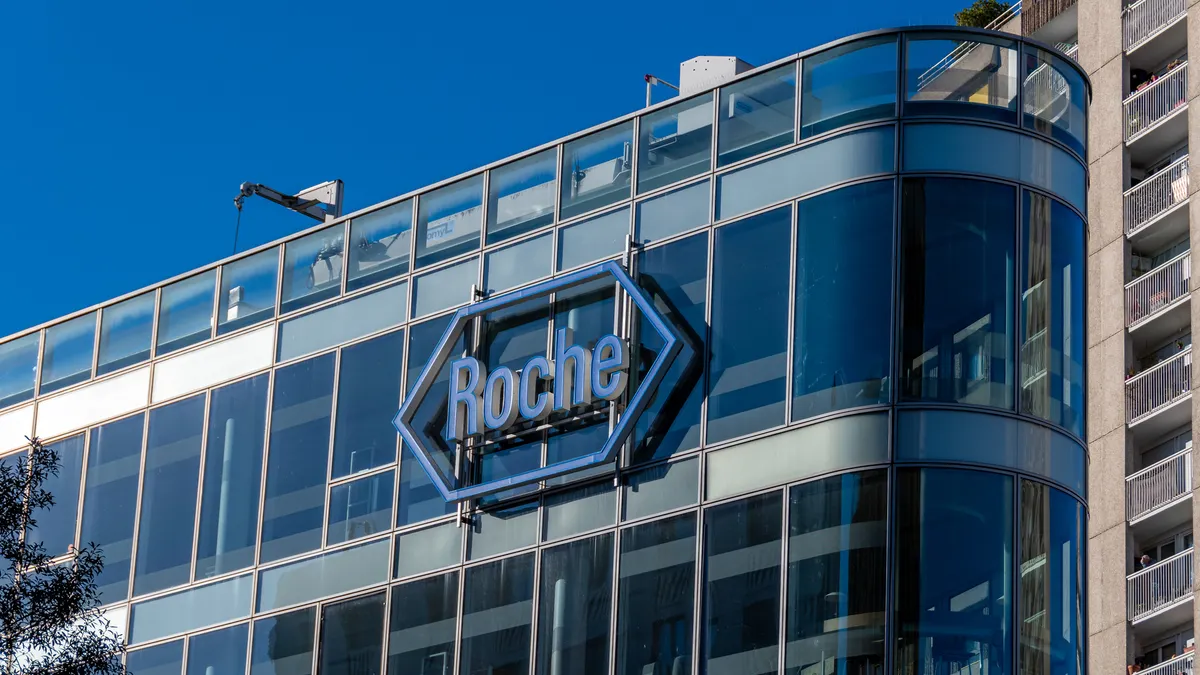
Ollin is partnering with China’s Innovent Biologics to develop the drug, which is moving into phase 3. The candidate targets two leading causes of vision loss and blindness, diabetic macular edema and wet age-related macular degeneration. The company, which emerged from stealth with $100 million in funding in September 2025, could mount a challenge to Roche’s DME and wet macular degeneration drug Vabysmo. In a recent head-to-head trial OLN324 appeared to outperform the Roche drug in vision improvement and eye health for both conditions, according to Ollin.
Ollin’s recent funding round drew attention because investors have generally been more focused on oncology and weight-loss drugs, but interest in ophthalmology has been ramping up. The company plans to use the funds to support phase 3 drug development and advance another type of bispecific antibody for thyroid eye disease and Graves’ disease, OLN102, licensed from Shanghai-based VelaVigo.
Ongoing momentum for autoimmune treatments
Interest in immune disease treatments remains high, and the field recently gained a new entrant, Beeline Medicines. The Bristol Myers Squibb spinout, backed by Bain Capital, was originally formed in July 2025. It emerged from stealth in April with $300 million in financing and will advance five in-licensed BMS immunology drugs aimed at conditions such as lupus, atopic dermatitis and psoriasis.
The company’s lead small molecule TLR7/8 inhibitor, afimetoran, is a once-daily pill for lupus erythematosus and is now in phase 2. That trial is expected to conclude at the end of the year and if all goes as planned, Beeline hopes a pivotal development program will follow. The treatment also notched a fast track designation from the FDA.
The company’s pipeline is diversified with a range of clinical-stage treatments including a phase 1 drug, BMS-986326, for atopic dermatitis and lupus, and a phase 2 TYK2 inhibitor, lomedeucitinib, targeting plaque psoriasis and potentially other rare immunological diseases. The company is also exploring two other early-stage treatments across several other indications, including inflammatory gastrointestinal conditions.
“Immune-mediated diseases remain an area of profound need, and we believe that Beeline Medicines is positioned to redefine treatment across multiple underserved autoimmune and inflammatory conditions,” said Dr. Nathalie Franchimont, chief medical officer of Beeline Medicines in a press release.
Dollars flow into longevity medicine
Longevity medicine, which has drawn substantial interest from billionaire investors, continues to attract capital as it moves from concept into the clinic. The startup New Limit showcased the field’s appeal when it closed a $435 million series C funding round this month backed by Founders Fund, co-founded by Peter Thiel, and Lilly Ventures, among others.
The company, now valued at an estimated $3.1 billion, was founded in 2021 by Coinbase CEO Brian Armstrong to create medicines designed to roll back the biological clock in cells using epigenetic reprogramming. Buoyed by what company officials called a “breakthrough” prototype drug that reverses aging in human liver cells, the company now plans to move into the clinic as early as next year.
“Our trial next year will reveal how liver age reprogramming translates into humans for the first time. Over the coming years, we will add new therapeutic programs and bring a diverse portfolio of therapies into the clinic,” the company said in a recent blog post.