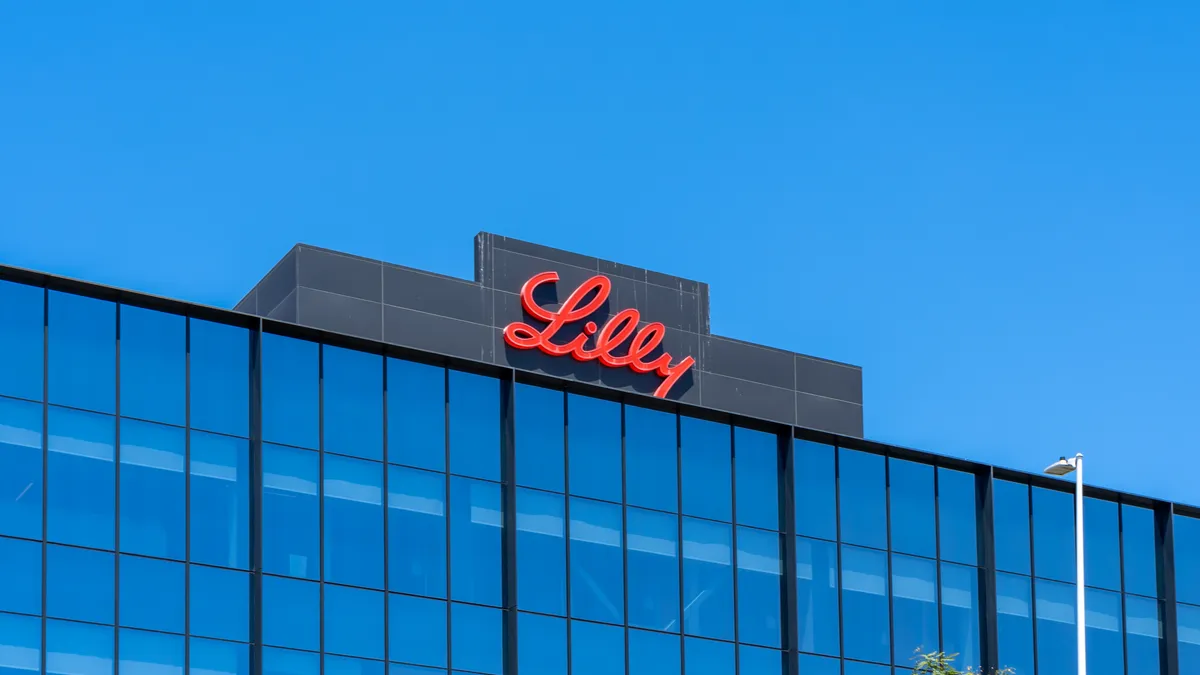
As the race to develop next-generation GLP therapies heats up, Eli Lilly is laying the groundwork to grow its portfolio beyond weight loss.
The pharma giant released a trove of new data at the recent American Diabetes Association conference giving hints to the various directions it could take with its GLP portfolio. Alongside results showing that its late-stage “triple G” receptor candidate retatrutide provided more potent weight loss than approved drugs, Lilly also revealed that it reduced osteoarthritis knee pain and improved sleep apnea.
The pharma giant is also officially getting its dealmaking wheels turning to expand into new indication areas, recently striking a licensing agreement with Korean biotech Hanmi Pharm to gain the rights to sonefpeglutide, a mid-stage GLP-2 agonist being developed to treat short bowel syndrome.
"This is a notable expansion of Lilly's GLP franchise because moving into [the] GLP-2 [space] allows Lilly to tackle rare diseases and gastrointestinal biology with minimal upfront cost but substantial milestone potential," said Effie Tzameli, the former search and evaluation lead of global business development at Novo Nordisk, who’s now an industry advisor for R&D innovation.
Under the agreement, Hanmi will receive $75 million upfront and could earn up to an additional $1.185 billion in milestone payments if the drug reaches the market outside South Korea. Lilly’s buy-in is a small price to pay to expand its reach in the GLP market.
"This is a business-as-usual deal and a small commitment from Lilly," said Norstella's thought leadership vice president, Dan Chancellor, who noted that the upfront payment represents “less than a single day” of revenues for the company’s blockbuster drug tirzepatide, the active ingredient in Zepbound and Mounjaro.
The next moves for GLP drugs
The deal with Hanmi comes as Lilly and other drugmakers look to build on the benefits of first-generation GLP drugs, but with fewer side effects and more convenient dosing.
Takeda Pharmaceuticals’ Gattex, which earned an FDA nod in 2012, is the only approved GLP-2 therapy for treating SBS, but the drug requires a daily injection, which can be an added burden for patients battling the severe malnutrition that can come with the disease.
Gattex is also set to lose patent exclusivity this year, drawing biosimilar competition and opening the door for next-generation entrants to differentiate on dosing and tolerability.
Sonefpeglutide, which is being developed as a monthly shot, mimics GLP-2 — a gut hormone that stimulates intestinal repair and reduces inflammation — and was made to remain active in the body longer than existing treatments.
"[Hanmi's] GLP-2 is designed with dosing frequency in mind, which may allow for a unique clinical profile," Chancellor said.
Ironwood Pharmaceuticals is also developing a GLP-2 candidate the biotech picked up when it bought VectivBio in an all-cash deal worth $1 billion in 2023. The GLP-2 asset, apraglutide, is being developed as a once-weekly shot for patients with SBS and intestinal failure and is currently in phase 3 testing.
But there have been setbacks from other companies making similar moves.
In 2024, for example, the FDA rejected Zealand Pharma's bid for approval of its twice-weekly GLP-2 shot, glepaglutide, citing insufficient safety and efficacy data.
Although Lilly is new to the GLP-2 and SBS space, the pharma titan is already exploring the benefits of GLP-1 drugs alongside other candidates in its pipeline, particularly in inflammatory bowel diseases.
Lilly is currently conducting a phase 2 trial on its experimental dual GLP-1/GIP agonist, brenipatide, for irritable bowel syndrome with diarrhea.
Tirzepatide, meanwhile, is in phase 3 trials for Crohn's disease and ulcerative colitis as a combination therapy with its approved IL-23 antagonist, Omvoh.
While Lilly’s recent data for retatrutide reinforced its “dominance” in obesity, according to one analyst, its move into other indications could set the stage for the company reigning supreme in the wider GLP space.