Few drugs have had a more contentious public journey than ivermectin, an antiparasitic first approved by the FDA in 1996 as Merck & Co’s Stromectol to treat river blindness and other parasitic infections. During the pandemic, the drug became a symbol of COVID-19 misinformation when it was promoted as a treatment for the virus despite slim evidence. Today the internet buzz around ivermectin is back in another unproven use: cancer.
Proponents and detractors largely agree on one point — there’s not enough clinical evidence to support its use as a cancer treatment. Professional organizations like the American Cancer Society and the American Society of Clinical Oncology have released public statements about ivermectin, warning that it’s an unproven treatment and advising against its use outside of clinical trials.
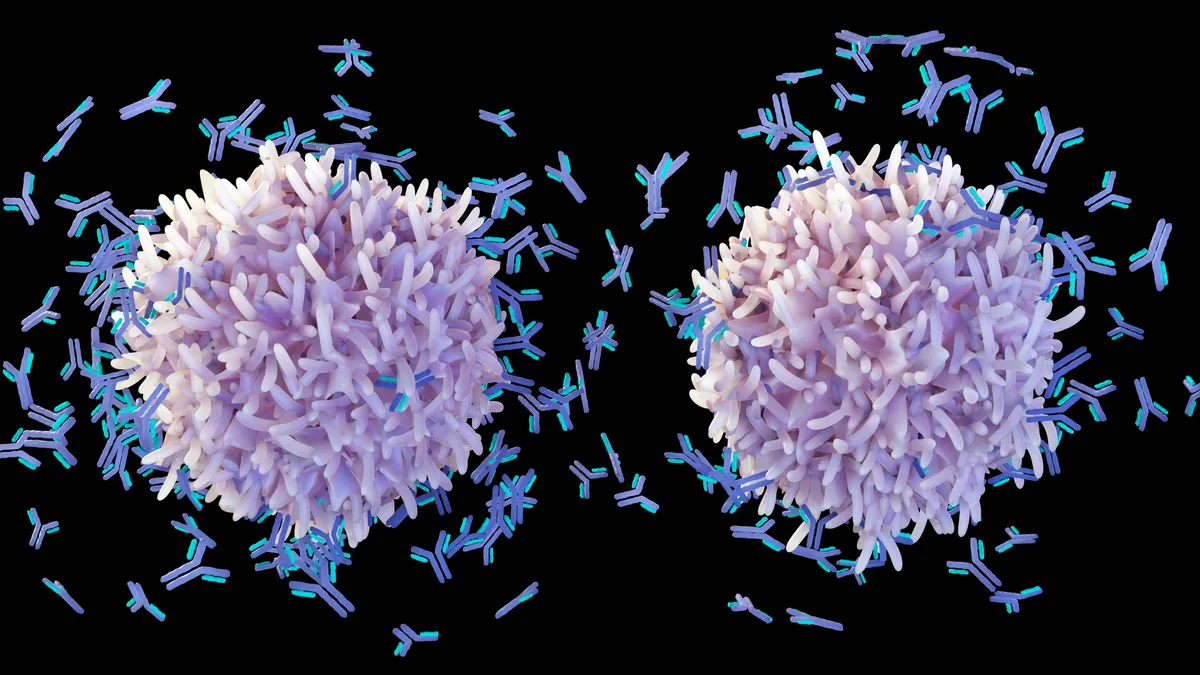
But enthusiasm for the drug picked up late last year after the actor Mel Gibson proclaimed its potential anti-cancer effects on Joe Rogan’s podcast. Now, interest is being driven by early laboratory and animal studies, which have shown hints that ivermectin could disrupt tumor growth by interfering with cell signaling.
But favorable effects are often seen at drug concentrations that are too high to safely be used in people. And as with all drug research, the leap from the lab to the doctor’s office frequently fails to pan out. To date, no human trials have validated ivermectin’s use as a cancer treatment. Even so, interest among patients is spiking and has prompted some states to encourage more research.
Florida Gov. Ron DeSantis and his wife, Casey DeSantis, specifically mentioned exploring ivermectin as a cancer treatment in the announcement of $60 million in cancer research funding to support innovative approaches. Florida and other states have also proposed or approved measures to increase over-the-counter access to the drug.
A political hot potato
Dr. Nathan Goodyear, an integrative medicine physician at Williams Cancer Institute, is among those pushing to pursue ivermectin’s potential in cancer. He currently prescribes it off-label to some cancer patients alongside immunotherapy, in part to ensure they are using it safely rather than self-medicating. Goodyear said he wants to see more trials to help validate its broader use, but believes the drug has become too politicized to attract attention from researchers.
Not everyone, though, is convinced that it’s political backlash that’s keeping researchers from exploring ivermectin’s potential in cancer.
“Serious research follows the signal. If there’s a credible mechanism, reproducible early data and a plausible path to benefit, the hope is that researchers will pursue it,” said Aman Khera, an industry regulatory science and innovation advisor. “I’d like to think that’s true no matter how politically charged a drug might be. In ivermectin’s case, the reality is that the signal in oncology hasn’t been strong enough to justify major investment. If and when the science is compelling, you will see trials.”
A small number of studies testing ivermectin in cancer are registered through ClinicalTrials.gov. One phase 1/2 study at Cedars Sinai Medical Center is investigating whether the drug is safe and can shrink tumors more effectively when combined with a checkpoint inhibitor in metastatic triple-negative breast cancer. Earlier results from the trial presented at ASCO last year showed that the drug combination was well tolerated among nine patients.
A second phase 2 trial is slated to begin in July at the University of Florida exploring ivermectin’s safety when used alongside an anti-PD-1 therapy.
While ivermectin has been used safely on its own for years, it’s unclear how the drug will behave in combination with other oncology treatments. The University of Florida study description notes that there are documented safety risks, including a case of severe neurotoxicity in a bone cancer patient taking ivermectin alongside the cancer drug Stivarga. It also states that ivermectin could disrupt the gut microbiome, which is known to influence the efficacy of immune checkpoint inhibitor drugs.
As these trials progress, some fear the hype around ivermectin is outpacing the science, which should come first, Khera said.
“Research is about testing a hypothesis, and in promotion it's about declaring a conclusion. In research, you’re transparent about uncertainty and you’re generating data,” she said. “When someone presents a drug as effective without that data, they’ve crossed from science into marketing, and that’s where regulators step in.”
Regulators have latitude to rein in false or misleading claims. They can require changes to messaging and issue safety warnings, she noted. So far, the FDA has made no moves to control the promotion of ivermectin by influencers. For those interested in its potential use in cancer, the door is still open for research or trial-and-error prescribing.
“What they can’t do is stop clinicians from prescribing for off‑label use or prevent people from discussing theoretical ideas, " Khera said. “The regulator’s authority is tied to public claims of effectiveness. If the evidence is weak, they can challenge the claim but ultimately scientific inquiry cannot be shut down.”