There’s no denying which company is on top of the pharma mountain.
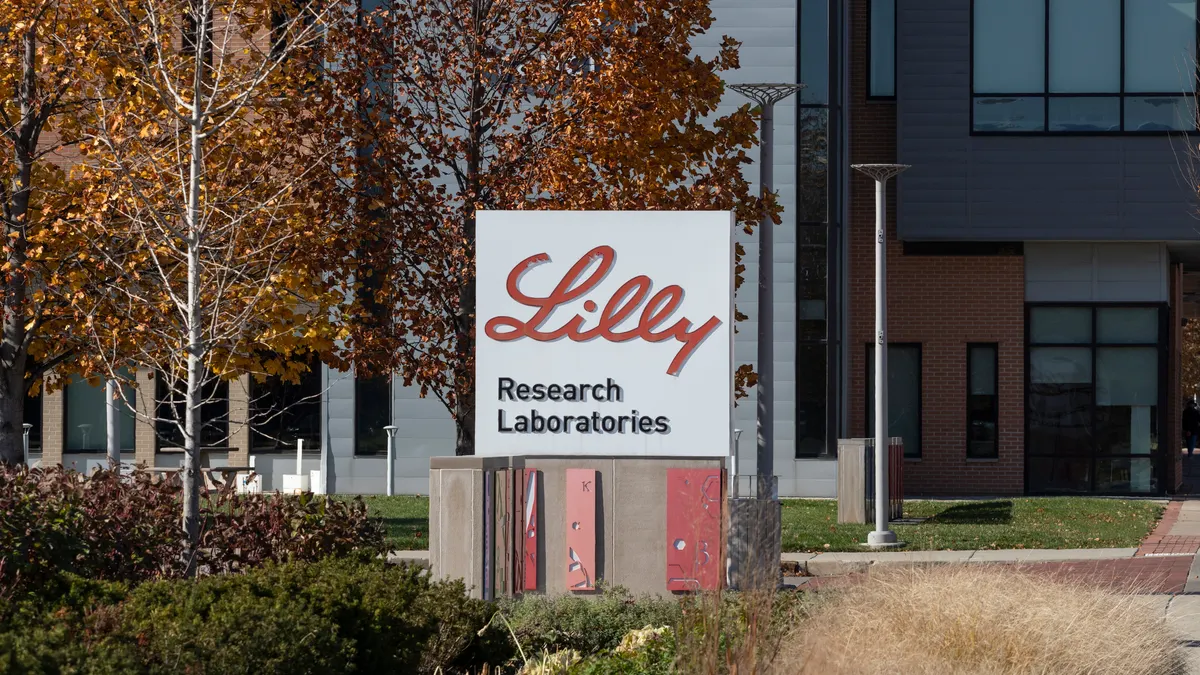
Eli Lilly became not just the first pharma company to surpass $1 trillion in value last year, but the first ever in healthcare. Now, Lilly is ranked as the industry’s top R&D machine as well.
Idea Pharma revealed its annual Global Innovation and Invention indexes this week, which scores companies on innovation (successfully launching new drugs) and invention (their ability to develop new drugs). This year, Lilly became the first company to land the No. 1 spot on both lists.
“They’ve had 45% revenue growth that is unparalleled compared to other companies,” said Jacqui Poot, president of Idea Pharma’s strategic consulting and analytics business unit.
Lilly’s rise is, of course, closely linked to the wild success of its weight loss drugs, but the company is also setting the stage for a long run at the top by investing heavily in its pipeline.
Lilly has been one of the top dealmakers in pharma this year, most recently shelling out $202 million to pick up Engage Biologics and its pipeline of non-viral DNA delivery systems for genetic medicines.
But it takes more than obesity blockbusters to maintain R&D momentum.
Novo Nordisk — once the industry’s weight loss titan before being surpassed by Lilly — has seen its star fade. After rising to a No. 1 position in Idea’s 2024 ranking, Novo has since fallen out of the top 10 as it grapples with slowing growth, a major reorganization and CEO turnover.
A look at the other companies on Idea’s lists provides insight into the various ways pharma companies can build a solid drug development strategy, while also revealing potential lessons from those that are struggling.
Big Pharma’s hits and misses
Sanofi experienced the biggest jump this year on the Innovation Index, rising 19 places to No. 3.
Much of that improvement was fueled by the company’s big-time immunology drug Dupixent, which pulled in about $18 billion in sales last year. While Dupixent fills Sanofi’s coffers, the company has been diversifying its pipeline with potentially first or best-in-class assets across the rare disease, oncology and immunology spaces.
“We’ve been following them for years and they’ve shown resilience, transforming into a readout powerhouse,” Poot said.
GSK also leapt 10 spots, landing in fourth for innovation and invention. Although the United Kingdom-based pharma is heavily invested in vaccines — a turbulent space currently in the U.S. — its shift toward specialty medicines and respiratory diseases has paid off. Its oncology pipeline, in particular, has proven fruitful.
“They’re delivering double-digit financial growth and gaining regulatory momentum with first-in-class approvals while re-establishing their oncology products in additional markets,” Poot said.
A couple of companies, though, stood out for their challenges.
Pfizer continues to lose ground on the indexes as the extraordinary success of its COVID-19 vaccine slips away and it contends with clinical setbacks in other areas.
“They are having difficulty navigating the post-COVID era,” Poot said.
Bristol Myers Squibb plummeted 14 places on Idea’s Innovation list. Despite notable wins on several fronts, including a new approval for its CAR-T cell therapy Breyanzi in December, BMS also faced late-stage setbacks, such as the phase 3 failure in schizophrenia for its closely watched drug Cobenfy.
The overall takeaway from these stories is that different strategies can fuel R&D and market growth. Some of the companies that rank high on the list — such as Regeneron and Vertex Pharmaceuticals — are specialized in particular areas of high-value biology, while others are taking a more diversified approach.
“There is not one playbook,” Poot said. “It really depends on each company’s capabilities and how much risk they want to take.”
For the first time this year, Idea also highlighted 10 emerging biotechs poised to make an impact on a bigger stage.
Biotech’s rising stars
As part of its new “Disruptive Pioneers” list, Idea zeroed in on startups developing cutting-edge technologies that appear on track to hit the market.
Revolution Medicines, which made the list, has been on a high-profile clinical winning streak this year with its pipeline of RAS-targeting cancer drugs. Its success in key late-stage trials has lifted Revolution’s market value above $29 billion.
Parabilis Medicines is also riding high as it takes aim at “undruggable” oncology targets with its pipeline of novel, ultra-tunable peptide therapies known as “helicons.” After raising more than $800 million in private funding rounds and scoring a research collaboration with Regeneron worth up to $2.2 billion, Parabilis is now prepping for an IPO.
“The companies we chose are early-stage and pre-revenue, but they’re working on scientific breakthroughs with strong commercial potential,” Poot said.
Several of the biotechs on the list are on the leading edge of cell and gene therapies, such as Intellia Therapeutics and its in vivo CRISPR gene editing technology and Tune Therapeutics, which specializes in “genetic tuning.”
But the main throughline for all the biotechs was that they’re not only focused on the next milestone — they’re making critical commercialization decisions in early development and implementing that market strategy in the clinic, Poot said.
“Will the endpoints they’re trying to achieve be relevant for their treatment? What kind of outcome will patients want from their product?” Poot said. “These companies are making sure their clinical programs include this evidence and that it’s brought back to patients.”
And not every biotech Idea listed is working with the most advanced technology. Compass Pathways, a frontrunner in the psychedelic arena, got a shoutout as its psilocybin-based therapy for depression moves closer to a potential FDA nod.
Overall, each of the startups have the potential to leave their mark on the industry.
“These are biotechs that could drive global pharma pipelines with their assets,” Poot said.