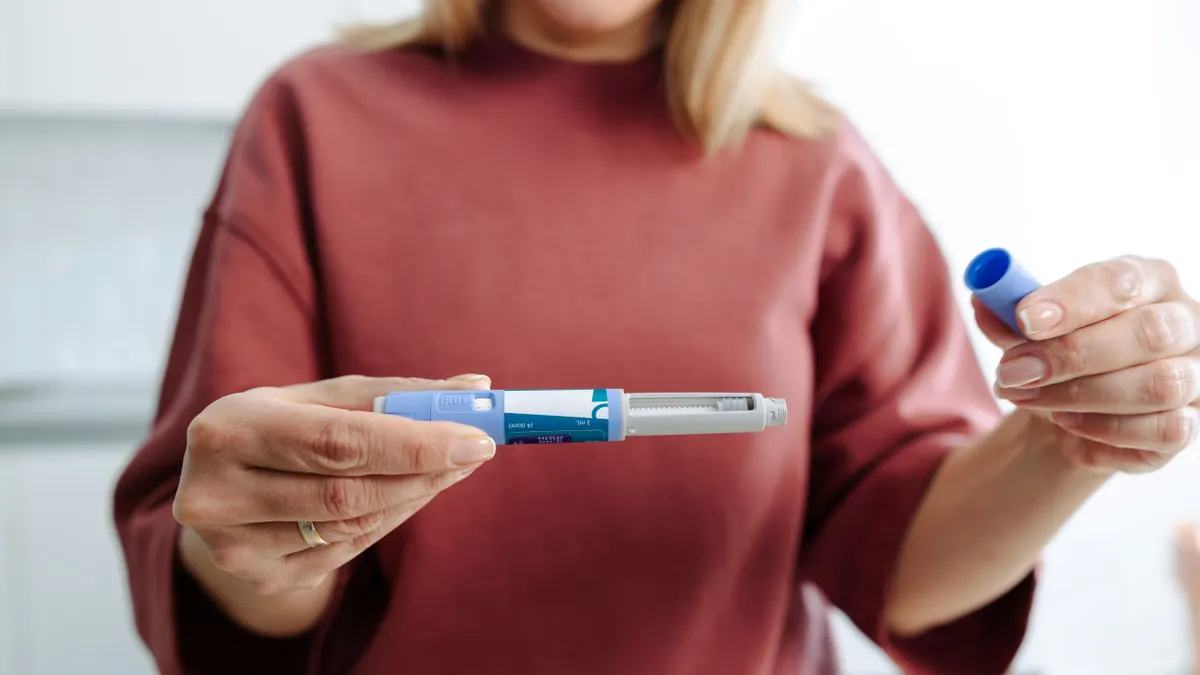
Nearly four times as many Americans are taking a GLP-1 weight loss drug now compared to two years ago. But about 20% still aren’t using an FDA-approved medicine, despite efforts to curb copycat drugs, according to a recent Gallup survey. The number could be even higher. Another 12% weren’t sure if they were using a brand-name medication.
Compounded pharmacies became a major headache for Novo Nordisk and Eli Lilly beginning in 2022, as the popularity of their GLP-1s soared. The large pharmas initially struggled to keep pace with skyrocketing demand, leading to drug shortages that opened the door for compounders to mass produce cheaper, non-FDA-approved versions of the drugs, which are legal when FDA-approved drugs are in short supply. The sudden boon for compounders generated billions for telehealth companies like Hims and Hers. At their peak in 2024, they accounted for an estimated 30% of the overall market, according to KFF Health News.
Even when the active ingredients in Novo and Lilly’s blockbuster drugs — semaglutide and tirzepatide — were removed from the FDA’s drug shortage list in late 2024 and early 2025, pharma’s compounded GLP-1 problem just wouldn’t go away. Telehealth companies quickly pivoted to “personalized” versions of the medicines, which are also allowed when the FDA-approved version doesn’t meet patient needs, if they require a lower dose of the drug or are allergic to an ingredient.
The large pharmas fought back. Novo filed a patent infringement lawsuit against Hims and Hers, and the company ultimately agreed to stop advertising compounded alternatives and instead offer Wegovy to patients through its platform. Novo dropped the lawsuit, but reserved the right to revive it if necessary.
Controversy over these drugs has continued. In May, the FDA, which has issued numerous warning letters to companies selling compounded GLP-1s, moved toward a broader crackdown. The agency proposed excluding semaglutide, tirzepatide and liraglutide from the 503B Bulks List, which enables large-scale compounding, without requiring individual patient prescriptions. If approved, the move could deal a major blow to large-scale distributors of compounded GLP-1s.
The FDA also issued a drug alert in June warning patients and healthcare providers that unapproved GLP-1 drugs are risky because they’re not reviewed for safety, efficacy or quality by the agency. A recent JAMA research letter highlighted additional risks, finding that online sellers often filled orders for the drugs without screening patients for potential risk factors, such as a history of eating disorders.
If the FDA’s 503B proposal is approved, it would mark another victory for the pharma industry, but it remains to be seen if it will finally curb the public’s appetite for alternative weight loss options.