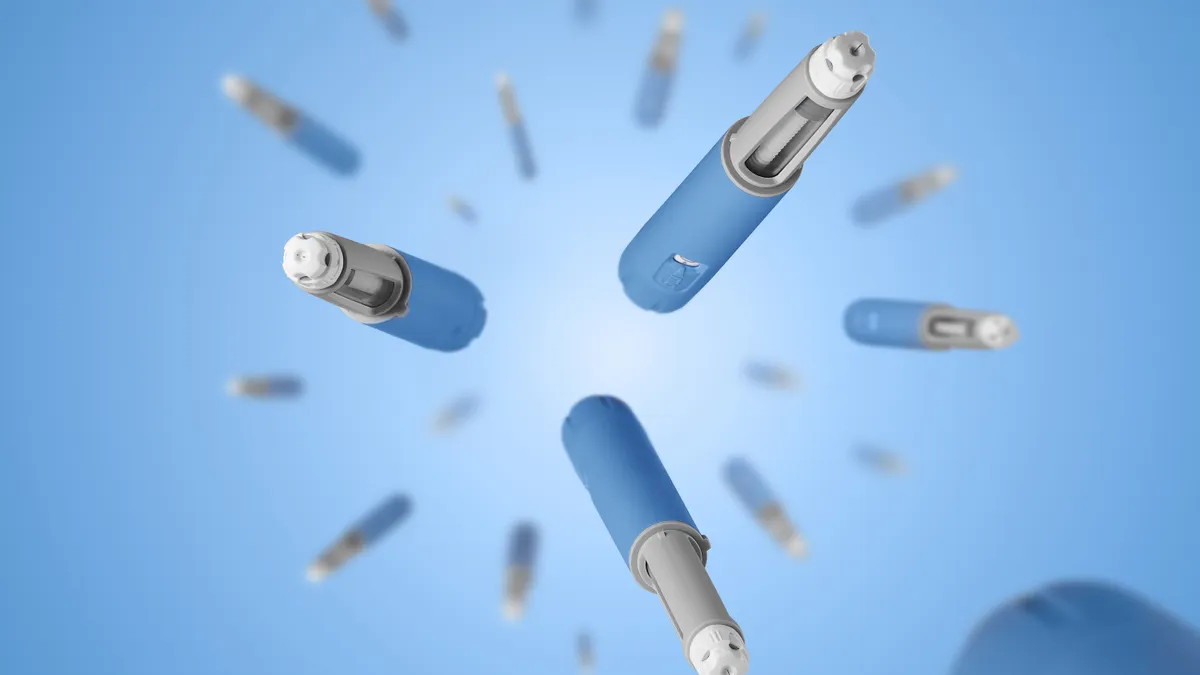
The race is on for the next big thing in weight loss drugs and readouts from some of the top contenders are slated to drop this year.
This rising crop of next-generation candidates aims not only to build on the waist-whittling results of earlier drugs but to make them more palatable for patients by reducing side effects, adjusting dosing and addressing weight loss plateaus.
Novo Nordisk and Eli Lilly have already hit major milestones with the approval of GLP-1 pills, a more patient-friendly alternative to earlier injectable versions. Novo led the way with its Wegovy pill, approved in December 2025. A few months later, Lilly followed with Foundayo. The two new options are expected to compete for a growing share of the overall GLP-1 market, which is projected to reach $100 billion by 2030.
As competition intensifies, the three companies below are approaching key trial readouts in 2026 that could help determine which next-generation therapies may be best positioned to take their share of the marketplace.
Eli Lilly takes aim at blockbuster weight loss
Eli Lilly, already the leader in the GLP-1 space, is taking a multi-pronged approach with retatrutide, which targets a trio of hormones: GLP-1, GIP and glucagon. The drug could help solidify Lilly’s market position if it performs as hoped in several phase 3 trials this year. With an estimated $28.8 billion net present value, retatrutide is also at the top of the pile of up-and-comers.
Results released so far hint that retatrutide may beat current market leaders in its magnitude of weight loss. December results from the phase 3 Triumph-4 trial, which is testing the drug in people with obesity and knee osteoarthritis, showed that the high-dose group saw a 28.7% reduction in body weight, or an average loss of 71.2 pounds after 68 weeks. By comparison, one late-stage study for Lilly’s blockbuster drug tirzepatide, the active ingredient in Zepbound and Mounjaro, demonstrated 15% to 20% weight loss during a similar time frame.
Retatrutide also reduced knee pain with more than 1 in 8 patients reporting that they were free from that issue at the end of the trial. Detailed results from this trial are expected at a scientific meeting this year, according to the company.
Another phase 3 trial, Transcend-T2D-1, is testing retatrutide in people with poorly controlled type 2 diabetes and revealed that after 40 weeks, patients lost up to an average of 36.6 pounds and reduced their A1C, a measure of average blood sugar levels, by 2%, meeting the primary endpoint. Additional results from this trial will be presented at the American Diabetes Association Scientific Sessions in June.
People taking retatrutide in both trials still experienced some of the common stomach symptoms GLP-1s are known for. In Triumph-4, excessive weight loss also led to a higher discontinuation rate among people who started with a BMI of 35 or lower. For this reason, the drug may ultimately find its place as a tool for people with more weight to lose. Ongoing trials with rolling readouts throughout 2026 will also show if the drug delivers other favorable results, such as improvements in cardiovascular risk factors and high cholesterol.
Lilly is also planning to unveil late-stage results for its Triumph-1 trial in general obesity in June, Triumph-2 in obesity with type 2 diabetes in the second or third quarter, as well as additional trials in sleep apnea and chronic low back pain.
If the drug delivers, analysts estimate it could reach nearly $4 billion in global sales by 2030.
Viking could answer a key question about maintaining weight loss
Viking Therapeutics’ lead candidate is also being closely watched for its potential impact on obesity R&D. The company anticipates a third-quarter readout for its phase 1 study of the GLP-1 and GIP agonist, VK2735, exploring maintenance dosing options.
The phase 1 study is designed to answer a critical question for the GLP-1 field: How much medication do people need to maintain their weight-loss results after reaching their target weight? Viking is testing both the tablet and injectable drug in this trial, and the results will help the company determine a path forward for patients after they achieve their goal weight.
"The successful development of maintenance dosing regimens is critical to realizing the long-term health benefits from weight loss and may provide an opportunity to further differentiate VK2735 from currently available obesity treatments," Brian Lian, Viking’s CEO, said in a press release.
This study is running alongside late-stage trials, including one testing the drug as a shot in weight loss and diabetes management. Another for a pill version is planned for the fourth quarter.
The results from the phase 3 studies are not expected to be released this year, but earlier trial results for the drug have been favorable. The injectable medication delivered mean body weight reductions up to 14.7% in phase 2 after 13 weekly doses, alongside mild or moderate side effects. Its pill version, however, hit a bump in its phase 2. Although the drug helped people lose up to 13% of their overall body weight at 13 weeks, it saw a 28% discontinuation rate due to side effects, such as vomiting, a result that sent stocks plummeting.
Pfizer’s long-acting, high-stakes option
Another drug to watch this year is Pfizer’s ultra-long-acting injectable GLP-1 receptor agonist, which it acquired in a $10 billion deal with Metsera after winning a high-stakes bidding war against Novo Nordisk.
Most recently, the drug, PF’3944 (formerly MET-097i), met its primary endpoint in a phase 2b trial designed to show if it might promote continued weight loss when switching from weekly to monthly maintenance injections. The drug triggered a mean placebo-adjusted weight loss of up to 12.3% in the trial and delivered a “favorable safety profile.” At 28 weeks there was no apparent weight loss plateau, which may show an advantage for the long-acting formula.
“These topline results … reinforce the potential of PF’3944 as a monthly treatment with competitive efficacy,” Dr. Jim List, Pfizer’s chief internal medicine officer, said in a press release.
Pfizer will release more details from this trial at the American Diabetes Association conference. The company also said it expects to have 10 phase 3 studies with the candidate up and running this year as part of its wider obesity drug development program that will include over 20 trials.