Some of the biggest news and trends captured in PharmaVoice’s newsletter this week. Sign up here to receive the newsletter daily.
Cobenfy’s stumbles
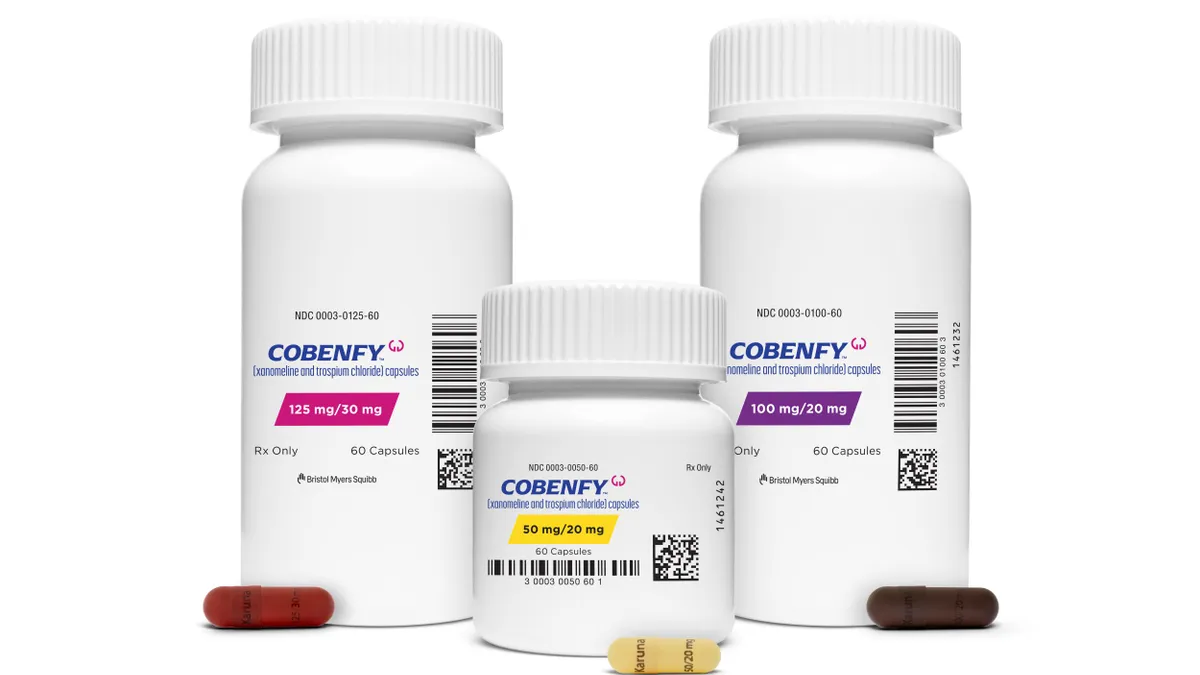
Bristol Myers Squibb is under pressure to make good on its $14 billion acquisition of Karuna Therapeutics, which brought its breakthrough schizophrenia drug Cobenfy into the Big Pharma’s fold.
Although it was pegged as a potential blockbuster, Cobenfy has struggled on the market amid coverage hurdles, pulling in just $155 million last year.
Could Cobenfy fare better as an Alzheimer’s disease treatment? The drug is in late-stage trials for Alzheimer’s psychosis, where it could offer a better safety profile than existing treatments, according to the company. Cobenfy is also one of the key readouts in Alzheimer’s expected this year as part of pharma’s burgeoning pipeline for the condition, which we dug into this week.
The dynamic duo in PD-1/VEGF
Summit Therapeutics and Akeso landed another win with their high-profile PD-1/VEGF bispecific drug ivonescimab. The companies presented more positive data for the treatment at ASCO this week, showing that it slashed the risk of death by 34% — a rate surpassing what analysts had deemed would be significant for the drug in lung cancer.
But since the drug first made waves in 2024 with data suggesting it beat Keytruda in a lung cancer study, its subsequent results have been mixed. There are also reasons to suspect lung cancer may not be the best target in general for PD-1/VEGF bispecifics.
This week, we looked at the hype surrounding the emerging drug class in lung cancer and where pharma companies should perhaps place their bets instead.
A new blockbuster run for AstraZeneca?
Groundbreaking pancreatic cancer results grabbed the spotlight at ASCO this week.
The crowd erupted into a standing ovation as investigators from a phase 3 trial for Revolution Medicines’ RAS-targeting drug presented what they described as “landscape-changing” data.
Several other drugmakers have also waved splashy results at ASCO, including AstraZeneca, which presented data showing a drug combination including its approved immunotherapy Imfinzi slashed disease progression and death by 30% in liver cancer.
While oncology remains AstraZeneca’s largest revenue driver, the company thinks it could be at the start of a new blockbuster run in hypertension that will take it from the cardio space to weight management and beyond. This week, we took a closer look at those plans.