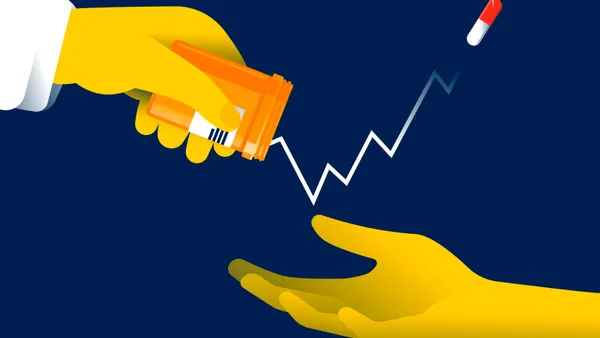
Some of the most well-known drugs in history have emerged through repurposing, from Bayer’s aspirin, which was originally sold as a painkiller and fever reducer then later as a cardiovascular medication, to Pfizer’s Viagra.
Now, the FDA is aiming to replicate those successes by taking a closer look at how therapies already on the market may be repurposed for potential new uses, especially in areas where patients face limited treatment options.
"This is where the opportunity for industry impact becomes extremely exciting," said Raj Indupuri, CEO and co-founder of eClinical Solutions.
Earlier this month, the regulator announced that it’s seeking input from industry stakeholders on how it can tap into pharma’s potential goldmine of existing drugs. Specifically, the FDA wants help finding candidates that might already meet the evidence standards for new uses without additional trials, and those supported by early clinical or preclinical efficacy results that might “warrant further study.”
This is good news for most pharma companies that already have enormous volumes of underutilized data from across the clinical trial spectrum — a single phase 3 trial alone can pump out upward of 6 million data points. But analyzing these vast datasets, which are often collected and stored in a patchwork of systems and databases, has also become increasingly complex, Indupuri said.
“Many companies have years of data that have never been analyzed with today’s AI and machine learning capabilities."

Raj Indupuri
CEO, co-founder, eClinical Solutions
Trial information is often spread across electronic data capture systems, laboratory platforms, safety databases and real-world evidence sources, and is sometimes managed by vendors or contract research organizations.
This is where AI-driven tools can come into play.
"AI and machine learning can help organizations identify relationships and signals across datasets that may not be apparent through traditional analysis," Indupuri said.
For example, AI can help uncover patient subpopulations that responded differently than expected. AI-powered technology can also find biomarker correlations, longitudinal treatment patterns or new hypotheses based on real-world outcomes, he explained.
"This is a very important signal for drugmakers, reflecting a broader shift across the industry to reduce cycle times, lower development risk and bring therapies to patients faster," Indupuri said.
What drugmakers should know
The FDA's push for drug repurposing is part of a wider mission to update drug labels when backed by available scientific evidence, and sends a strong message that the pharma industry can become more agile. It also reflects a broader evolution happening across the regulatory and clinical development space, Indupuri pointed out.
"Regulators are increasingly encouraging more continuous, data-driven approaches to development," he said. "This is a moment for the industry to think about not just deploying AI tools but also modernizing the underlying data and operational foundation that allows AI to generate value from existing assets."
For companies looking to get ahead of the FDA's repurposing efforts, Indupuri recommended four main factors to prioritize — data readiness, AI governance, operational alignment and underutilized assets.
"Many companies have years of data that have never been analyzed with today’s AI and machine learning capabilities," he said.
For large companies with older drugs in their portfolios, there could be "enormous, untapped value" hidden in existing clinical and real-world data, according to Indupuri.
"Many approved compounds already have established safety profiles, manufacturing processes and long-term evidence," he added. "The FDA’s interest in drug repurposing creates an opportunity to revisit assets with a modern data infrastructure, agentic AI, integrated analytics and digital twin strategies."
The agency is seeking guidance from clinicians, researchers, patients and other stakeholders, including drugmakers, on how to identify drugs for repurposing until June 11.