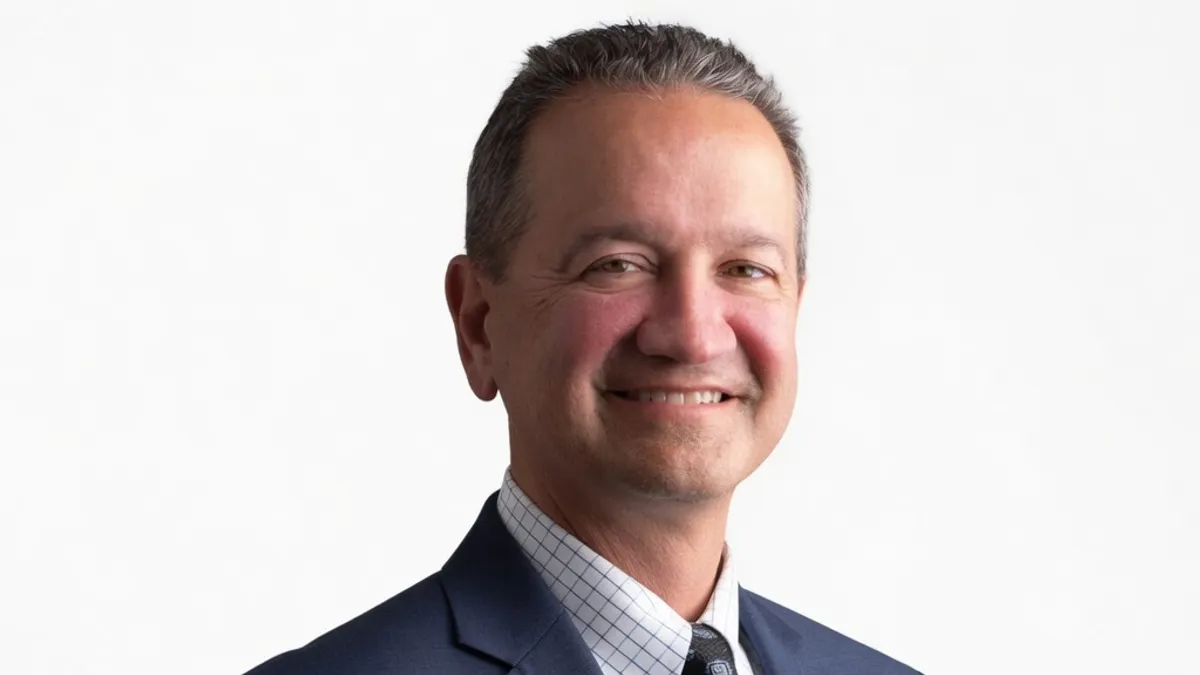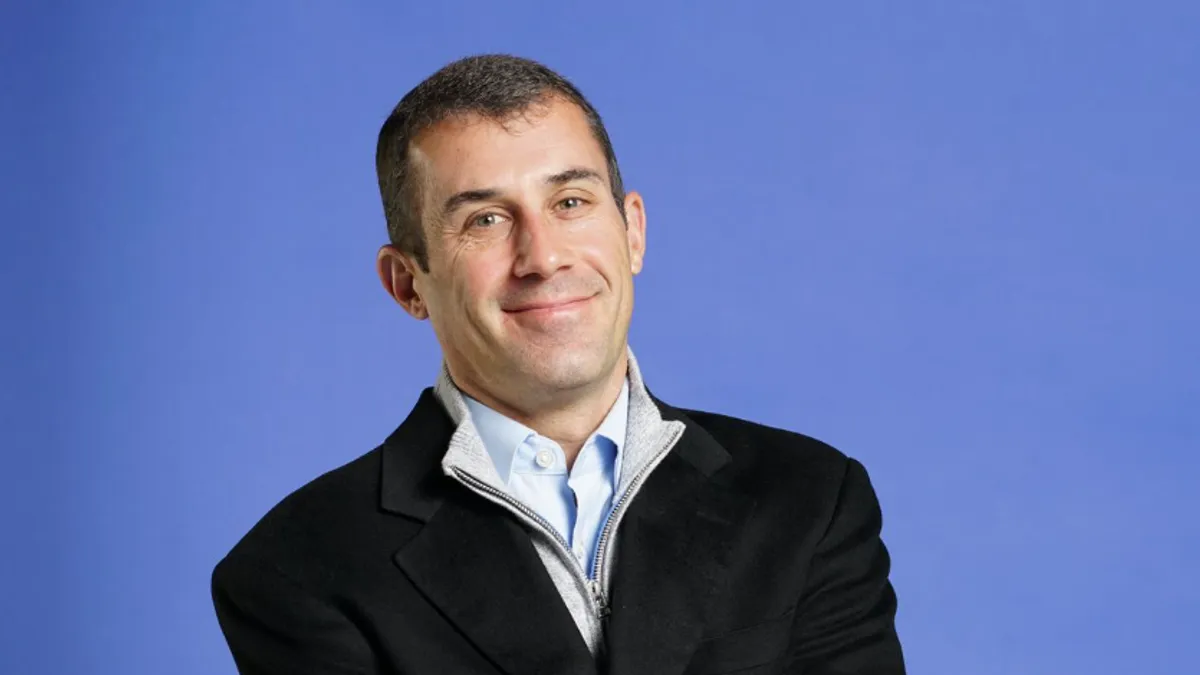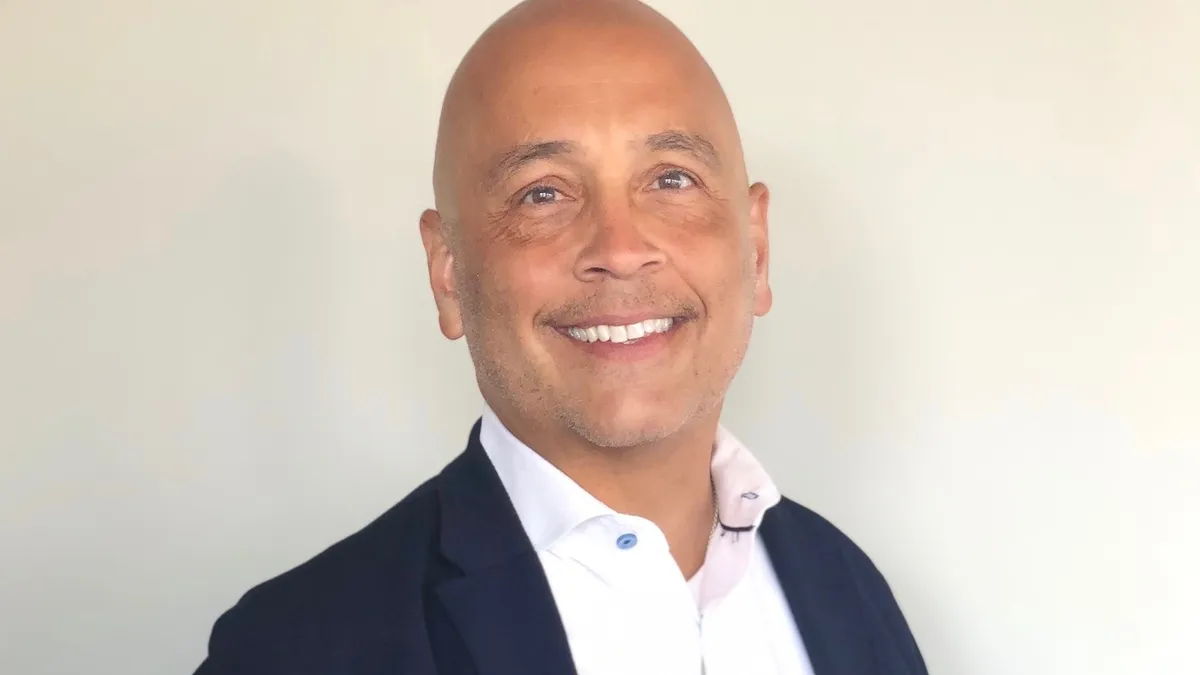
Welcome to First 90 Days, a series dedicated to examining how pharma executives are planning for success in their new roles. Today, we’re speaking to Michael Halstead, the new CEO of Helus Pharma, who steps into the top spot to guide the company through late-stage drug development and, potentially, commercialization.
Psychedelics are attracting growing interest from drugmakers looking to bolster their psychiatric pipelines. Helus Pharma is aiming to ride that wave with a new CEO at its helm.
Eli Lilly’s recent deal to acquire AtaiBeckley for up to $3.8 billion, including its lead depression candidate BPL-003, offered another sign of pharma’s growing interest in psychedelic drug development.
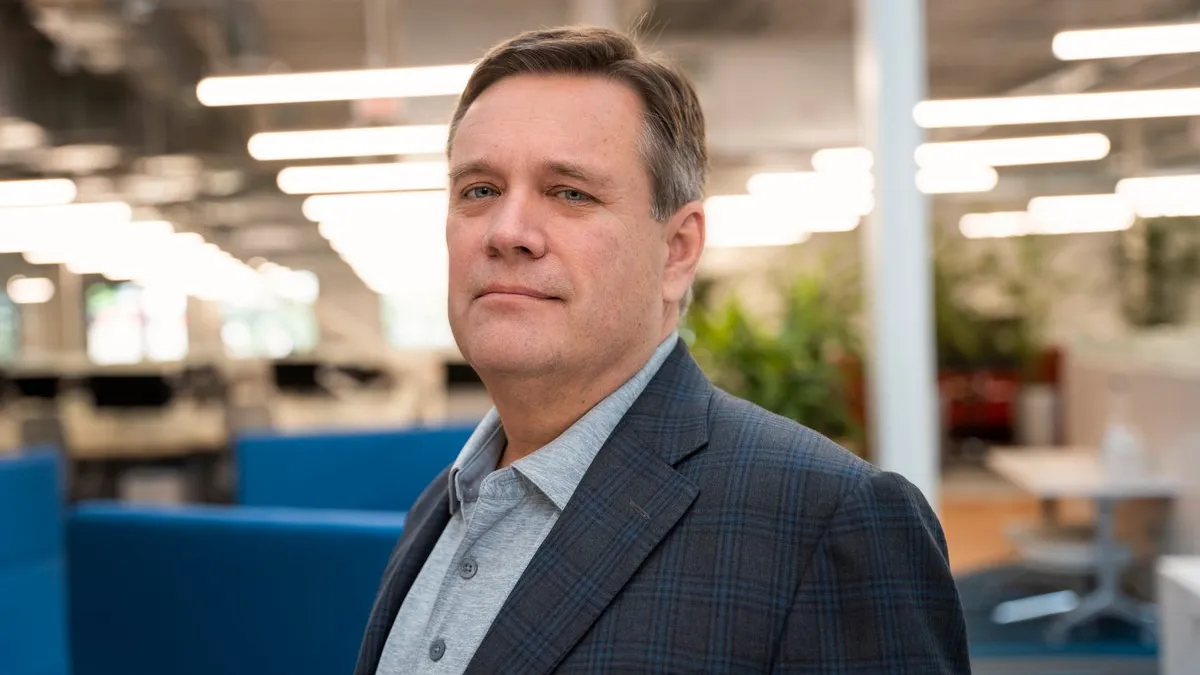
“The space in general has gotten incredible focus and is really starting to come into its own,” said Michael Halstead, who was appointed CEO of Helus in early August. Halstead brings notable dealmaking experience in the CNS arena to the role.
As president of Intra-Cellular Therapies, Halstead helped scale the organization and lead its $14.6 billion sale to Johnson & Johnson in April 2025, the biggest pharma acquisition that year. The deal broadened J&J’s footprint in mental health and added Caplyta, now approved for schizophrenia, bipolar depression and as an adjunctive treatment for major depressive disorder. J&J has projected more than $5 billion in peak annual sales for the drug. It’s a skill set Halstead plans to apply at Helus, a mental-health-focused biotech moving into later stages in the clinic, and looking toward commercialization.
The company is developing novel serotonergic agonists for major depressive disorder, generalized anxiety disorder and other mental health conditions.
Helus’ lead molecule, HLP003, a modified version of psilocin, showed lasting results in phase 2. The trial tested the drug as an add-on treatment for patients taking antidepressants but not responding well. Among seven participants who received two 16 mg doses three weeks apart and completed the 12-month follow-up, all met response criteria and five of the seven, or 71%, were in remission based on the standardized Montgomery-Åsberg Depression Rating Scale. HLP003 is now in phase 3, and if all goes as planned Helus says it could file a new drug application as early as 2028.
To succeed, the company will also need to find its footing against stiff competition from companies like Compass Pathways, whose COMP360 could become the first classic psychedelic approved in the U.S., as well as Definium Therapeutics and GH Research.
Definium reported positive phase 3 results last week for its LSD-based tablet DT120 in generalized anxiety disorder. That followed positive phase 3 results in major depressive disorder in June. A single 100-mcg dose of the treatment reduced scores on a standardized anxiety measurement scale by 11.6 points compared with a 6.2-point drop with placebo — a 5.4 reduction over placebo. One analyst called it a “clean win” for the company.
Halstead also saw the results as a win.
“These results are encouraging to patients, and bolster credibility for the use of 5-HT2A agonists in GAD — like our asset HLP004 — broadly,” he said. But HLP004 may be differentiated by its short treatment time. Phase 1 data showed all participants were ready for discharge within three hours, according to the company.
A major challenge ahead for Helus will likely be managing the company’s future growth.
“When I started at Intra-Cellular Therapies we’d just finished phase 2, phase 3 was ongoing. We were about 20 people,” he said.
By February 2025, shortly before the J&J acquisition closed, Intra-Cellular employed 860 people. Halstead said that kind of growth requires a building-block approach.
“You can't suddenly drop a battleship on top of the organization,” Halstead said. “That doesn't work. You also can't do it too slowly or you won't be in position to achieve your goals.”
Here, he discusses the path ahead for the company.
This interview has been edited for brevity and style.
PHARMAVOICE: What made this new role at Helus the right fit?
MICHAEL HALSTEAD: After finishing up at Intra-Cellular Therapies, I was in the fortunate position of being able to really spend time thinking about what it is that I want to do next, and where I want to do it. The guiding principle was somewhere where we would make a real impact in mental health.
The founder of Helus, Eric So, is similarly very passionate about mental health. We had a nice baseline connection. We spent a lot of time getting to know each other, making sure that this was going to be a partnership that was going to last, be stable and help both of us to achieve our goals.
What lessons from Intra-Cellular will you apply at Helus?
The commercial area is your biggest area of growth. As you're hiring your commercial leaders and the critical people under them, getting that balance of experience and passion for what we're trying to accomplish and building that steady leadership are really key.
You’re building a field sales force. That's your largest population of people, and they're out in the field, not sitting in an office with you. So, it's really important to get that right, so that everything you view as important that you want to accomplish flows through them as the arms and legs of the organization. It's actually something that we did well at Intra-Cellular.
What do you see as Helus' biggest opportunity in the psychedelic space?
Helus has the HLP003 program in phase 3 development for the treatment of major depressive disorder as an adjunctive therapy. I think that’s a really great indication that they've chosen.
But the company has a broader platform. They have the HLP004 program in development for generalized anxiety disorder, another prevalent condition where we need treatments. They also have a platform of earlier-stage compounds that they haven't talked about much. As I look at them, I see a lot of potential there for various mental health indications. Drug development being what it is, you always want to have a broad platform, not just a single drug candidate. So that platform is very appealing.