Can companies win new patent protections around long-known drugs? That question has been swirling around the psychedelic drug space as researchers explore new therapeutic uses, formulations and delivery methods for compounds like psilocybin that have existed outside traditional drug development for decades.
A recent patent battle could provide clues.
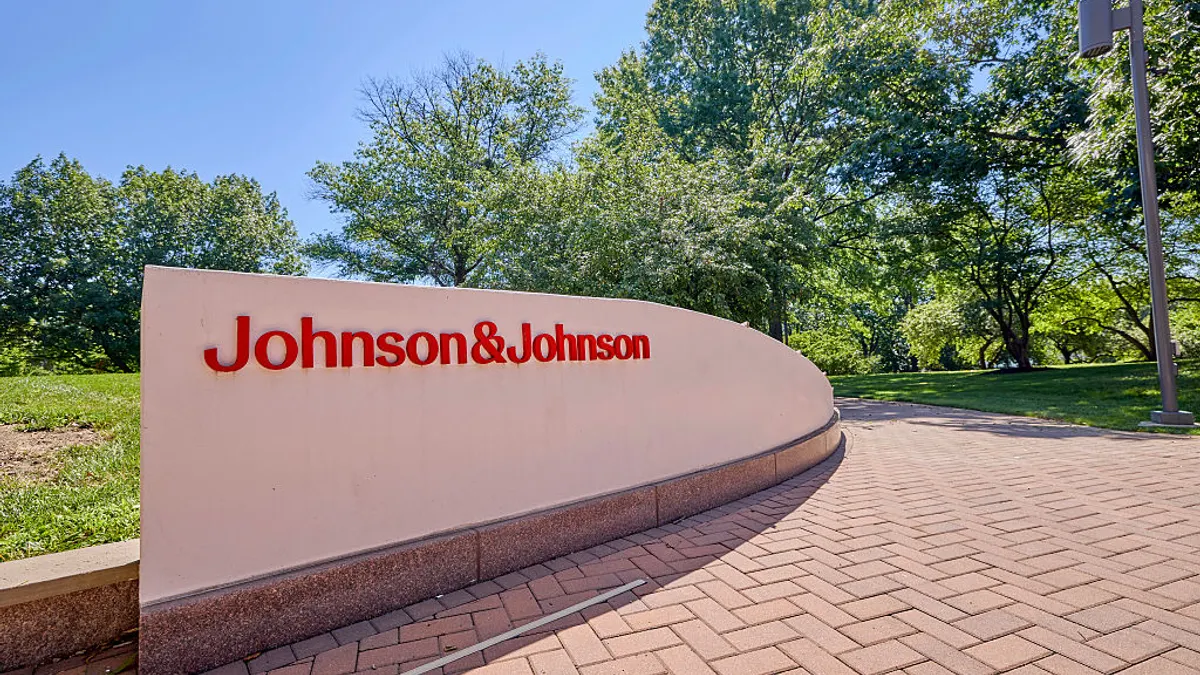
Johnson & Johnson subsidiary Janssen Pharmaceuticals won a patent infringement case against Sandoz, a proposed generic competitor to its blockbuster depression treatment, Spravato, last month.
Spravato, which generated $1.7 billion in sales in 2025, is based on esketamine, a form of ketamine. But the patents at issue did not simply cover esketamine itself: three of them cover methods and dosing regimens for treating depression, while a fourth covers a pharmaceutical formulation of S-ketamine hydrochloride.
Even so, the judge sided with J&J, ruling that the Sandoz generic would infringe on four of the company’s patents. Janssen filed the lawsuit in 2023 after the generic drugmaker sought an FDA approval for its version of Spravato. While Janssen claimed patent infringement, Sandoz disputed the validity of those patents.
Key details about the decision are still under seal, but the federal district court judge’s decision could keep Sandoz’s drug out of the U.S. market until 2035 if Janssen’s claims remain enforceable.
J&J had already settled with another would-be generic competitor Hikma Pharmaceuticals.
Patent protection for legacy drugs
Psychedelic drug development for a range of neurological and psychiatric conditions has been on the rise, drawing increased attention from Big Pharma. For example, Eli Lilly completed its acquisition of AtaiBeckley and its pipeline of psychedelic-based drugs this month for about $2.8 billion upfront, with up to another $1 billion tied to development and regulatory milestones.
The trend has sharpened patent controversies around psychedelics, including how much innovation companies must demonstrate to patent and protect new formulations, dosing regimens, delivery methods or therapeutic uses built around substances humans have used for centuries.
Archaeologists have found evidence of psychedelic use dating at least 1,000 years around the world, from a temple in the Peruvian Andes to a cave in Bolivia. Critics of pharmaceutical patenting in the space have objected to the notion that companies can gate off access, which could impede further research and innovation.
But patent filings are proliferating.
As of September 2024, there were more than 1,000 U.S. patent applications and patents for psychedelics, according to Sterne, Kessler, Goldstein & Fox.
Many psychedelic drugs, such as psilocybin, are based on naturally occurring compounds, which create patent hurdles. Companies can get around this limitation by demonstrating that their formulation is unique enough to warrant patent protection. But these claims sometimes face resistance, not only from companies that specialize in generic drugs like Sandoz, but from organizations looking to preserve open access to psychedelic compounds.
For example, Compass Pathways prevailed in a challenge from the nonprofit Freedom to Operate, which had petitioned the U.S. Patent Office to review two of its psilocybin patents. Compass went on to advance one of its synthetic psilocybin drugs, COMP360, through late-stage development for treatment-resistant depression. Now, COMP360 could become the first classic psychedelic to gain FDA approval. The U.K. based company expects to complete its FDA approval application sometime in the fourth quarter.
While the field still faces regulatory questions around the integrity of its clinical trials, more patent scuffles like the one Janssen faced will likely continue to play out in the courts as psychedelics candidates, many of which are in late-stage development, progress through the pipeline and towards the market in coming years.