Eli Lilly is no stranger to competition from compounded versions of its tirzepatide GLP-1 diabetes and weight loss drugs. But the problem recently took a turn into uncharted territory when medical spas, online sellers and other businesses began marketing products purporting to contain its investigational obesity drug retatrutide.
Sales of compounded versions of Lilly’s Zepbound and Mounjaro have already sparked fights between the Big Pharma and compounding pharmacies, which can legally make non-FDA-approved versions in limited circumstances when federal compounding requirements are met.
But selling retatrutide, which is still in phase 3 development and hasn’t been FDA approved, to consumers is illegal under federal law. It raises safety issues related to dosing, quality and patient monitoring, said Jayne Hornung, chief clinical officer for Norstella’s MMIT.
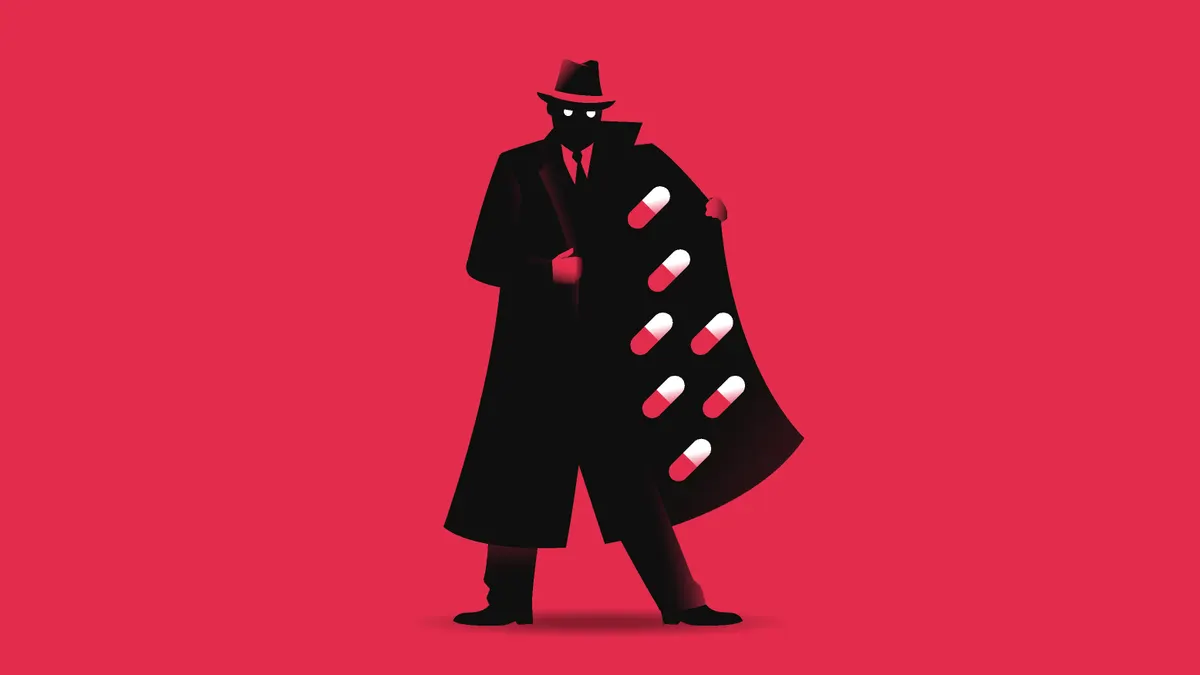
Med spas and “wellness clinics” are likely buying the active ingredient from research facilities overseas, she said. They are then marketing the drug, which has produced substantial weight loss in Lilly’s clinical trials, as a “weight loss hack,” according to a Lilly press release.
Retatrutide is known as a triple-G agonist because it targets not only the metabolic hormone GLP-1 in weight loss shots like semaglutide, but also GIP and glucagon. In a phase 3 extension study, participants who entered with a BMI of at least 35 lost an average of 30.3% of their body weight after 104 weeks on the highest dose of retatrutide. If the drug delivers on its promise and wins approval, some analysts expect it could reach nearly $4 billion in global sales by 2030.
Lilly has said it plans to submit retatrutide for approval to the FDA in the first quarter of 2027.
Customers buying the illegal version are paying somewhere around $200 a month, a price substantially under what the branded version could cost once approved, Hornung said. If the FDA approves retatrutide, Hornung estimates that its list price could land between $1,000 and $1,500 a month.
“The question becomes: Are patients going to switch from $200 that they've been getting on the black market to $1,500 a month?” she said.
A recent Gallup survey of GLP-1 users showed that about 20% still aren’t taking an FDA-approved GLP-1 despite efforts to cut down on sales of compounded versions. Another 12% didn’t know whether the drug they were taking was a copycat or the real deal.
Cracking down on black market sales
Lilly is now looking to courts, law enforcement and regulators to halt these illegal sales. The large pharma recently filed six lawsuits against U.S. companies it accuses of selling black market versions of the drug.
It’s also attempting to pick apart the black market through a series of smaller maneuvers aimed at the various parties potentially allowing it to flourish.
For example, Lilly said it has reported more than 14,000 websites, ads, social media posts and product listings for the drug in over 100 countries to various internet service providers and e-commerce platforms. It also referred “more than 200 individuals and entities” to the FDA, U.S. Department of Justice and other law enforcement and regulatory officials “to stop this illegal market,” Lilly said.
The company described the issue as not just a business problem but a potential safety concern for customers.
"What is being sold on the black market is not a medicine — it is entirely unverified, unapproved and not worth the risk,” Dr. David A. Hyman, Lilly's chief medical officer, said in a press release.
U.S. Customs and Border Protection has also taken action, intercepting more than 690 shipments containing more than 31,000 units of illicit GLP-1 drugs in fiscal 2025. In July alone, it recorded more than 1,400 seizures and intercepted nearly 90,000 vials, according to Reuters.
Despite the various crackdown efforts, there’s still plenty of financial incentive for different companies and sellers that want in on the GLP-1 market. Although the legal market for compounded GLP-1s has narrowed as shortages have ended and drugmakers have sued sellers, they’ve still generated billions for telehealth companies and demand remains high.
That potential payday could keep the black market for retatrutide afloat despite Lilly’s legal pushback and threaten its share of the market if the drug wins an FDA nod.
“Unfortunately, Lilly is going to face something we've never seen at launch before,” Hornung said, referring to the potential use of black market versions by patients. “And we're going to see if those people switch over or stay using products on the black market.”