Chief executives at S&P 500 companies saw median salaries increase by about 5% in 2024, and analysts expect those numbers to hold steady when 2025 calculations are complete.
But some Big Pharma CEOs were major outliers last year, receiving double-digit percentage pay bumps and several entering the stratospheric “$30 million club.”
Their raises were often driven by dealmaking and boosts the company’s bottom line amid turbulent times. Last year, many pharma bosses ushered in major manufacturing deals, and record-high revenues and share prices, while navigating an uncertain tariff landscape, approaching patent cliffs and large restructuring efforts.
Even so, many of the CEO raises were still eye-catching and widened existing executive-to-median-employee pay gaps.
Here’s a look at five of the most interesting CEO pay increases in pharma last year and the circumstances around them.
David Ricks, Eli Lilly
New compensation: $36.7 million
Why it’s notable: David Ricks’ 25% compensation bump from 2024’s $29.2 million pay package feels reasonable when you consider that under his leadership, Eli Lilly’s revenue soared 45% in 2025 to reach $65 billion. Lilly also became the first pharma company to hit the $1 trillion market value mark last year, propelled by the runaway success of its obesity medicines, Zepbound and Mounjaro.
The company started 2026 off strong, too, scoring the approval of its oral GLP-1 drug, hot on the heels of Novo Nordisk’s weight loss pill approval a few months earlier.
Despite that historic success, Ricks’ compensation package is notable for another reason: The mega-gap between what Lilly pays its CEO and its employees. The company had a 293:1 CEO-to-median-employee pay ratio in 2025, with the median employee salary at just $125,100.
Robert Michael, AbbVie
New compensation: $32.5 million
Why it’s notable: Robert Michael hadn’t even been AbbVie’s CEO for two full years when his compensation jumped 75% from $18.4 million in 2024 to $32.5 million in 2025.
But that raise was earned, according to the company.
In an SEC filing, AbbVie said Michael “achieved or exceeded” his 2025 strategic goals. And even in the second full year after losing Humira exclusivity in the U.S., AbbVie increased its revenue over 8% to $61 billion for the year. Those earnings were driven largely by its immunology portfolio, including blockbusters Skyrizi and Rinvoq.
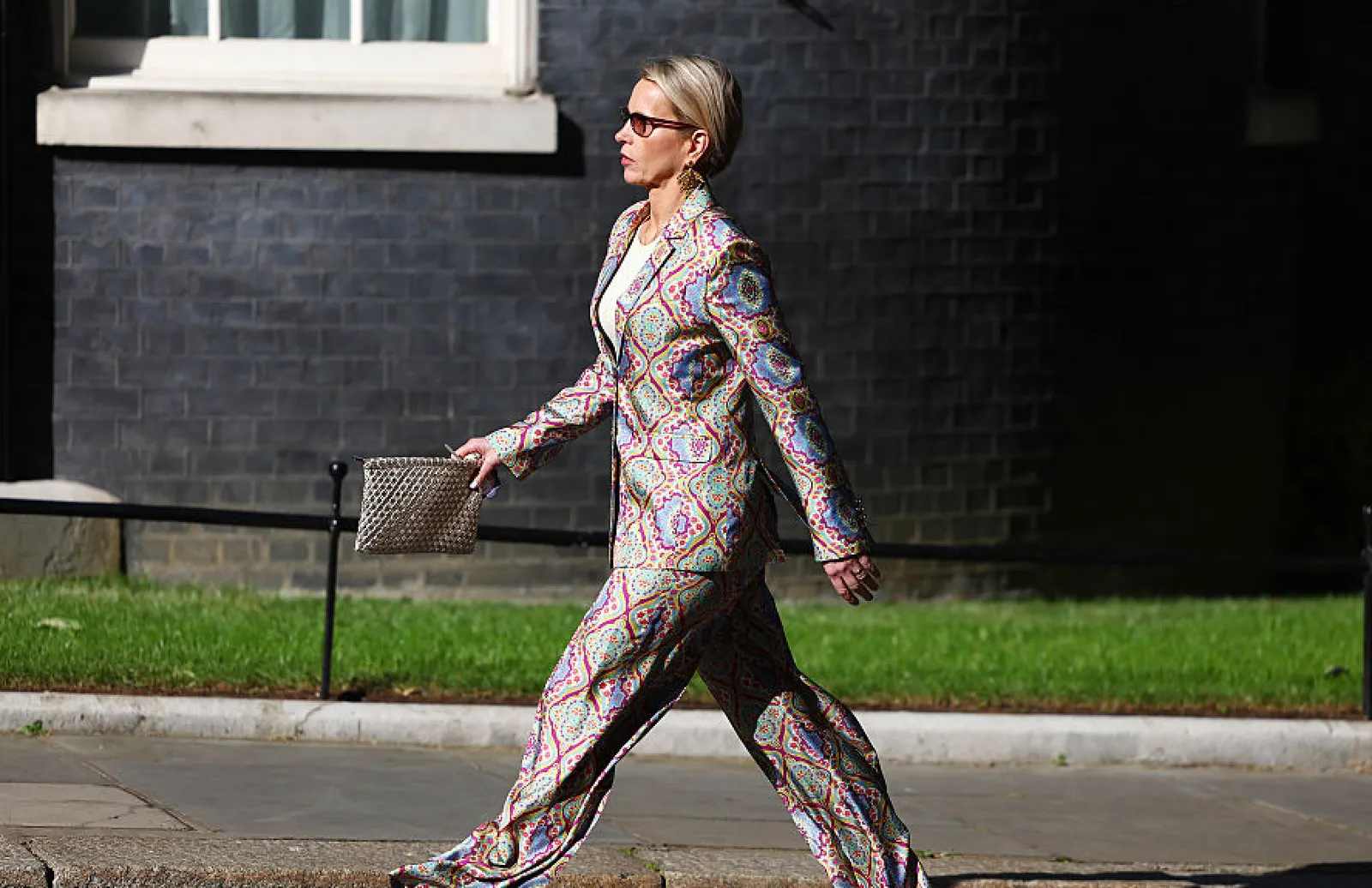
Emma Walmsley, GSK
Outgoing compensation: $21 million
Why it’s notable: Big Pharma’s first female CEO might have stepped down at the end of 2025, but Emma Walmsley’s pay increased almost 50% on her way out the door.
Walmsley’s 2025 compensation ballooned to $21 million in 2025 over its 2024 rate of $14.1 million.
The company cited her “exceptional results” in 2025, pointing specifically not only to her usual responsibilities and objectives but her success in brokering a most-favored nation pricing deal with the Trump administration. Like many of the other deals large pharmas have struck with the White House to avoid potential tariffs, GSK agreed to lower drug prices on some of its portfolio.
In a separate pledge, GSK committed to invest more than $30 billion in U.S. R&D and manufacturing over the next five years.
Albert Bourla, Pfizer
New compensation: $27.6 million
Why it’s notable: Despite proxy advisors recommending against an increase in Pfizer executive pay and a 2% drop in company revenue, the company’s CEO got a pay bump anyway in 2025, earning $27.6 million compared to $24.6 million the year before.
Although revenues have declined in the post-pandemic years, Pfizer touted Bourla’s other achievements, including four key drug approvals, acquiring obesity and cardiometabolic disease company Metsera, scoring in-licensing agreements with 3SBio and YaoPharma and reaching a pricing and tariff agreement with the Trump administration.
A cost-realignment program is also expected to save Pfizer $5.7 billion through 2026, the company said.
Joaquin Duato, Johnson & Johnson
New compensation: $32.8 million
Why it’s notable: As pharma’s top company by revenue, J&J paid its chief executive handsomely in 2025, bumping Joaquin Duato’s total compensation to $32.8 million from $24.3 million the year before. The raise also launched Duato into the “$30 million club” alongside other top earners like Eli Lilly’s David Ricks, AbbVie’s Robert Michael and Novartis’ Vasant Narasimhan.
J&J said that under Duato’s leadership, the company “exceeded its combined financial and strategic goals in 2025.” Duoato also steered J&J through “[the] most significant loss-of-exclusivity event in more than a decade,” the company said, referring to sinking revenues from its blockbuster autoimmune drug Stelara.