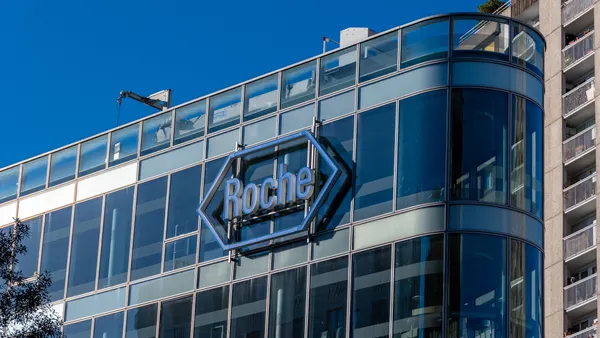
Matchups between pharma and AI companies are a more common feature of the industry’s dealmaking landscape. This year alone has seen the launches of Amazon Web Services’ Bio Discovery platform, OpenAI’s GPT-Rosalind for life sciences research, Roche’s AI factory with NVIDIA and Eli Lilly’s $1 billion AI co-innovation lab, also with NVIDIA.
“There have been a lot of big capital deployments, even just over the last quarter, all of which are first of their kind,” said Orr Inbar, co-founder and CEO of AI clinical trial simulation firm QuantHealth.
But even among those landmark deals, Anthropic’s recent acquisition of Coefficient Bio, an AI-based drug discovery and clinical trials startup, stands out.
First, there’s the $400 million price tag. That amount is even more notable considering Coefficient Bio is an eight-month-old startup operating mostly in stealth with only about 10 employees and an undisclosed technology platform.
But Coefficient Bio is bringing two pharma heavy-hitters to the table, including co-founders who hail from Genentech. One of them, Nathan Frey, is now Anthropic’s life sciences lead, according to his LinkedIn profile, while the other, Samuel Stanton, is on its technical staff.
Anthropic’s acquisition of Coefficient Bio could also be the first in a wave of deals seeing AI/life sciences startups gobbled up by AI giants.
“It’s the first acquisition of a tech-bio company in a long time,” Inbar said. “[It] demonstrates how the thinking is changing in terms of allocating capital around AI and drug development … [and] definitely sets a precedent.”
Betting big on drug development
The Coefficient Bio acquisition isn’t Anthropic’s first foray into the drug development arena. Its new Claude for Life Sciences launched in October and already counts AstraZeneca, Sanofi, Novo Nordisk and Genmab as clients.
While Claude for Life Sciences featured preclinical R&D tools at launch, it recently expanded to include capabilities for clinical trial operations and regulatory stages, including connections to Medidata, ClinicalTrials.gov, ToolUniverse, Owkin, ChEMBL and other external resources.
“We're seeing a doubling down on drug discovery, but also a motion into later stages of drug discovery,” Inbar said.
OpenAI is making life sciences moves, too, with the new GPT-Rosalind for life sciences research and a client roster that includes Amgen, Moderna and Thermo Fisher Scientific.
Inbar noted that these big swings are likely a way for huge AI companies to justify skyrocketing valuations that don’t yet match revenues.
“At the end of the day, all these generalist models are great, but the majority of the time, it just helps people write better emails or put kitten filters on their video chat,” he said. “So when it comes to making money and actually impacting human life at scale, life sciences and healthcare is a pretty good place to be.”
Anthropic’s recent moves are paying off in other ways, too. Its valuation recently skyrocketed to $1 trillion, overtaking OpenAI. On the same day, Google confirmed it would invest up to $40 billion in the company, just days after Anthropic announced a deal with Amazon that would add up to 5 gigawatts of new capacity.
Shifting market dynamics
Although Inbar doesn’t anticipate major companies like Anthropic or OpenAI launching drug development programs of their own, he sees emerging competition between traditional life sciences companies and biotechs like Formation Bio, which bills itself as an “AI-native pharma company.”
“If more of the intelligence around drug development is shifting towards AI, and we have all these barriers that are deeply entrenched within life sciences and how they're doing things, then maybe the best way to disrupt is to just have those AI companies come in with a fresh mindset and a better set of tools,” Inbar said.
Another question is whether companies like Anthropic and OpenAI will ultimately find life sciences success.
“We've seen, historically, a lot of companies make really big bets on healthcare and life sciences, and fall flat on their faces,” he said, pointing to efforts like Google’s Verily and IBM Watson Health.
With the Anthropic-Coefficient deal, Inbar said he’ll be looking for whether they’re able to produce a viable drug discovery and development model within the next few years. Ultimately, Inbar said success will come down to the balance of computing capacity and human skills.
“Big Tech often fails in the space [because] data and compute alone are not enough. You also have to understand where humans are actually important in that process,” he said. “In life sciences, this means you have to think hard about the problem you're solving and how you actually direct and use that data and compute to solve the problem. Whether it's clinical trial design or drug discovery or anything in between, what are the touchpoints between humans and the machine?”