Pharma companies already use AI for tasks like optimizing clinical trials, identifying drug targets and developing predictive models for risk detection. But AI’s next iteration promises to take the technology a step further with “agents” that act autonomously.
Among those at the forefront of this shift is Owkin, an AI company whose clients include Sanofi, Bristol Myers Squibb and Merck & Co. Its autonomous “AI scientist” can tackle complicated questions about topics like commercialization and drug discovery in a fraction of the time human researchers could.
Pascal Weinberger, Owkin’s co-CEO, likens it to handing a thesis to a Ph.D. student and asking them to report back with their findings.
“The mental model is: What if you gave every researcher in your company a data center full of genius Ph.D. students in their pocket?” Weinberger said.
AI agents operate, plan and adapt independently, or as McKinsey & Company recently described it, they change “AI’s role from tool to coworker.”
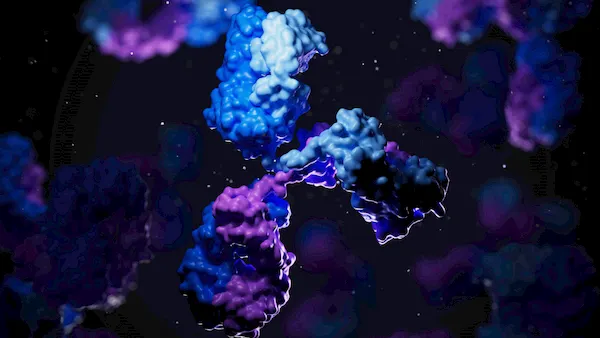
Owkin’s tool, K Pro, uses agentic AI to take a complex, multipart pharma research question and deliver a comprehensive answer with annotated citations to back it up. Weinberger offers this example: Asking the tool to analyze the top indications being pursued in clinical trials for an antibody targeting CTLA-4, comparing them to gene expression across MOSAIC cancer types, and determining whether there’s an indication competitors are missing.
The AI scientist will answer the question step by step, conducting literature research, running gene expression analysis and data science models, and doing general web searches for other relevant information like press releases.
“Just answering a question like this would take a team traditionally weeks because you're doing a lot of research on different areas,” Weinberger said. But their tool can do it in hours or days and it provides the “scientifically validated plots that you would expect in an analysis like this.”
In addition to reviewing existing literature, the tool also draws on a patient dataset from more than 800 hospitals, including “gene data, pathology slices, insurance reports, anything,” Weinberger said.
“All of that has some little piece of information on how the underlying biology actually works and it helps you model it,” he said.
‘Supercharging’ existing employees
Several pharma companies are already using agentic AI, including Novo Nordisk, which is working with NVIDIA to develop customized agents. Johnson & Johnson is using agents to determine certain chemical processes related to drug development. On the vendor side companies like IQVIA are developing customized AI agents that can handle a range of tasks. Owkin says some of its clients are already using its K Pro platform.
But humans still play a large role in all of these situations.
“There’s this idea that over time, especially as the models get more powerful, you can remove the human from a lot of those steps because maybe an AI model can do the review better than a human can, or maybe an AI can come up with better research hypotheses,” Weinberger said.
In fact, these tools’ greatest value will likely come from performing tasks that are too complex or inefficient for humans, like analyzing unstructured datasets, according to McKinsey. While tools like K Pro can operate independently, Weinberger doesn’t believe it will dramatically reshape companies’ workforces and put data scientists and biomedical researchers out of a job.
Some hiring experts agree.
“I wouldn’t say that AI is necessarily replacing jobs one-for-one,” Jae Yoo, executive director of EPM Scientific, a recruitment firm specializing in pharma, biotech and R&D hiring, told PharmaVoice earlier this year. “It’s rehousing and reshaping the types of jobs that are now coming in.”
A recent poll of industry executives echoed that sentiment, with pharma’s C-suite leaders reporting they don’t think AI will lead to major job losses.
Weinberger said that’s true even within Owkin.
“We still have a big team of researchers that basically fuels the machine, building the skills, finding and verifying the data, finding and verifying the resource, asking the right questions,” he said.
Ultimately, humans will still be responsible for using AI-generated data to decide a company’s strategic direction. That’s why having the tool produce verifiable results is so crucial.
“It's important to our pharma customers that they can review this,” Weinberger said. “I want to know how this graph was produced because I'm going to make a million, if not hundred-million-dollar decision based on the analysis that I get here.”
Weinberger isn’t promising that some jobs won’t go away.
“If the world changes in a meaningful way, some people will inevitably lose their jobs,” he said. “I think the goal here is to accelerate progress.”
But Weinberger believes most displaced employees will move onto other positions because the task at hand is so massive. Millions of patients will still have unmet medical needs and the drug discovery process is still long and expensive.
He argues that if a tool like theirs can make one researcher or engineer 1,000 times more efficient, pharma companies likely won’t reduce staff and settle for the same number of discoveries and revenues they’ve had for years.
“That doesn't really happen in the world,” he said. “What happens is the pharma says, great, now I have 1,000 people that can do the work of 100,000 people or a million people, figuratively speaking, and I can grow my top line. I can solve more diseases. I can add more drugs to my portfolio.”