WASHINGTON — As leaders in the public and private sectors look for answers to the affordability crisis in U.S. healthcare, the conversation around drug pricing can get tense.
Arguments from drugmakers around the cost of innovation bump into counterpoints about price transparency and how much more the U.S. pays compared to other countries. But while the temperature rises quickly, even the fiercest opponents agree the current system needs an overhaul.
Does the blame fall on pharma companies? Geopolitical inequity? Pharmacy benefit managers, large insurers or hospitals? All of the above, according to government and industry leaders speaking separately on stage this week at a healthcare summit hosted by Politico.
While many leaders believe only targeted disruption can bring the change needed to make drugs more affordable, they disagree on what form that disruption needs to take. Much of that comes to a head with the simmering rollout of a most-favored nation policy championed by the Trump administration.
“They’re terrified of the big PBMs … and it’s not even close.”

Mark Cuban
Founder, Cost Plus Drugs
The most-favored nation policy formally reintroduced last year would require pharma companies to sell drugs in the U.S. at a price equal to that of other countries paying less. It is intended to be codified within President Donald Trump’s proposed “Great Healthcare Plan,” and already large drugmakers have made behind-the-scenes deals with the administration to bring those prices in line.
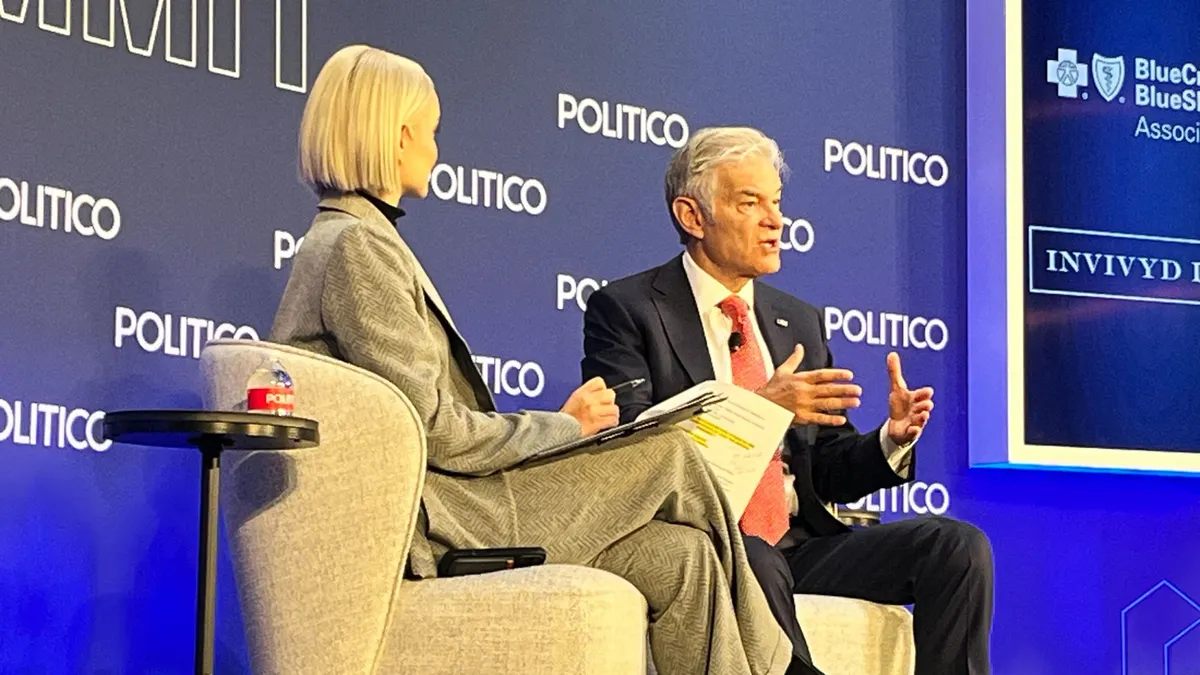
“We're going to protect innovation [in the] pharmaceutical sector, but we are no longer paying three times more than everybody else and paying for all the research and providing most of the profits in the pharmaceutical industry,” said CMS administrator Dr. Mehmet Oz, speaking with a journalist at the summit.
The reason countries in the European Union pay less for prescription drugs is that prices are negotiated and set by governments. Lowering what drugmakers can charge in the U.S. to match countries like France would be a bow to “socialist” price setting, said PhRMA CEO Stephen Ubl, the industry group’s longest-tenured chief who plans to step down at the end of the year.
“The president has identified a real issue: There are price differences between the U.S. and other countries [but] I just think the MFN is the wrong policy prescription,” Ubl said. “What we shouldn’t do is essentially allow the French health minister or other socialist countries to set the price in the United States.”
The transatlantic divide on drug pricing
Ubl likened the MFN policy to price control, which was an accusation also levied at the Biden-era provisions within the Inflation Reduction Act that allow Medicare to negotiate certain drug prices. He said European rates are “artificially low” as a result of member states’ cost prohibitions.
“Back in the 80s, much of the industry was domiciled in Europe, and a lot of the high-value investments in R&D and jobs were in Europe,” Ubl said, adding that “socialist countries” would be setting the American healthcare agenda. “They made a bunch of bad decisions, in our view, imposing price controls on the industry … [while] at the same time the U.S. is making good decisions, and a lot of those high-value investments moved to the U.S. as a result.”
HHS senior advisor Calley Means took offense to the word “socialism,” suggesting Ubl “owes the president an apology” while defending Trump and HHS Secretary Robert F. Kennedy Jr.’s positions on the matter.
“The president has rightfully pointed out that we are 4% of the world's population but generate over 70% of worldwide pharmaceutical profits,” Calley said. “It is not socialist to point that out and exert force to drive solutions for the American people.”
Oz pushed the administration’s direct-to-consumer drug sales website TrumpRx as a measure of lower prices negotiated with individual pharma companies.
“You would never buy a car if they wouldn’t tell you what it costs until you drive it off the lot,” Oz said. “And yet, that’s what we do all the time in healthcare, so between most-favored nation drug pricing made transparent on TrumpRx and other initiatives, we’re making major inroads.”
Price setting is particularly anathema to investors in earlier biotech, and John Stanford, CEO of venture capital group Incubate, told PharmaVoice in an interview that “letting other countries take draconian measures as it relates to our own healthcare access seems like passing the buck.”
Stanford called for an end to the “sniping” across the aisle and a more cooperative approach to drug pricing reform.
“We have ignored this for far too long, and we need to put pen to paper for an all-of-the-above approach rather than sticking to our little silos,” Stanford said. “We have to start rowing in the same direction.”
‘They’re terrified of the big PBMs’
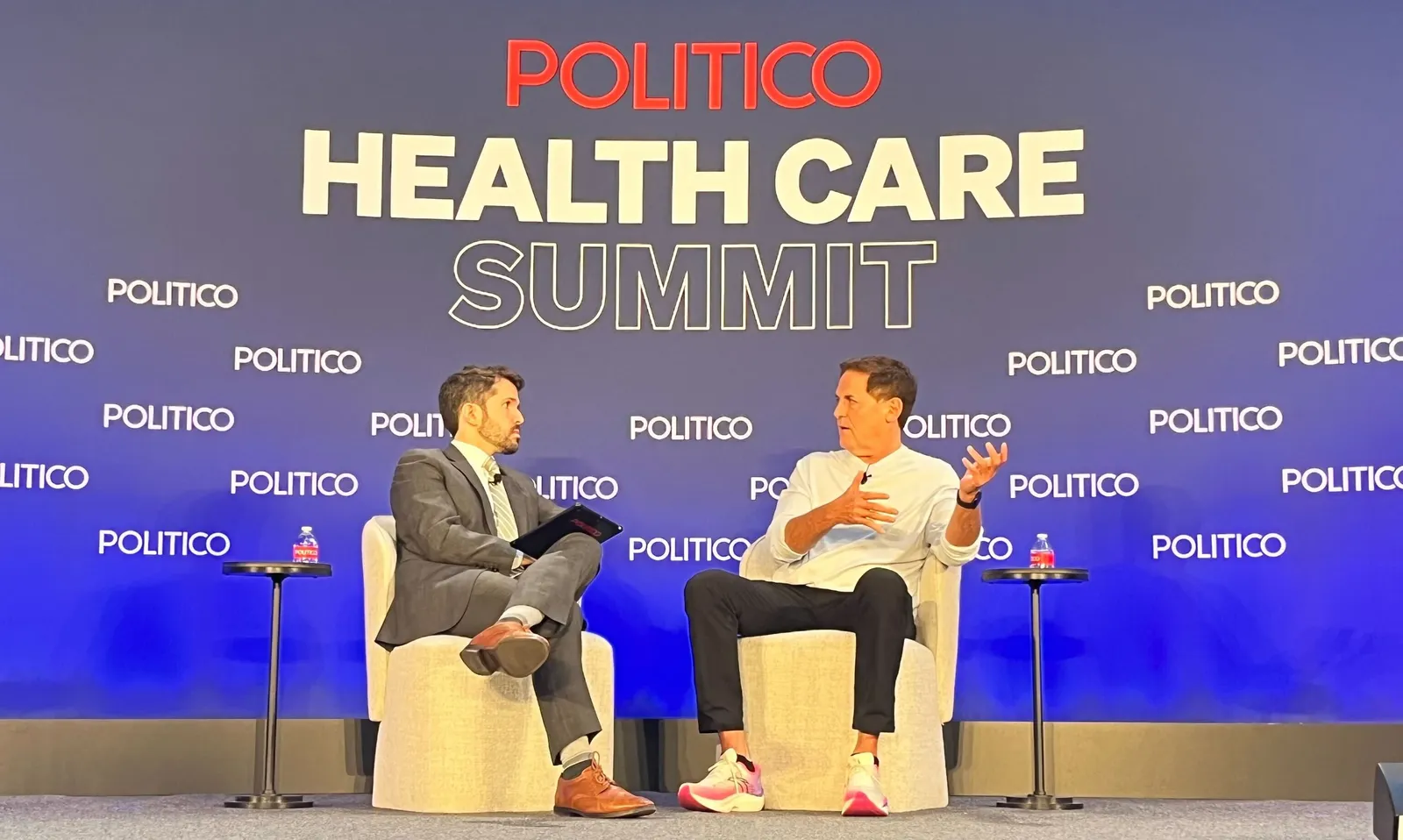
Dallas billionaire entrepreneur Mark Cuban is no big fan of Trump, but he sees the administration’s TrumpRx model as a step in the right direction toward more transparency in drug pricing.
Cuban, who founded the direct-to-consumer online pharmacy Cost Plus Drugs, believes that much of the pharmaceutical pricing headache comes down to drugmakers’ strained relationship with large PBMs and insurance providers, and has called for a major upheaval.
While he supports the concept of universal healthcare in the U.S., it would be impossible to reach without price transparency and the crumbling of the PBM infrastructure, he said.
“Until you break those companies up, you are not in charge of your healthcare,” Cuban said at the summit. “They don’t give a s— about you, and they don’t give a s— about patients, and as long as that’s the case, things are going to be broken.”
He called TrumpRx a good example and “a huge win” for lower drug prices across the board, saying he has “no problems with what HHS has done.” But he also said the government’s influence pales in comparison to that of PBMs, who decide which drugs are available to their patients.
“Brand manufacturers … are more afraid of the insurance companies [and] PBMs than they are of the president,” Cuban said, pointing to PBMs’ leverage to threaten a weaker formulary position for drugmakers who don’t play the game, or those who choose to sell to a discount site like Cost Plus Drugs. “They’re terrified of the big PBMs … and it’s not even close.”
To lawmakers on both sides of the aisle, Cuban had a simple message regarding more effective healthcare and drug pricing reform: “Don’t be a wimp.”