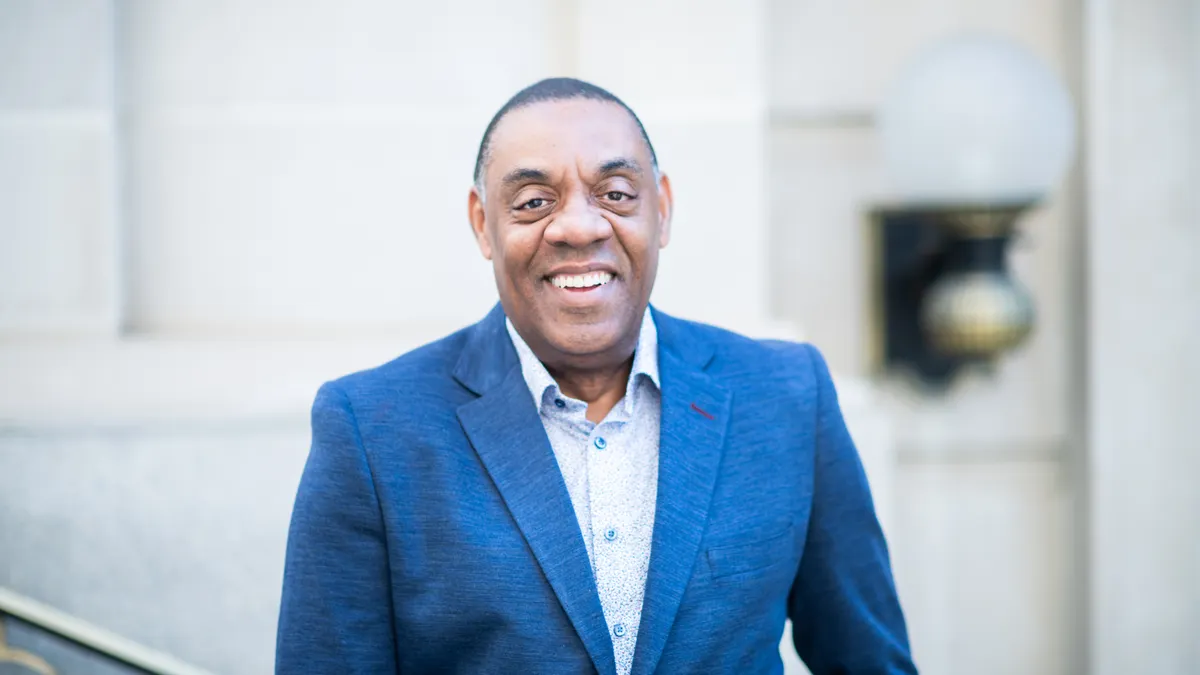
It was during a meeting at the White House in 2019 with top Trump administration officials and biotech CEOs that Patroski Lawson’s curiosity was first piqued about the rise of China. After the group discussed the Asian country’s rapid ascent in biotech, Lawson’s interest was amplified in other conversations with biotech executives.
“They were all talking about China, and they were talking about the need for the U.S. to figure out what we want to do, how we want to grow our industry, preserve it, protect it,” said Lawson, the CEO of KPM Group, a biotech lobbying firm. “I thought, ‘Wow, we need an organization to really think strategically about this.’”
That realization ultimately motivated Lawson to found the Washington D.C.-based American Biotech Innovation Alliance, which launched this month. Lawson describes the organization as more of a think tank than a traditional trade organization with a focus on broad strategy, not on the day-to-day ins and outs of biotech like many other industry groups.
While China may have been the impetus for ABIA’s formation, its focus will be squarely on supporting America’s biotechs, Lawson said. About 30 companies have already joined the group, including Moderna and Rocket Pharmaceuticals, and Lawson is aiming to grow its ranks to 50 members as it creates its “Biotech Vision 2030” strategy.
Although the U.S. has moved to address national security issues that have arisen from China’s growing prominence in the drug landscape, including the recent passage of the Biosecure Act, Lawson says ABIA’s goal isn’t to tamp down competitors.
“I think stifling innovation anywhere in the world is not good for patients in the United States. It's a bad look,” Lawson said.
Even though the biotech industry in this country is already strong, it was built without intentional coordination.
“Imagine what we will do when we are all working together, and we’re singing off the same sheet of music,” he said.
Here, Lawson explains the organization’s action plan and when it will begin making inroads at the nation’s capital.
This interview has been edited for brevity and style.
PHARMAVOICE: What are the biggest challenges that you feel the biotech industry is facing right now?
PATROSKI LAWSON: One is defining biotech. You go to a cocktail party and [people ask]: “Who are your clients?” I work in the biotech sector. “Oh, you mean Pfizer?” No, that's actually not what I mean. Biotech, the companies that are the innovators — that's not to say Pfizer isn't innovating, because they are. Let's be clear, innovation is happening across the ecosystem. But by and large, when you ask people about where the breakthroughs are coming from, the new therapies, they're coming from small innovator biotech companies with less than 100 employees.
The second is the lack of a coordinated vision for what America is going to look like in the next 50 years, as it relates to biotech innovation. Are we going to be a nation that leads the world in breakthrough therapies? Or are we going to be a nation that squanders the last 50 years of amazing science and innovation that's come out of this country?
The third is regulatory challenges. There’s a lack of certainty. I don't care if you run a small restaurant or a large multinational corporation; a lack of certainty is a problem. It feels like right now things are a little volatile.
What factors do you think will improve the biotech industry?
The first thing you hear from everyone is that we've got to make early-stage development much faster because time is money.
[And then] obviously, calming the FDA down. We need calmness, an agency that is committed to science, committed to data, that is free from political influence is definitely important.
We [also] need to reimagine a new social contract with the patient community. If you're working in rare diseases, particularly in ultra-rare, these companies know all of these patients by name. They know the caregivers by name and patient advocacy community leaders by name. I know it's really hard when you're dealing with huge patient populations to do that. But we need to think more carefully about the social contract we have with the American patients. That could be a part of this conversation as well.
How do you picture your organization will advocate for biotech?
As we start formulating the strategy, we're going to need to start communicating and educating. I like to call it education versus lobbying. We want members to truly understand how valuable this ecosystem is to the United States of America. That's No. 1. We're going to start right away educating members of Congress. As the plan gets baked more, we will obviously be in constant communication with the biotech caucus and others up there to start socializing some of these concepts. Any national strategy is going to have to be endorsed by the federal government.
Five or six of us can put together a national strategy in a weekend. The real work is building a consensus. That's the grind, that's the grassroots movement aspect of this and that’s why we think the ABIA has a chance here, because of the way we’re structuring it.
What is the timeline for putting together your plan, and what does the process look like?
I would like to start socializing the presidential campaigns as early as next summer. The idea is to have the plan, different deliverables, where we're touching base with the community. The first deliverable will be: What is the definition of biotech, and what does it mean to the ecosystem? What does it mean to America? We hope to have something ready for the JP Morgan [Healthcare] Conference in January.
We're going to be meeting all summer in small committees in different places around the country and the rest of this year to help get the best ideas from a lot of different groups.
We'll start writing the plan and have the final report, hopefully by the end of next year. We want to use 2028 to go on the road and help inform presidential campaigns, state campaigns, rolling up our sleeves with the messaging to get the word out about what we need to do. In January 2029, with the new Congress, if we've done our work well, we're ready to inform policy. If we can do it sooner, great.
If you succeed in what you are trying to accomplish, what does the biotech ecosystem look like five years from now?
[A recent article noted that] 40% of the early-stage clinical molecules were coming out of China, whereas 10 years ago it was 8%. It would be nice in five years from now, if America decides that this is an area that we want to lead in, that we've turned the corner and 50% to 75% of those early-stage molecules are being discovered in America.
The other [vision] would be perhaps the 48th president of the United States has a strategy, and that he or she, in the State of the Union, is talking to Congress the same way [John F.] Kennedy did in 1963, when he gave his famous moon speech to rally the nation and ask for funding for the federal government to help make that happen. We're going to invest X number of dollars over the next 10 years to really make biotech a national strategic imperative for the country.
If we do nothing else but help change the perception of biotech, biopharma and pharmaceuticals in this country in the next five to 10 years, that would be huge.