SAN DIEGO — AI adoption is still ticking up in pharma with 34% of companies leveraging the tech for specific functions, according to a recent GlobalData survey. Early drug development in particular has been the prime driver of AI adoption, with nearly 60% of respondents reporting they use the tech for discovery and target identification.
But pharma companies that want to take it further are often still unsure where they should deploy the technology. Only about 15% of global pharma and life sciences companies said they felt fully prepared to develop AI business models, according to a recent PwC survey, and many still don’t have a detailed AI plan sketched out.
Not only that, AI hasn’t always fulfilled its grandiose promises.
We’re still early in the evolution of AI and in many ways, its impact is just now being felt in pharma. But AI has been around long enough for companies to figure out where it might not live up to the hype.
At this week’s annual BIO convention, I asked industry leaders about the various ways they’ve been disappointed in AI. Here are the use-cases they identified where AI still has plenty of room to grow.
R&D timelines still lag
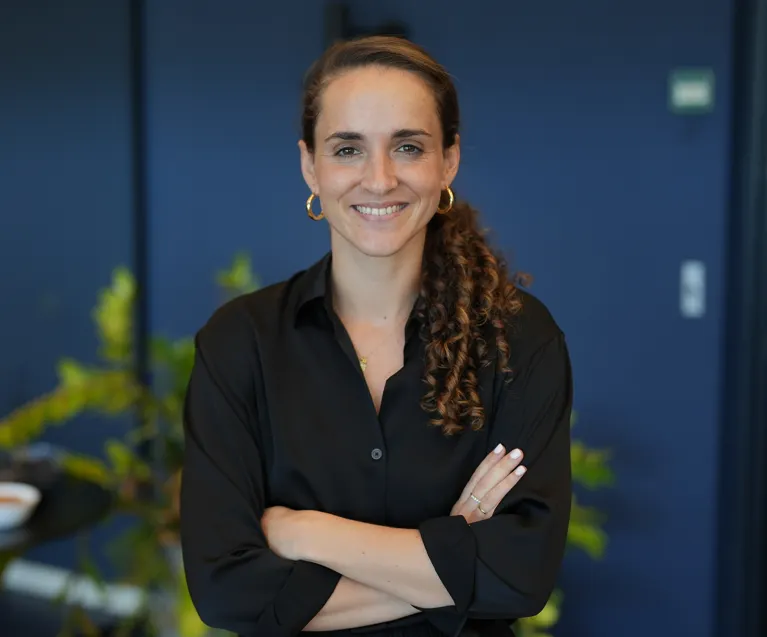
“In the early stages with antibody design or protein design, AI can shorten your development time from a year to maybe a few months. But this is not life-changing for the whole process. It's disappointing because the hope was taking development from one year to a week … that would be a big change. People adopted the technology, saw what it can do and thought it was incredible, right? So why is it still taking six months? The hope is that we will really shorten timelines to make it cheaper and faster.”
~Sharon Gour Arie, chief operating officer, AION Labs
It can’t create drugs from scratch

“We can start from a really good point with a sequence of a potential molecule for our antibody therapeutics, and then we can optimize it. If you start from a reasonably good sequence, you can get exceptional outcomes. What we have not seen with AI is going from scratch to a really good outcome. I think there's a lot of confusion about what generative means. If we start from a sequence and then we use AI to optimize it, then yes, it generates a new sequence. But that is not generative AI. So we can go from good to great. We still cannot go from nothing to great.”
~Marianne De Backer, CEO, Vir Biotechnology
Key word restrictions stymie research

“If we have the word Ebola in our Excel sheet, you can't use Claude anymore. It just dies … because it thinks you're trying to generate an Ebola bioweapon. There's no path right now to remove those restrictions. The model is built. Those restrictions are important, and I would argue that's the right initial move. And the reality is, we could be using these tools to help us design things like clinical trials and that would be phenomenal. But if we want to use AI in biomedical research, we have to use these large language models, and those restrictions would have to be fixed in the new models.”
~Jared Bauer, CEO, Seek Labs
AI implementation needs work

“To me the disappointing thing is not about AI, it's about how companies are implementing AI. The CEO says, ‘AI is awesome, I want everyone to use AI, and I want to see ROI.’ And then the company rolls out Copilot or Claude and staff are supposed to figure it out. That doesn't work because most people will do the same thing, which is summarize documents or write stuff. It can't be like trickle-down AI on everyone, and then it's going to work.
It’s better if you have a citizen developer … or a plan where the company puts people from all the different divisions in one room, and asks them to come up with use-cases for tasks that are challenging, laborious, take a lot of time or can easily be automated. Then you build the solution.”
~Tala Fakhouri, chief AI and regulatory strategy officer, Parexel
AI hasn’t unlocked the secrets of biology

“We know AI helps us work more quickly, more efficiently. There's nothing wrong with that because that's going to drive some benefit, maybe a productivity or an economic benefit. But I just feel that biology still has so many secrets. So how could we use the AI tools to help uncover some of those secrets? That's going to be the key to opening up novel ways to discover new drugs.”
~Lorna Ewart, chief scientific officer, Emulate
It’s getting in the way of big picture thinking

“I just finished reading Mustafa Suleyman's book called ‘The Coming Wave,’ and he was talking about the industrial revolution and how we thought it would improve our quality of life because the machinery would free up so much time that people would have a challenge figuring out what to do with their time. That didn't happen. It increased productivity but we're busier than ever. AI will take the load off stuff like writing reports, reading email, summarizing meetings … and we think we're going to have so much more time, but I think it's also creating the opposite situation.
There's a huge acceleration of information creation and proliferation across the board in our lives that AI helps enable. For example, there are tools that send all these automated emails. It creates a lot of noise, making it harder for me to find the real people to talk to. So I spend part of my day just filtering through the noise … and you can't step back and think big picture and get big ideas.”
~Svetlana Lucas, chief business officer, Scribe Therapeutics