Welcome to Biotech Spotlight, a series featuring companies creating breakthrough technologies and products. Today, we’re looking at Galimedix Therapeutics, which is taking a fresh approach to targeting amyloid in Alzheimer’s disease and beyond.
In focus with: Dr. Alexander Gebauer, co-founder and executive chairman at Galimedix.

Galimedix’s vision: Amyloid beta-targeting treatments for Alzheimer’s disease have divided scientists for years, with some arguing that the benefits of available drugs, including Leqembi and Kisunla, may not justify their risks.
With the so-called “amyloid hypothesis” in peril, many companies have shifted their focus to new targets such as tau or inflammation.
Galimedix, however, believes that amyloid still holds promise if executed another way. The biotech is betting that a new modality and earlier treatment will validate their approach.
The clinical-stage company is developing novel oral and topical small molecule therapies that target amyloid beta in Alzheimer’s disease and other conditions where amyloid is also believed to be a driver, including glaucoma and dry age-related macular degeneration.
Why it matters: After getting off to a sluggish start, sales for Eisai and Biogen’s Alzheimer’s drug Leqembi and Eli Lilly’s Kisunla are on the upswing.
Eisai maintains blockbuster ambitions for Leqembi with a sales target of nearly $900 million for this year.
Kisunla is currently trailing slightly in the market, pulling in $124 million in the first quarter of 2026, compared to Leqembi’s $168 million in sales. But that might not last: analysts have pegged Kisunla as a potential blockbuster down the road.
Still, the market for delivering more effective and safer treatments in Alzheimer’s remains vast.
“Amyloid beta is an interesting target, because there have been ups and downs,” Gebauer said. “I would say, it’s semi-validated.”
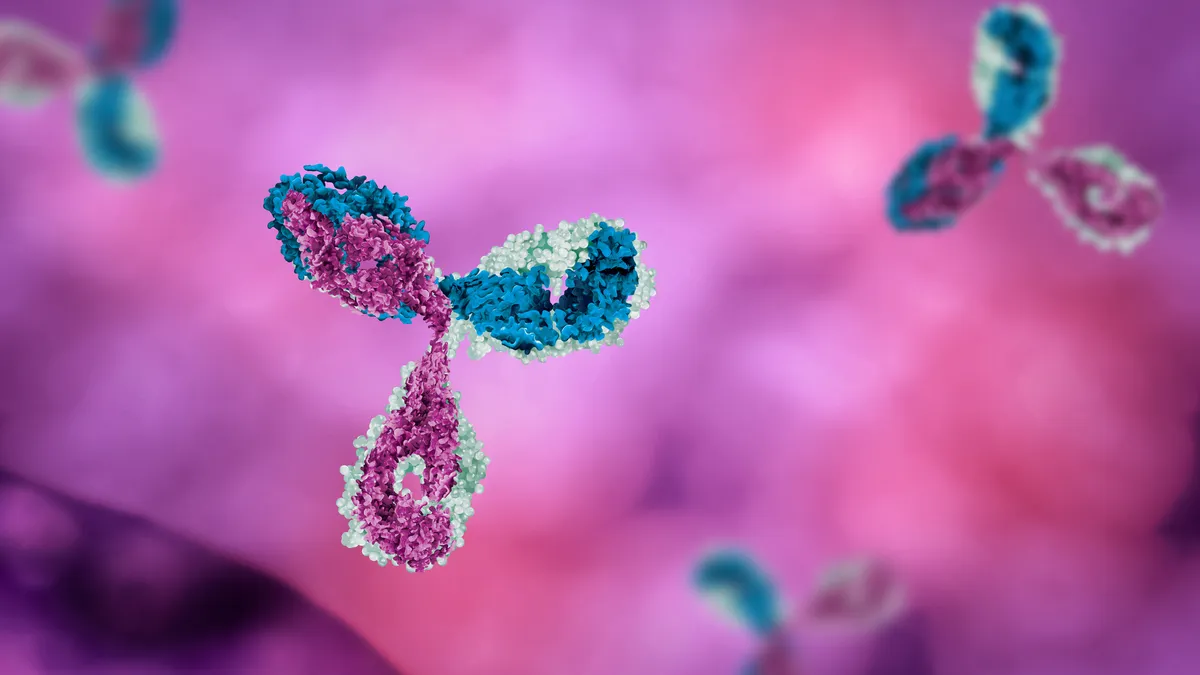
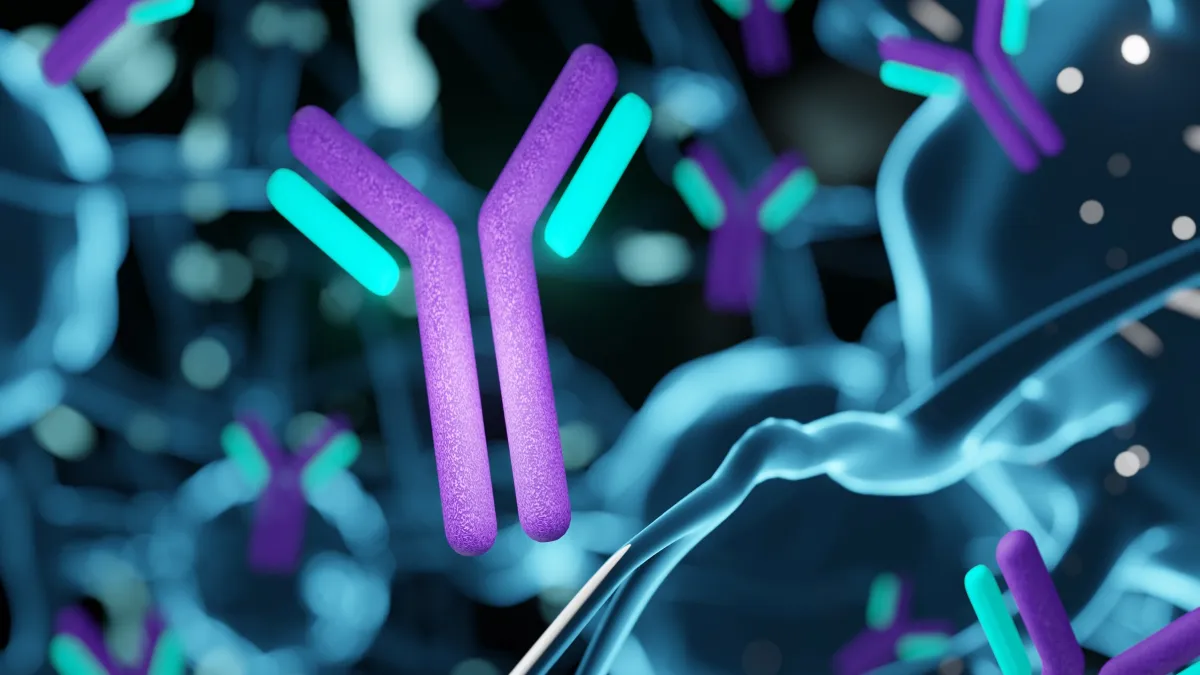
The approved amyloid drugs have demonstrated potential disease-modifying effects, but haven’t met their high market expectations for two reasons. The first is safety, he said. Leqembi and Kisunla both carry the risk of a serious condition called ARIA, marked by tiny bleeds and brain swelling. Gebauer believes this is a modality-specific problem.
“If you look at other modalities that also address amyloid, they don't have ARIAs,” he said.
Galimedix’s small-molecule treatment GAL-101, which is being tested as an oral treatment and an eye drop, could potentially reduce the risk of these side effects, while targeting amyloid earlier in the disease process.
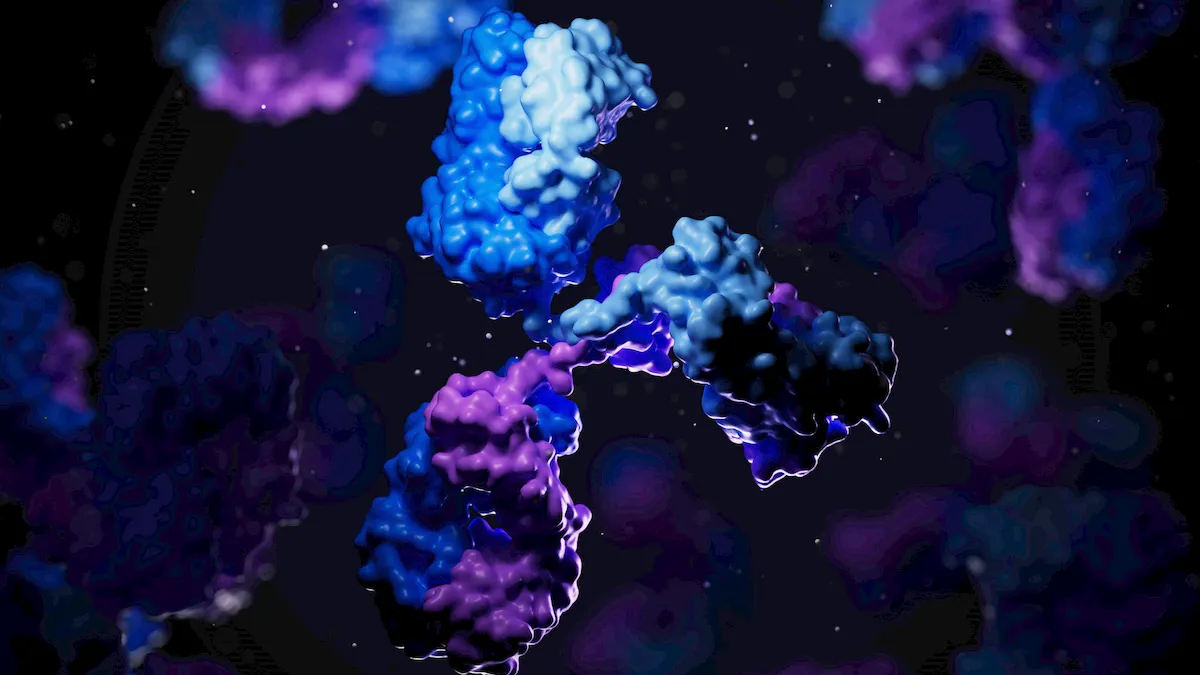
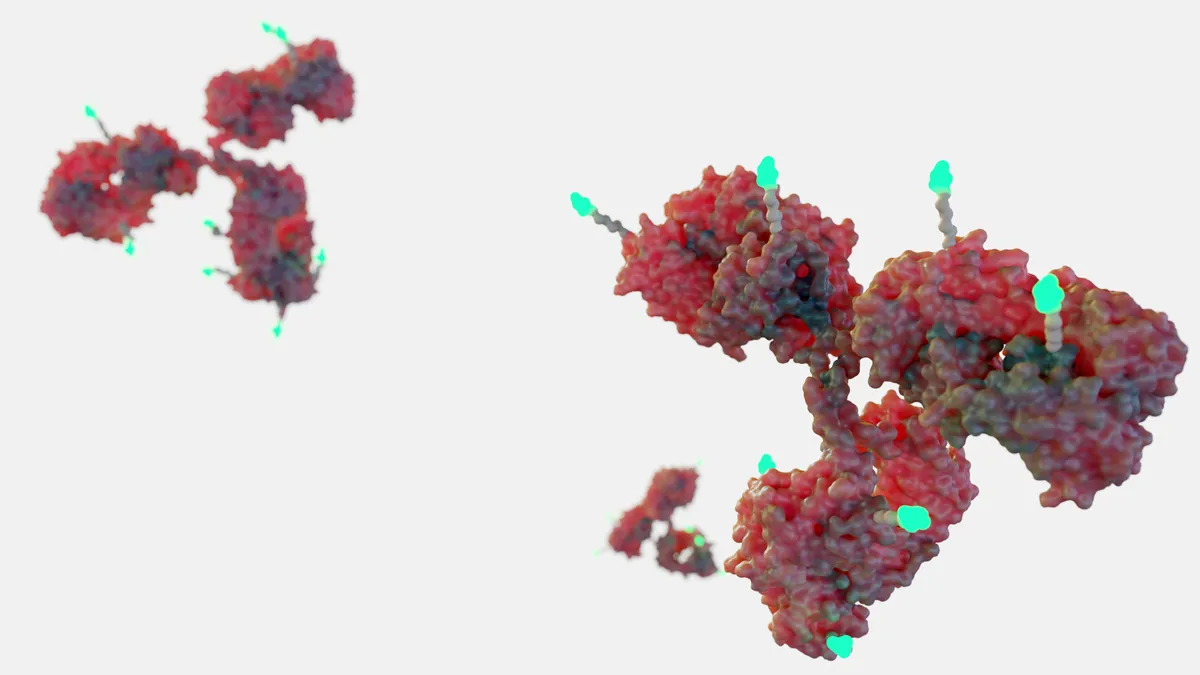
Many argue that current amyloid treatments have not been highly effective because they clear existing amyloid plaques, which have already affected brain neurons. Galimedix’s candidate instead is designed to disrupt their formation by targeting misfolded monomers, the first step in this toxic cascade, which could prevent the formation of neuron-damaging clumps.
“Imagine you have a stain on the inside of your glove. From the outside, you can’t address it, you need to turn the glove inside out, and then you can address it,” Gebauer said. “This is what our molecule does.”
By intervening earlier, the candidate could head off damage and potentially restore function by freeing neurons that are struggling under an amyloid attack, allowing them to start working again.
“Our aim is not only to slow down the disease progression …. we would also hope to see that we can roll back the disease process, at least to a certain extent,” he said.
Why eye diseases could validate the amyloid approach: Galimedix’s next step is proving the drug can accomplish what they hope in phase 2 with a candidate that strategically targets dry AMD. Unlike Alzheimer’s, where clinical outcomes are primarily determined with assessments such as questionnaires, eye disease progress can be measured with precise tools to validate the approach more quickly.
“We can look at small areas in the eye, in the retina, where the photoreceptors are under the attack [and] on the border of dying, and then we can analyze what the vision is in these areas before and after treatment,” Gebauer said.
If those stressed photoreceptors regain function, it would offer more concrete and rapid proof for the technology — potentially in as few as 50 patients, Gebauer explained.. Still, he noted that there would be more work to do: documenting this effect wouldn’t guarantee that the approach would also work in the brain, just support the theory that it could.
Galimedix expects to complete enrollment in the eDREAM phase 2 trial in dry AMD around the end of this year and anticipates a readout in 2028, according to a company spokesperson.
Despite the long-running hurdles with amyloid-target treatments, many companies have been open to discussing partnerships about its candidates in the Alzheimer’s and retinal disease space. Fundraising remains a challenge for Galimedix and its competitors, Gebauer said, but the company has a cash runway of at least two years to continue advancing its mid-stage work. The success of its programs in phase 1, which is often the “graveyard” of oral treatments, has also given Galimedix momentum, he noted.
Whether Galimedix can ultimately succeed in developing treatments that become a “new center of care” depends on the biotech succeeding where previous amyloid drugs have fallen short.
“We believe that amyloid antibodies are targeting the right target, but in a non-optimal way,” Gebauer said. “And we hope that we are targeting the right target in the optimal way.”