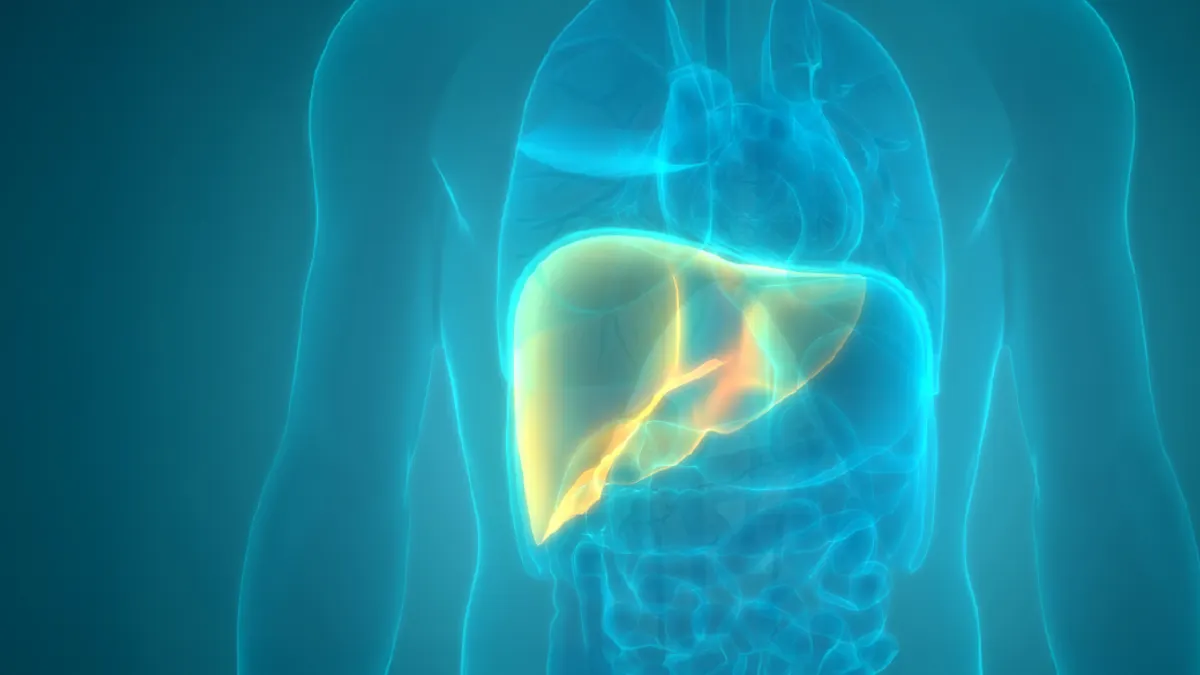

Obesity-linked chronic diseases, including metabolic dysfunction-associated steatotic liver disease (MASLD), type 2 diabetes and cardiovascular disease, are surging globally. Developing earlier interventions for these conditions is widely agreed upon as the most compelling path forward. But from a developer’s perspective, it is also the most narrow and perilous.1 Historically, uncertainty around who should receive disease-specific early interventions has made early intervention clinical trials infeasible. However, the feasibility of early-intervention trials is beginning to shift as multi-parameter risk-prediction models support prescreening of eligible patients.2,3
MASLD illustrates the shifting calculus of early intervention trials. As the leading chronic liver disease, affecting roughly one-quarter of adults globally, a disease-intercepting therapy could have profound impact.4,5 Early identification of patients with biologically active disease and fibrotic risk is critical for effective intervention, because fibrosis stage is a strong predictor of liver-related outcomes, including metabolic dysfunction-associated steatohepatitis, clinically significant fibrosis, cardiovascular disease and hepatocellular carcinoma. However, development of disease-specific interventions remains challenged by incomplete disease biology and by reliance on liver biopsy, which is invasive, prone to variability, poorly scalable for screening and insensitive to dynamic early-stage change. After decades of program failures, the first disease-specific MASLD approval occurred only recently, in 2024.6
Advances in multi-parameter risk-prediction models, driven by machine learning, are enabling more sensitive and specific MASLD prognosis by synthesizing imaging features, laboratory values and clinical variables.7 These algorithms complement established stepwise pathways such as simple blood-based scores to rule out advanced fibrosis in lower-risk settings and imaging to confirm fibrosis risk and prioritize referral. The most useful algorithms will distinguish liver fat detection from fibrosis staging and outcome prediction, because reduction in liver fat alone is not equivalent to prevention of liver-related events.
The shift toward multi-parameter risk prediction is now reinforced by 2026 clinical practice guidelines for Cardiovascular-Kidney-Metabolic (CKM) syndrome.8 The guidelines endorse the use of PREVENT (Predicting Risk of Cardiovascular Disease EVENTs) equations to guide early primary prevention including for patients at risk for metabolic liver diseases. Standardizing these multi-organ risk thresholds allows developers to move beyond a narrow, single-organ focus and efficiently screen for patients in the earliest, asymptomatic stages of CKM syndrome progression.8,9
Prescreening studies can help integrate these risk-prediction models into clinical development, mitigating the risk of high screen-failure rates that can come from implementing risk-based trial eligibility, particularly when eligible patients are asymptomatic. In a prescreening protocol, low‑burden biospecimen collection and risk assessment are separated from the main interventional study, so sponsors can efficiently find the subset of individuals who are biologically high‑risk or in asymptomatic stages of disease. Biomarker-characterized cohorts can then be funneled into interventional trials as they open, accelerating enrollment of those most likely to benefit from early intervention.
One possible prototype for this approach is the ALIGN study (All-Liver Interventional Global Network), the first described multi-center global observational screening study aimed specifically at identifying individuals with a high likelihood of MASLD/metabolic dysfunction-associated steatohepatitis (MASH) who are interested in participating in therapeutic trials.3 To efficiently find asymptomatic, high-risk individuals, ALIGN utilizes noninvasive methodologies, such as vibration-controlled transient elastography (FibroScan), to measure liver stiffness and steatosis combined with routine liver function tests.3 ALIGN also pairs noninvasive imaging with targeted genetic testing for known disease-modifying variants, such as the PNPLA3 I148M mutation, which drives progressive liver disease independent of traditional metabolic syndrome features.3
Beyond operational trial efficiency, large-scale observational prescreening trials serve a scientific purpose: characterizing the phenotypic, genetic and familial attributes associated with complex metabolic disease. By capturing comprehensive real-world data, observing familial medical histories and tracking genetic variants across diverse demographics, observational cohorts generate the foundational evidence required to understand distinct biological trajectories of complex disease. This understanding is essential for increasing the precision of therapeutic discovery and clinical development in future trials.
While prescreening optimizes trial architecture, developers must recognize that highly selective designs can create significant barriers post-approval. If an early-intervention therapy secures regulatory approval based on burdensome screening criteria, providers may be unable to identify appropriate patients in routine practice, leading to unsustainably low adoption rates. To forecast a realistic return on investment, developers must account for real-world diagnostic accessibility and prioritize scalable screening modalities that can be embedded into primary care pathways rather than relying on specialist hepatology clinics. Ultimately, by adopting more sensitive and accessible prescreening methodologies during clinical development, developers play a central role in transitioning metabolic medicine toward intercepting progressive disease before irreversible fibrosis, cirrhosis or liver-related complications occur.
References
- Franks PW, Suliman SGI, Timpson NJ, Langenberg C, le Roux CW. Data-Driven Decision Support in Obesity Management Commission: enabling more equitable and personalized obesity care. Nat Med. Published online May 12, 2026:1-3. doi:10.1038/s41591-026-04363-0
- Coral DE, Smit F, Farzaneh A, et al. Subclassification of obesity for precision prediction of cardiometabolic diseases. Nat Med. 2025;31(2):534-543. doi:10.1038/s41591-024-03299-7
- Daniels SJ, Nelander K, Eriksson J, et al. Design and rationale for a global novel non-invasive screening observational study using genetics and non-invasive methodologies to identify at-risk MASLD participants: The ALIGN study. Contemp Clin Trials Commun. 2025;44:101437. doi:10.1016/j.conctc.2025.101437
- Khare, Tripti, Karina Liu, Lindiwe Oslee Chilambe and Sharad Khare. 2025. “NAFLD and NAFLD Related HCC: Emerging Treatments and Clinical Trials.” International Journal of Molecular Sciences 26 (1): 306. https://doi.org/10.3390/ijms26010306.
- Petroni, Maria Letizia, Federica Perazza and Giulio Marchesini. 2024. “Breakthrough in the Treatment of Metabolic Associated Steatotic Liver Disease: Is It All Over?” Digestive and Liver Disease 56 (9): 1442–51. https://doi.org/10.1016/j.dld.2024.04.021.
- Meyre, Pascal B., Stefanie Aeschbacher, Steffen Blum, et al. 2025. “Biomarker Panels for Improved Risk Prediction and Enhanced Biological Insights in Patients with Atrial Fibrillation.” Nature Communications 16 (1): 7042. https://doi.org/10.1038/s41467-025-62218-7.
- Aggarwal, Pankaj and Naim Alkhouri. 2021. “Artificial Intelligence in Nonalcoholic Fatty Liver Disease: A New Frontier in Diagnosis and Treatment.” Clinical Liver Disease 17 (6): 392–97. https://doi.org/10.1002/cld.1071.
- Ndumele CE, Rodriguez F, Dixon DL, Khan SS, Mukherjee D, et al. 2026 AHA/ACC/ADA/ASN Guideline for the Prevention, Detection, Evaluation and Management of Cardiovascular-Kidney-Metabolic Syndrome: A Report of the American College of Cardiology/American Heart Association Joint Committee on Clinical Practice Guidelines. J Am Coll Cardiol. 2026;87(225):e1889-e2007. doi:10.1016/j.jacc.2026.03.056.
- Khan SS, Bhave N, Blumenthal RS, Coresh J, Huang X, Joseph JJ, et al. Use of Predicted Risk and Expected Benefit to Guide Decision-Making in Cardiovascular-Kidney-Metabolic Syndrome for the Primary Prevention of Cardiovascular Disease: A Scientific Statement From the American Heart Association and American College of Cardiology. J Am Coll Cardiol. 2026. doi:10.1016/j.jacc.2026.05.007.