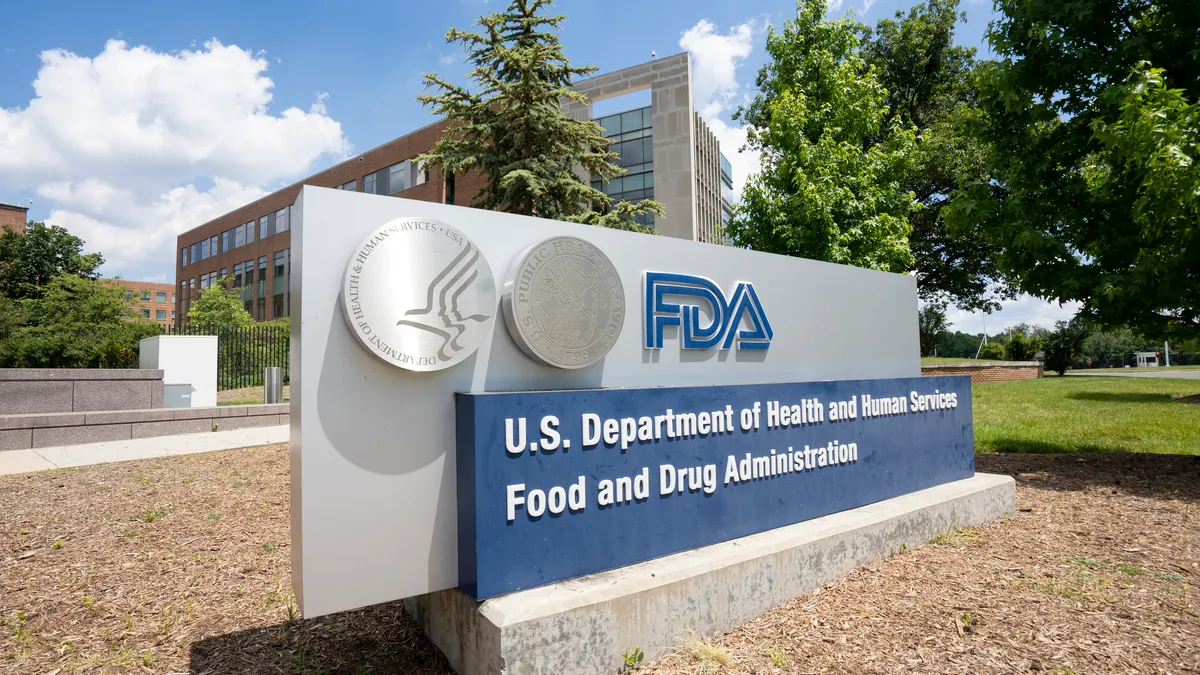
After a three-month pause, the FDA is once again issuing complete response letters, despite lingering questions about whether the letters are even legal to release.
The FDA’s reasons for rejecting a drug are typically communicated to the public through pharma companies. But the FDA began publishing troves of CRLs last year as part of its push for “radical transparency.”
Earlier CRL dumps revealed key information about high-profile rejections, including the FDA’s insistence on a placebo-controlled study arm for Regenxbio’s Hunter syndrome gene therapy, and discrepancies between what Corcept Therapeutics told investors about its Cushing’s syndrome drug rejection and what the FDA actually said.
In contrast, this latest batch of 14 CRLs, released July 10, mostly cite product quality and facilities deficiencies. Only three point to clinical issues, according to an analysis by Citeline’s Pink Sheet. Some, like the letter to Grace Therapeutics rejecting its injectable nimodipine for aneurysmal subarachnoid hemorrhage, are so heavily redacted that entire sections are unreadable.
The release came just days after the FDA confirmed a pause in its “radical transparency” plans, which were challenged when an unnamed pharma company filed a citizen’s petition against the practice, according to multiple reports. Meanwhile, the FDA has proposed a new rule that would “eliminate the longstanding presumption that the mere existence of a marketing application constitutes confidential commercial information.”
Here’s a look at what two recent letters among the newest batch of released CRLs revealed about the FDA’s denial reasoning.
Clinical issues: Ascelia Pharma’s MRI contrast drug
Details were scant when Ascelia Pharma first reported this month that the FDA declined to approve its oral MRI contrast agent Orviglance, saying only that the agency requested additional clinical data and product documentation.
But days after the FDA uploaded Ascelia’s CRL, the company issued an “update” containing more specific information about the rejection, as well as responses and clarifications around some of the agency’s concerns.
Orviglance is a novel, oral MRI contrast agent that aims to improve focal liver lesion detection and visualization in patients with severe kidney impairment.
In the CRL, the FDA took issue with how the radiologist readers evaluated the study images. After one set of readers didn’t find that Orviglance had superior efficacy, Ascelia tried again with a new image reading process and three new readers. According to the FDA, the re-evaluation “may have introduced bias in the training of the new readers due to knowledge of the images and initial read results.” Because of this and other factors, the FDA said the re-evaluation wasn’t considered adequate and well-controlled.
Ascelia counters these claims, saying that the new readers were independent, blinded and had “no prior knowledge” of the images or prior reading results.
In addition, the company said that not only was the image re-read conducted under predefined procedures, but that they discussed the new approach with the FDA and incorporated the agency’s feedback into the NDA submission.
Ascelia said it plans to work with the FDA to “identify an expedited path forward.”
Facility problems: Galderma’s Botox competitor
Facility-related issues were at the heart of the FDA’s rejection of Galderma’s RelabotulinumtoxinA, a Botox competitor that’s already approved in 33 markets and launched in more than 20, including the European Union, where it's marketed as Relfydess.
Although the FDA published the CRL, it contained few specifics about the rejection, only that the FDA “conveyed deficiencies” about the facility after a pre-license inspection. Most other details were redacted.
Galderma’s own announcement earlier this month about receiving the CRL contained more information, including that the FDA cited concerns about “analytical method optimization.” It noted that none of the FDA’s concerns were safety- and efficacy-related.
Shares of Galderma fell nearly 6% after the company announced the rejection. But the company noted that its struggles with the FDA wouldn’t affect its work in other markets, saying that “regulatory filings in other territories are ongoing and remain on track.” It also noted that since 2022, the particular manufacturing site at issue “has completed 10 inspections from key regulatory authorities from around the world serving as the basis for international Relfydess launches.”
This was Galderma’s second stab at U.S. approval for the drug. Chemistry, manufacturing and controls issues were behind the 2023 rejection, too. Now, the company says it is putting corrective and preventive actions into place and moving quickly to address the FDA’s inspection observations.