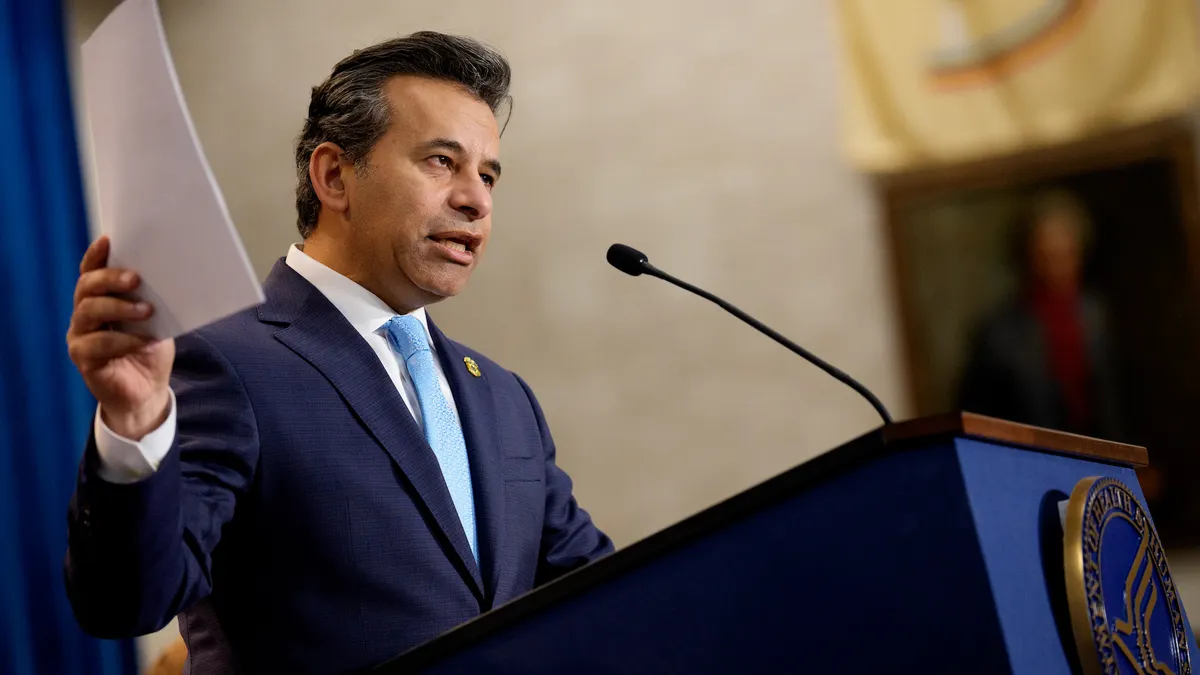
It’s been over two months since Dr. Marty Makary stepped down from his post as FDA commissioner, and there has yet to be visible progress toward naming his permanent successor. The gap in leadership is sparking concerns among industry watchdogs that pharma could lack clear guidance on federal priorities for weeks or months to come.
The FDA has endured long stretches without confirmed leaders before — including a 22-month period under former President George W. Bush and a 13-month leadership gap under former President Joe Biden. As a result, acting commissioners, who do not require Senate approval, have become increasingly common, with some serving for over a year.
But just because pharma stakeholders have become more accustomed to working alongside acting commissioners doesn’t mean they’re enthusiastic about it.
Multiple sources told PharmaVoice the industry remains wary of long gaps between confirmed commissioners, noting that policy can feel tenuous under their reign and it’s difficult to make long-term plans.
“Transition delays and really, any uncertainty in leadership, are not good for the industry and not good for the public,” said Genevieve Kanter, economist and associate professor of public policy at the University of Southern California. “Companies will slow down their pipeline, delay their trials and delay their submissions until they get more stability and clarity in terms of policy.”
Waiting game
The Trump administration has yet to name a nominee to replace acting commissioner Kyle Diamantas — and there are currently multiple hurdles in front of any confirmation process. In particular, the Senate isn’t going to be around much in the coming months.
“There are fewer than 30 legislative days between now and the election, during which either or both chambers will be in session, leaving a narrow window for Congress to advance items not already in process, let alone consider a nominee to lead a federal agency as significant as the FDA,” said Jordan Brossi, senior public affairs advisor at Holland & Knight.
There’s also extensive disagreement among lawmakers about what the next candidate should look like, Brossi said.
But the ideal nominee would have a background in regulations and a proven track record of scientific achievement to preserve trust in the agency’s credentials, Kanter said.
“On my wish list is someone who has had FDA experience, has a commitment to science and the science policy process, is really, really good with people, and can manage absurd levels of unpredictability,” Kanter said.
So far, a few options have been floated for who might lead the agency, including former Commissioner Dr. Stephen Hahn, former senior health official Brett Giroir, and Dr. Heidi Overton, who’s currently serving in the Trump administration as a domestic policy advisor focused on healthcare. Hahn and Giroir would likely be viewed as reassuring choices by much of the pharmaceutical industry, given their regulatory experience and reputations for supporting a science-based review process.
Overton, by contrast, is more of a wild card with a smaller footprint in pharma’s regulatory world, leaving industry and lawmakers to look for signals about how closely she would align with the White House's health agenda versus the FDA's traditional independence.
Any nominee will face a long road to confirmation, including a pre-nomination process, staff review by the Senate Health, Education, Labor and Pensions Committee, and a full chamber vote for approval. That process — which in the best of times typically takes two or more months — is further complicated by the Senate only working for a handful of weeks between August and September.
Midterms are also on the horizon, which could make the confirmation process even more difficult, according to Brossi.
Diamantas has been popular in part because of his legal chops but also because his brief tenure has been stable, especially relative to Makary, whose turbulent time as commissioner was marred by high turnover and concerns of political influence on regulatory decisions.
Both Kanter and Brossi suggested that lawmakers might prefer to put off a contentious nomination process and preserve relative peace at the FDA until they’ve secured re-election — especially if the nominee is inexperienced. And if the Senate does not confirm a nominee during its short session post-midterms, the president will have to wait until next year to submit a nomination.
Policy in flux
The lack of a Senate-confirmed FDA leader creates ongoing uncertainty for the agency. Acting officials may be able to manage day-to-day operations, but they often have less authority to make major strategic shifts or commit the agency to durable policy changes, analysts said. While Diamantas has experience at the agency, his potentially short-term tenure leaves doubts about what policies will last and which may be reconsidered upon his replacement.
“The big question is whether the policies launched during the Makary regime will stick around,” Kanter said.
That uncertainty matters because confidence in the FDA depends not only on the quality of individual decisions but on whether companies, researchers and patients believe the agency is applying predictable, science-based standards, according to Kanter.
Recent debates over regulatory reversals, leadership turnover and the influence of political priorities have intensified concerns about whether the FDA can maintain independence and consistency. In recent polls, trust in the agency is at a near record low.
For biopharmaceutical companies, uncertainty around evidentiary expectations, trial designs or review standards can affect investment decisions well before a product reaches regulators.
Whoever lands in the role next will have a full plate with several major items to tackle, including reauthorization of the user fee program that supplements funding for work at the agency.
“The stakes for the FDA are high,” Brossi said. “The user fee act processes are considered must-pass, given the significant ramifications for both the FDA and regulated industries should authority to collect user fees expire.”