After GSK’s Lymerix, the only Lyme disease vaccine ever approved, was pulled from the market in 2002 amid a safety controversy, the field went dark and then stalled for more than two decades.
Now, Pfizer and Valneva are advancing a new candidate to prevent the tick-borne illness. But will mixed trial data lead to a win or set the market back once again?
The companies announced plans to seek approval for their investigational 6-valent OspA-based Lyme disease vaccine last week, despite missing its primary endpoint in a late-stage trial. While the trial showed that the vaccine prevented Lyme disease compared to a placebo, not enough participants contracted the bacterial infection during the study for the results to hit the designated statistical benchmark.
Even so, Pfizer and Valneva believe they have sufficient data for an FDA nod.
“The efficacy shown in the VALOR study of more than 70% is highly encouraging and creates confidence in the vaccine’s potential to protect against this disease that can be debilitating,” said Annaliesa Anderson, Pfizer’s senior vice president and chief vaccines officer, in a written statement.
A win with this vaccine could bolster Pfizer’s drug portfolio as it loses exclusivity on blockbuster drugs such as Ibrance and sees slowing sales for its COVID-19 products. The company is staring down a $21 billion revenue gap in the coming years, according to Evaluate. Although a Lyme disease vaccine won’t reach the astronomical heights of Pfizer’s COVID-19 shot, it could achieve $1 billion in annual sales at its peak, according to analysts.
An elusive target
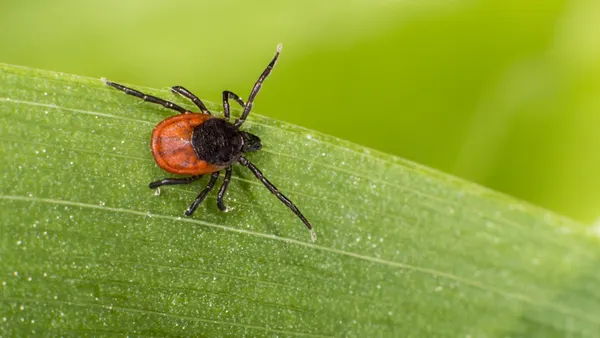
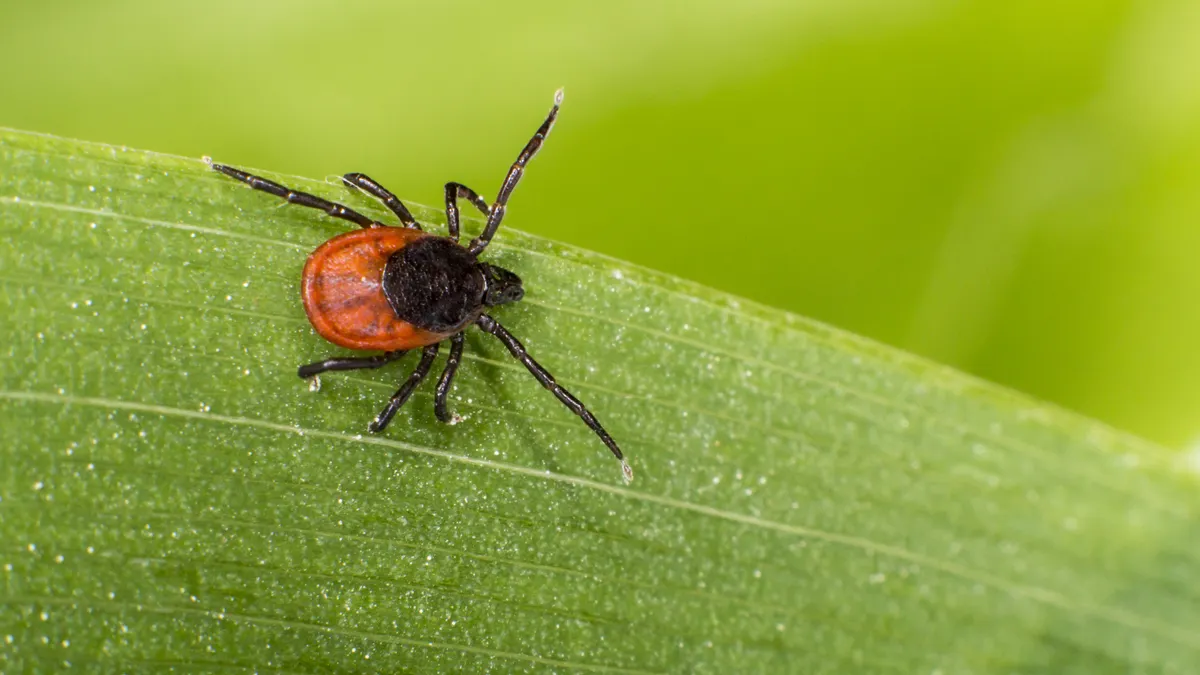
Companies have pursued a vaccine that prevents the tick-borne illness, which is caused by Borrelia bacteria, for years. Lyme disease is marked by a broad constellation of symptoms such as fever, chills, joint and muscle pain, and a signature bullseye rash. When it’s caught early, the condition is treatable with antibiotics — if not, the effects can become severe and include heart problems, fatigue, neurological symptoms, arthritis and more.
When GSK successfully brought Lymerix to market in 1998, the approval marked a potential turning point for treating the disease, which was first recognized in a cluster of Connecticut children in the 1970s.
But the vaccine had several strikes against it at the outset, including a burdensome three-dose schedule, efficacy that hovered below 80%, and the potential need for an annual booster shot, according to an editorial in Epidemiology and Infection. Lymerix also wasn’t tested in children, narrowing its reach, and was only effective against one strain of Lyme-causing bacteria, which limited its utility outside of North America.
However, it was a controversy over safety that ultimately doomed the vaccine. Many patients claimed that they were harmed by the shot, including some who developed a form of arthritis after vaccination. While the company and the FDA stood by the shot’s safety after conducting investigations, Lymerix never overcame the bad publicity, and sales collapsed. GSK pulled it from the market after just three years.
Building on the earlier model
The Pfizer shot has key differences from Lymerix. Like Lymerix, the vaccine also targets a protein on the surface of Borrelia burgdorferi, but it’s designed to offer coverage against six strains of the bacteria. It could also target a broader patient pool because it was tested in children.
However, it’s still likely to face regulatory hurdles.
U.S. health agencies have recently shown increasing scrutiny of vaccines with Robert F. Kennedy Jr. at the helm of HHS. Agency leaders have shown particular antagonism toward mRNA technology. In February, the FDA initially refused to review Moderna’s mRNA-based flu vaccine application, citing flaws in its study design. The agency later reversed course and accepted a revised application.
The CDC’s reconfigured vaccine advisory committee has also rendered several controversial decisions, including changes to the childhood immunization schedule and recommendations for the hepatitis B shot.
Other options on the horizon
Pfizer isn’t the only company at work in the Lyme disease space, and some leading contenders are developing pre-exposure prophylaxis treatments rather than vaccines.
Tonix Pharmaceuticals is testing a PrEP treatment, TNX-4800 that would be given annually to protect recipients throughout tick season, and potentially up to a year. The monoclonal antibody targets a surface protein on the bacteria like the Pfizer shot, although it uses a different mechanism. If a tick bites a treated person, their blood, containing TNX-4800, kills the bacteria inside the creature’s gut to prevent transmission. Tarsus Pharmaceuticals is also testing an investigational, on-demand Lyme disease oral prophylactic, TP-05, which could be taken before visiting a high-risk location. The prophylactic treatment, which is in mid-stage trials, sends an antiparasitic circulating through the blood that will kill a tick before it can transmit the infection.
But vaccine developers are also in the hunt. Moderna has two mRNA Lyme vaccines, mRNA-1975 and mRNA-1982, in early clinical development. The future of Moderna’s pipeline, however, is in question amid the tense regulatory environment.
Moderna CEO Stephane Bancel already said the company will no longer invest in new late-stage vaccine trials due to growing vaccine skepticism within HHS. Instead, companies like Moderna might pivot toward less controversial treatment indications for mRNA.
If the Pfizer vaccine fails, it could provide another reason for drug companies to avoid the vaccine space all together. And Pfizer’s Lyme vaccine represents a test case in an area with rising stakes. Lyme disease is rapidly spreading into new regions, adding new urgency to the search for effective prevention strategies.