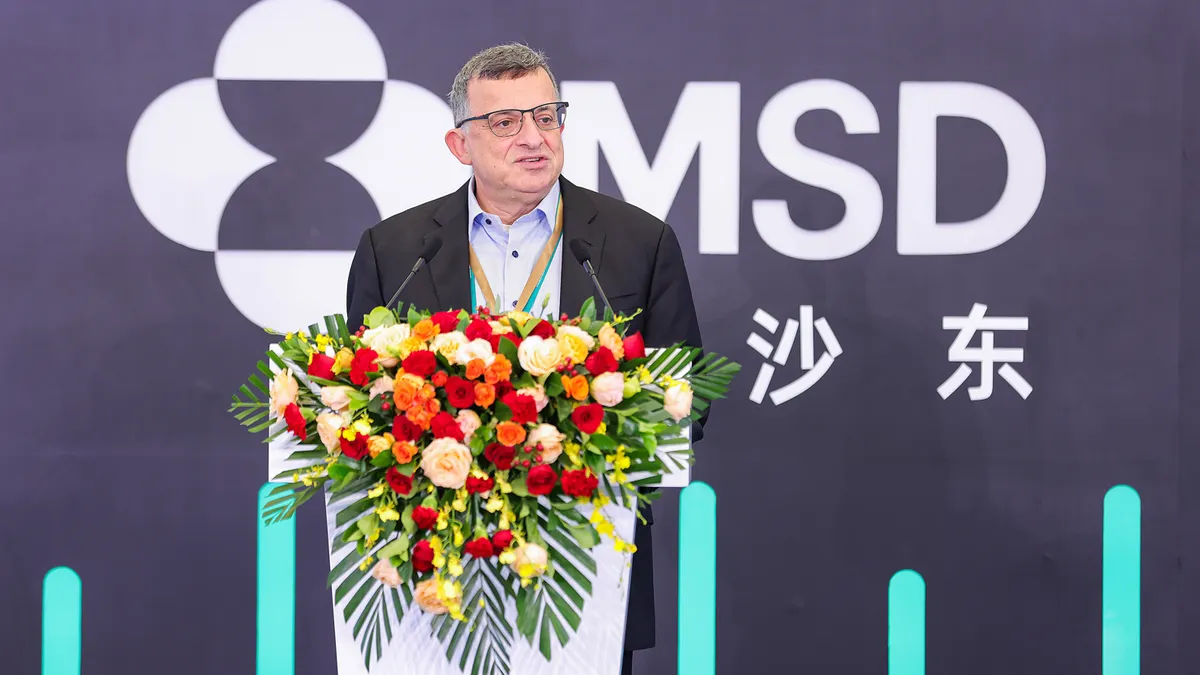
Success in women’s oncology isn’t just about buying patients more time but making those added months or years feel as close to normal as possible, according to Dr. Shweta Jain, vice president of global clinical development at Merck. “Can you improve the outcomes without adding a significant toxicity burden on the patients?” she said.
For women’s cancers, Merck hopes to show the answer is “yes” through trials combining antibody-drug conjugates with its blockbuster immunotherapy, Keytruda.
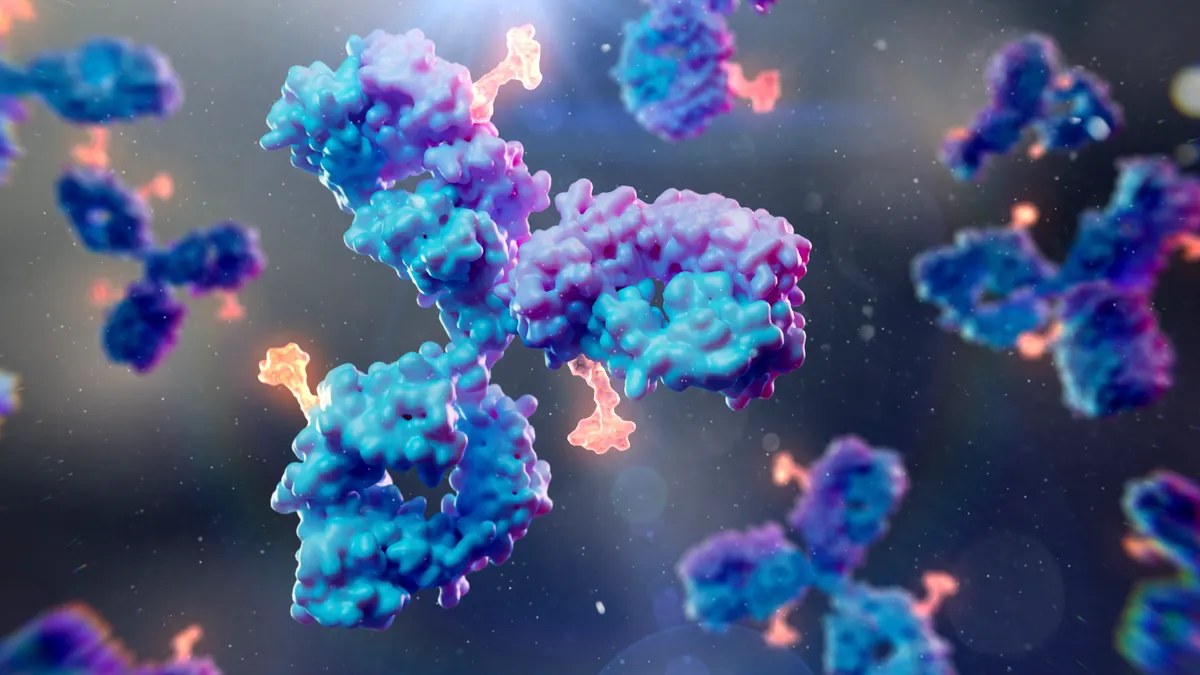
Interest in ADCs has risen with the success of drugs like Daiichi Sankyo and AstraZeneca’s Enhertu. Merck has invested heavily in this drug class, sometimes described as “smart chemotherapy” because ADCs pair a tumor-targeting antibody with a potent drug payload that mostly hits cancerous cells while limiting effects on healthy tissue. It’s testing its ADCs alone and in combination with Keytruda across breast cancer and several gynecologic cancers, including endometrial, ovarian and cervical cancer.
“Our aim is to essentially see how you could replace chemotherapy, how you could partner with Keytruda to ultimately make the regimens even more efficacious and continue to improve the tolerability profile,” Jain said.
The drugmaker is under pressure to deliver new drugs as Keytruda, which makes up nearly half of the company’s overall sales, faces loss of exclusivity and rising biosimilar competition. Merck is running more than 20 clinical trials in breast and gynecologic cancers involving nearly 20,000 patients worldwide. But it is facing competition from companies like AstraZeneca, which is looking to expand indications for Enhertu and another ADC, Datroway. Gilead is also testing Trodelvy for new indications in endometrial and ovarian cancer.
Tackling challenging women’s cancers
Merck’s lead investigational ADC drug in women’s oncology is sacituzumab tirumotecan, which targets Trop2, a protein involved in cell growth.
“Broadly speaking, we have 17 phase 3 studies that we have set up across different tumor types,” Jain said. These include trials targeting lung, digestive and genitourinary cancers. “Within the women’s cancer division, we have studies exploring sac-TMT as monotherapy and in combination in endometrial cancer, ovarian cancer, cervical cancer, hormone-positive breast and triple-negative breast cancer.”
The drug recently met both primary endpoints in a phase 3 trial, significantly improving overall and progression-free survival in patients with advanced or recurrent endometrial cancer whose illness had progressed after treatment with chemotherapy and immunotherapy.
“Endometrial is particularly underserved,” Jain said. It’s one of only a few cancers that has a rising mortality rate, and it disproportionately affects Black women who die at twice the rate of white women, according to the American Cancer Society. Merck plans to share additional data from that trial this year or next year.
Precision approaches to cancer
Sac-TMT is part of a broader women’s oncology pipeline that also includes ifinatamab deruxtecan and patritumab deruxtecan, which are being tested in breast, cervical, endometrial and ovarian cancers. Raludotatug deruxtecan, which Merck is developing with Daiichi Sankyo, is in the phase 3 portion of a phase 2/3 ovarian cancer study and a phase 2 study that includes endometrial and cervical cancers.
Keytruda is also a backbone of this program. “With antibody drug conjugates, combining them with immuno-oncology therapies makes sense,” Jain said. “That’s what we are going to explore with our antibody drug conjugate platform.”
As oncology increasingly moves toward targeted strategies, Merck is applying new diagnostic tools to determine which patients will most benefit from a given therapy and the right therapeutic window, Jain said. “That has become more and more the focus as we set up our development programs within women’s cancer. It’s not just about defining who responds, but it’s also about correctly identifying the right therapeutic window,” she said.
If Merck can deliver in women’s cancers, there is substantial commercial opportunity. PwC estimates that the broader female-specific oncology market — including therapeutics, devices and diagnostics, and care delivery — could reach $100 billion to $110 billion by 2030. At the same time, unmet need remains substantial, with gynecologic cancers causing more than 600,000 deaths globally in 2024.
“I think broadly speaking, we are going to advance our portfolio, continue to focus again in women’s cancer, where we’ve understood what the disease biology is and how it can be responsive to different types of pathways,” Jain said.