Orbiting about 250 miles above Earth, the International Space Station has long provided a lab for medical R&D in microgravity. That unique environment also created the breeding ground for one of the industry’s most notable research achievements in space: Merck & Co.’s FDA nod last year for a new formulation of its powerhouse drug Keytruda.

For over 10 years, Merck studied protein crystal growth on the space station, according to NASA, which paved the way to understanding how crystalline suspensions dissolve in liquid. The breakthrough helped Merck develop the subcutaneous version of Keytruda that offers patients an easier delivery method, while providing the company with a new revenue stream of its best-selling drug as it faces numerous patent cliffs.
“This focus on reformulation has opened up brand new vistas for pharma companies,” said Michael Roberts, chief scientific officer at the ISS National Laboratory.
As a test kitchen for scientific research, the ISS has played host to a wide range of pharma R&D, including studies into organoids for drug therapy applications.
But for many technical reasons, the ISS’ life spent spinning around the Earth the last 20-plus years is drawing to a close as NASA plans to bring the station down sometime around 2030.
What does that mean for the future of drug research in space?
Launching science into space
Although not officially a part of NASA, the ISS National Lab works closely with the agency to facilitate research at the station.
Since 2011, the laboratory has helped set the stage for over 250 research projects for companies across various industries including Eli Lilly, Sanofi and Merck.
Funding for the station comes from NASA’s budget while various government partners, including the Department of Defense, chip in to support different studies in its lab. And if a pharma company wants help getting its research into space, that’s where the ISS National Lab comes in.
Along with providing taxpayer-funded transportation to researchers if the science fits the agency’s mission for “visionary” science, the ISS National Lab can also connect pharma companies of all sizes with other space service providers.
In recent years, pharma has increasingly focused on improving drug targeting and delivery, advanced tissue and disease modeling and researching nanoparticles.
“As more pharma companies have become space aware and have a better understanding of the opportunities, they’ve been coming to us … so we can facilitate conversations that support launch services,” Roberts said.
Inquiries about microgravity research from pharma have ticked up slightly in recent years, Roberts said. But even though the price tag for flying to the ISS has dropped, the adventure can still be “prohibitively expensive” even for large pharma companies, costing between $250,000 to over $500,000 per individual experiment or launch.
“There are logistical issues that still prohibit widespread adoption of space research, but certainly the level of interest has continued to increase since we’ve been in the space community,” Roberts said.
The fate of drug R&D in space, however, is now hanging in the balance.
The next era of microgravity drug R&D
Although NASA is still years from deorbiting the ISS, recent budget cuts have already taken a toll on the ISS National Lab.
ISS National Lab heralded a “landmark year” for R&D successes in its 2025 annual report, including a record-setting 13 patents and six products that were identified through its low Earth orbit research. But the agency also lamented “considerable challenges” to its budget, which Roberts said forced ISS National Lab to cut almost 40% of its staff.
“Science is experiencing challenging times right now, and NASA is no different,” Roberts explained. “But we’re at our limit. If we lose any more, we’re going to just be record-keeping.”
While the agency awaits clarity around its future budget, a wave of startups is giving rise to a new low Earth orbit economy that could take its place.
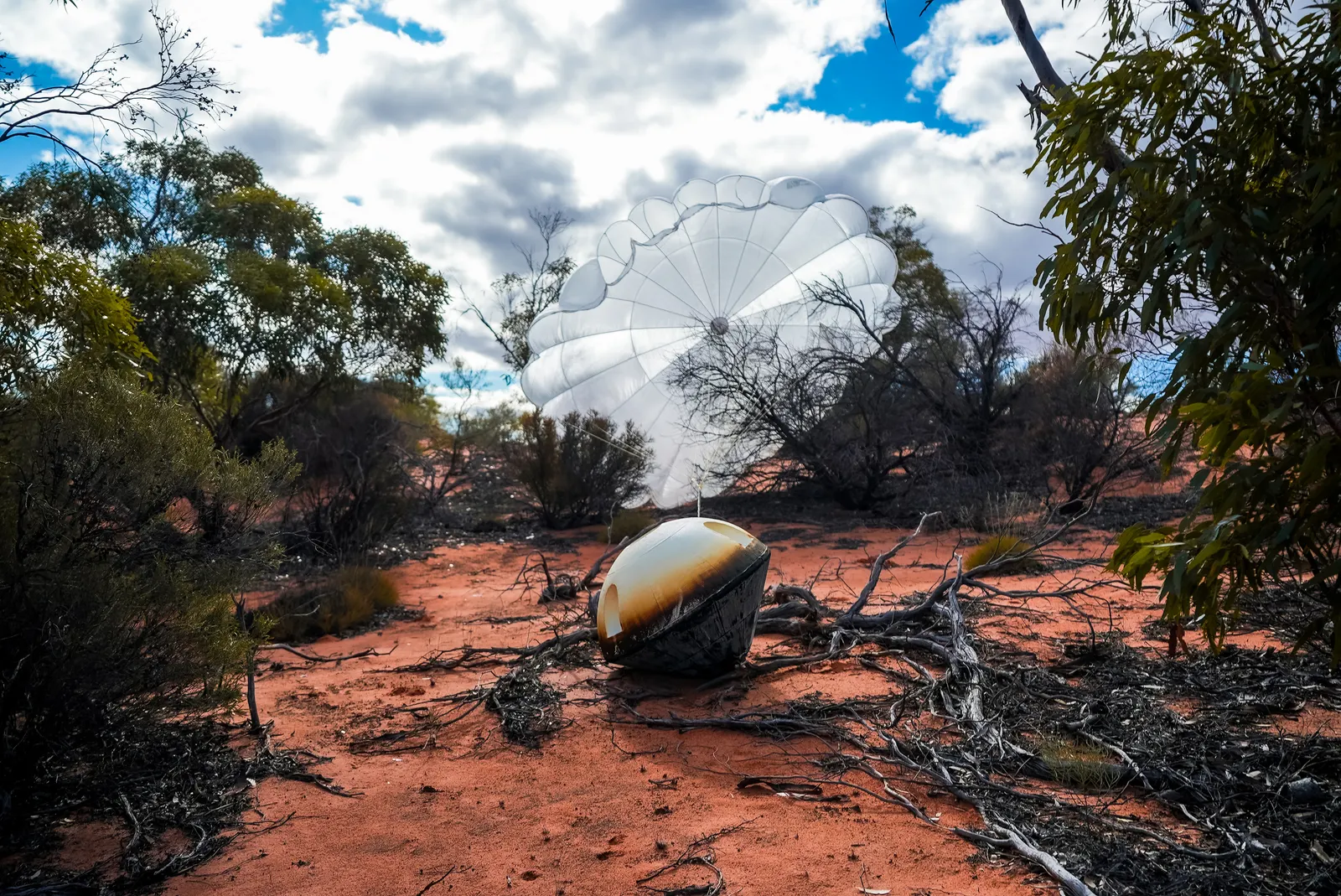
Varda Space Industries has become a growing force on pharma’s space R&D scene with its automated free-flying capsules that provide just enough space for drug research in low Earth orbit. Varda is the only company flying and returning microgravity research to Earth independent of the ISS, a Varda spokesperson said. The company has four missions slated this year and seven planned for 2027.
“The ISS’ national lab is an excellent place to do foundational science and early R&D. However, some payloads wait months or even multiple years to fly on the ISS,” Varda said in an email. “This is not feasible for commercial products and does not align with the timelines expected by the pharmaceutical industry.”
Varda recently struck a collaboration deal with United Therapeutics centered around rare pulmonary disease treatments that will focus specifically on small molecules and “utilize microgravity's influence on the structure and crystallization properties of therapeutic compounds in pursuit of novel formulations,” according to the companies.
Florida-based Redwire, which has developed a range of technologies for the space and defense industries, is also playing its hand in the microgravity economy. The company launched an experiment to the ISS last year it said could lay the groundwork for improving production of gold nanospheres — particles that could be key in different types of nanomedicine and cancer diagnostics.
Meanwhile, several companies are in the hunt to deploy the first commercial space stations that could provide lab space once the ISS is gone.
Vast, which has partnered with SpaceX, plans to launch its first station by early next year. Axiom Space is building modules that will first connect to ISS and then operate independently, while Blue Origin, founded by Amazon’s former CEO Jeff Bezos, has plans to build an “Orbital Reef” that it says will be a “mixed business park 250 miles above Earth.”
But it will take time for all these visions to be realized, leading to a potential gap in low Earth orbit lab space for pharma.
“If you look at the history of government programs, there’s no shortage of examples where government plays a key role in funding science and getting it off the ground,” Roberts said. “But then budgets run out … and then it’s another 10 to 15 years before there’s a commercial industry. We’re at that inflection point now with space research.”