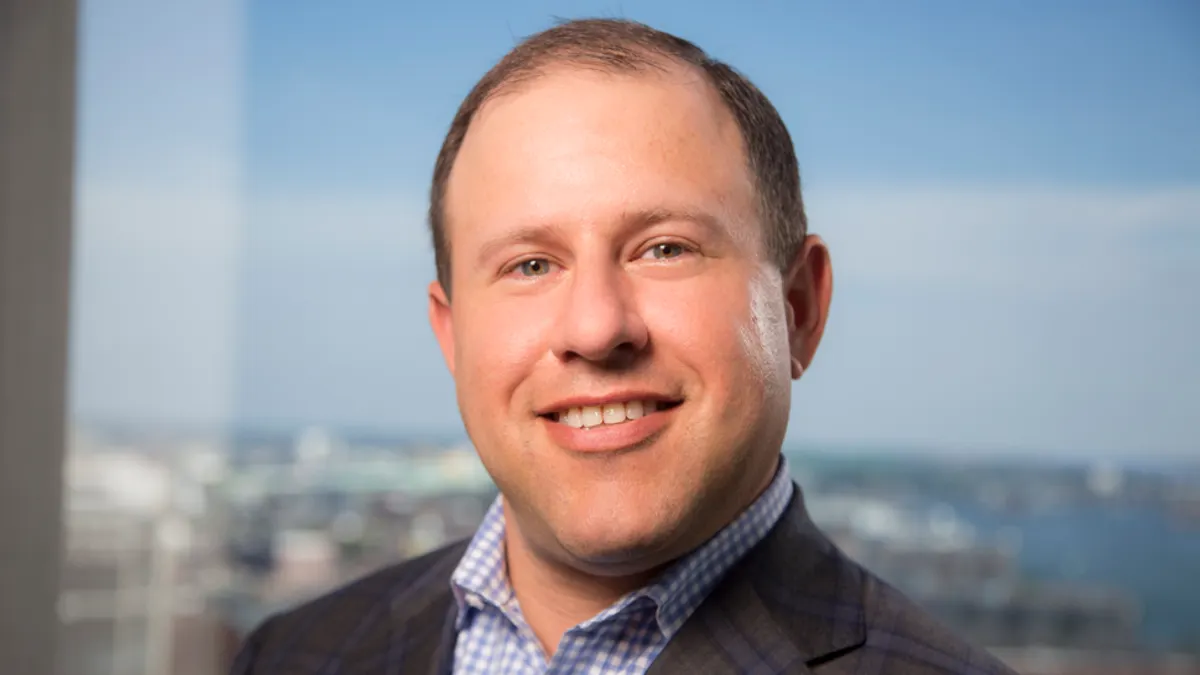
Geoff Meyerson has been to China seven times in the last year and a half. Still, Meyerson admits he may not be the best person to ask for local travel or dining tips. As soon as the bioinvestment fund CEO lands, he adopts the preferred Chinese schedule, working nine-nine-six — 9 a.m. to 9 p.m., six days a week.
“When I’m there, I’m going hard the entire time,” he told PharmaVoice.
The grueling pace of work is both cultural and self-imposed in order to land lucrative deals before the competition. Biotech deals have taken off in China, and Meyerson, CEO and co-founder of the recently launched global investment fund Banyan BioInnovations, is hustling alongside scores of biotech investors now scouring the country for emerging drug assets.
But Banyan, an offshoot of the investment bank Locust Walk, has a unique spin on the investment game, Meyerson said. When it finds a promising candidate, Banyan works to strike a deal that will build a new company around that drug. This “NewCo” model is more active than what a typical VC firm would provide while also offering more autonomy than a holding company.
Banyan is just a few months old and has yet to announce a deal. But more than half of its negotiations are happening in China and the team has five people on the ground dedicated to making crucial connections with drug developers, Meyerson said. As a result, the firm is currently in different stages of NewCo negotiations with its $100 million commitment to the life sciences industry in hand. The goal is to execute two to three new deals per year, and Meyerson expects that multiple launches around Chinese assets will be in the mix.
Through it all, here’s what Meyerson has learned about striking biotech deals in China.
How to hunt for assets in China
Amid the major surge in out-licensing agreements in China, the country’s “lowest-hanging fruit has certainly been picked,” Meyerson said.
Although there are still plenty of opportunities, the bar has risen to find candidates that are truly differentiated with solid — and preferably later-stage — data.
While the China-based companies have grown their presence at industry conferences, those are typically the “least fruitful place” to scout because “everyone is there” and “the companies in China that attend don’t tend to bring decision-makers to those meetings,” Meyerson said.
Instead, platforms that showcase pharma assets up for sale, such as databases DealForma and PharmCube, can be a good starting point. PharmCube in particular is “probably the most comprehensive source of opportunities in China,” Meyerson said.
China’s state-funded academic centers of excellence, which operate like biotechs, can also be home to promising drugs.
“They have pipelines of their own and it’s very interesting and impressive, very different from a U.S. academic medical center, which tends to have much earlier innovation and less translatable data that’s licensable,” Meyerson noted.
“Having a meal with that person is far more effective than meeting at a conference."

Geoff Meyerson
CEO, co-founder, Banyan BioInnovations
But for Banyan, finding the real “hidden gems” has come down to on-the-ground networking.
“We’re in front of lots of companies that many of the Western investors are not having conversations with, because they’re either Chinese companies that don’t have the same Western interface, they are not well known, might not be in one of the hubs, they might not be backed by major investors or they might be an old world company that was in generics but in this next iteration, they’re creating innovation,” Meyerson explained.
Building relationships and trust
To move a potential deal along, Meyerson advises going directly to the company’s chairman and getting to know them on a more personal level.
“Having a meal with that person is far more effective than meeting at a conference,” Meyerson said.
But be prepared for “copious amounts of alcohol,” Meyerson warned with a laugh. “They’re very friendly. They love to entertain.”
In-person meetings are considered a key way to prove competence to East Asian partners in a business relationship. Taking the time to nurture that relationship will also establish trust as the dealmaking process moves forward, which could be critical to its success.
“Getting data out of the company can be challenging,” he said. “[Especially] if there’s a general lack of trust.”
Be prepared for a different negotiation process and deal structure
After companies strike a deal in the U.S., they often “sign an agreement [and then] move on,” Meyerson said. But in China, there can be layers of negotiation and companies should be prepared for “additional asks” or “new constituents” coming into the dealmaking process in its later stages.
“That can be frustrating for someone from the West if they don’t expect that or want a final answer immediately,” he said.
It’s also helpful to understand what motivates Chinese partners when structuring proposed deals.
For example, most Chinese companies value upfront payments because “that’s effectively their funding,” Meyerson said. Rather than focusing on downstream payments such as royalties, investors in China that are willing to pay a little more up front will “get an awful lot better deal that can be below market on the backend, or at or above market near term.”
“That is definitely not a net present value tradeoff that is in the Chinese company’s favor, but they don’t care,” Meyerson said. “They don’t necessarily think in terms of net present value of the deal today in this structure versus that structure.”
Chinese companies also typically want to retain rights to the drug so they can continue building value for themselves “even if they’re out-licensed to the rest of the world outside China,” Meyerson said.
“That’s a very different dynamic,” he added.
In the end, reaching an agreement could come down to how well a Western investor finds common ground with its Chinese partner.
“Thinking through how you build a true relationship, not a transactional relationship, will ultimately enable people to be much more successful,” Meyerson said.