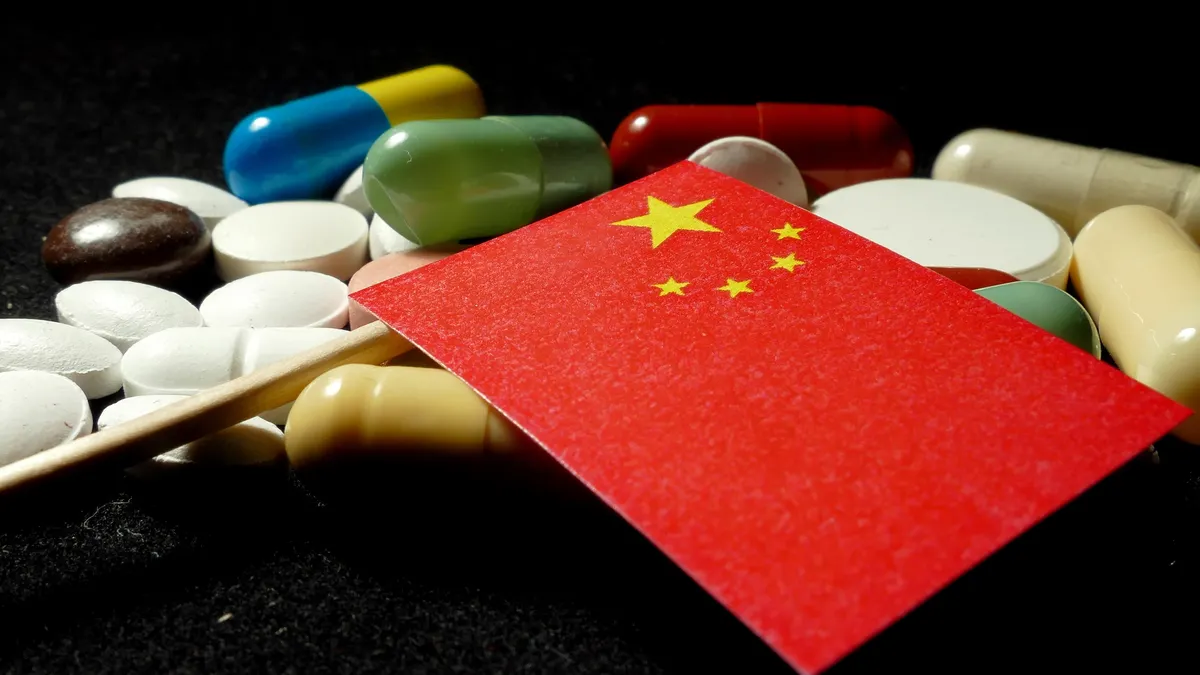
Chinese drugmakers have emerged from the shadows of large Western firms to become competitors, partners and innovators. Now, some analysts say they’re poised to take an even bigger leap on the global stage.
“I see these companies as having the ability to become global, fully integrated biotech companies,” said Michael Rome, managing director and head of the therapeutics investment team at Foresite Capital.
While there’s no strict definition for what constitutes a major international firm in the Big Pharma ranks, top companies typically share several traits, particularly on the revenue and sales side, Rome said.
“When you get to the point where you're scaling over double-digit billions, and you have marketed products that are on their way to being multibillion-dollar products, by definition you're now becoming a larger player in the space,” he said.
Chinese companies like Jiangsu Hengrui Pharmaceuticals are already checking some of those boxes.
A rising tide
Hengrui is one of China’s rising pharma juggernauts with a long history and a connected future.
“Hengrui has drugs that are approved in China,” Rome said. “They’ve formed multiple joint ventures with other companies to get their drugs registered globally.”
Founded more than 50 years ago, the company is attracting international attention. In 2024, it surpassed AstraZeneca as the world’s leading trial sponsor, measured by its deep pipeline, which includes 100 investigational drugs and 400 ongoing clinical trials.
Hengrui is well-positioned for future growth, according to a report from IDEA Pharma, thanks to its robust financial performance, sustained R&D investment and its commercially successful drugs.
Hengrui has also secured deals with companies like Merck & Co. and GSK. Last summer, Hengrui signed a $500 million pact granting GSK ex-China rights to Hengrui’s experimental chronic obstructive pulmonary disease drug and up to 11 other potential therapies. The agreement could be worth $12 billion over time.
Hengrui isn’t alone on the Chinese pharma horizon. Companies like Shenzhen Salubris Pharmaceuticals and Haisco Pharmaceutical Group are also among those to watch. So far, they have most of their infrastructure in China, Rome said, and their global expansion strategy remains uncertain. But perhaps not for long.
“I think you're absolutely going to see these companies emerge as global players,” he said. “They have world-class R&D organizations scaled very quickly over the last few years, and the quality of the science is impressive.”
Other companies cited in industry analyses for successfully turning innovation into global commercial potential are BeOne Medicines, formerly BeiGene, which originated in China but is now a global company with headquarters in Switzerland, and Sino Biopharmaceutical, which has pivoted from a primary focus on generic medications to innovation.
An environment for growth
Chinese companies are gaining a competitive advantage as their access to financial capital expands, and regulatory changes have fueled a biotech boom.
The nation is also expanding in scope. While China is already a leader in oncology, it’s moving into other drug development areas, including metabolic diseases as well as immunology and neurology, according to McKinsey.
“What most differentiates China is R&D velocity,” the firm said. “Early discovery-to-IND cycles are 50% to 70% faster than the rest of the world due to parallelized workflows, dense CRO ecosystems, and a culture of executional intensity.”
Chinese companies have also earned more scientific credibility since the country joined the International Council for Harmonisation of Technical Requirements for Pharmaceuticals for Human Use, which sets clinical trials standards, and are increasingly publishing their work in “top-tier journals,” according to McKinsey.
But while the potential is there for Chinese companies to jump into the international big leagues, the road they take may diverge from that of established Western drugmakers.
“What's interesting about the Hong Kong capital markets is you don't see the same type of M&A cycles that occur in the U.S., and the investor expectations are a little bit different,” Rome said. They tend to value partnerships and building fully integrated companies.
There are some potentially confounding factors that could disrupt progress toward the broader market, including strained relations between China and other nations. That includes the U.S., which in December passed the Biosecure Act, which aims to pressure U.S. companies to cut supply chain ties with certain Chinese companies to protect national security.
Despite these risks, the factors fueling Chinese drugmakers’ rise, such as strong R&D, financial tailwinds and innovative pipelines, appear likely to continue, propelling some of them into the international landscape.