
SAN DIEGO — Expect initial public offerings for biotechnology companies to continue to pop in the second half of 2026, driven by investors eager to back drug startups with quality clinical data in hand.
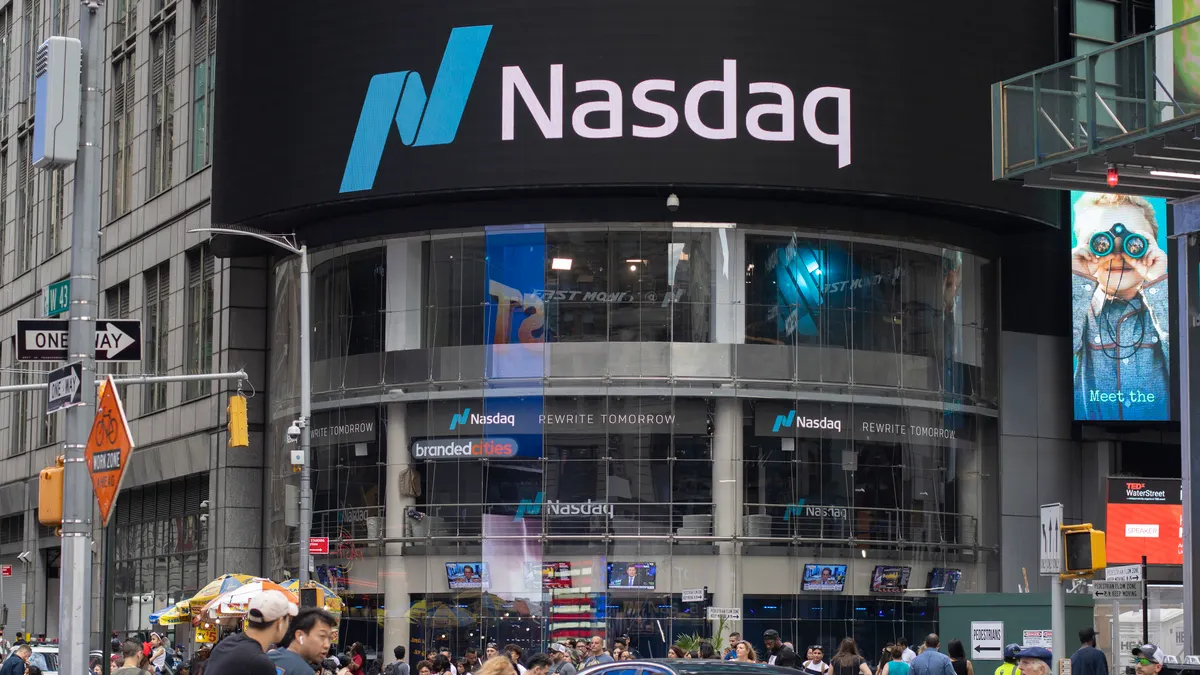
In a Monday afternoon panel at the annual meeting of the Biotechnology Innovation Organization, investors and healthcare investment bankers argued that the pace of IPOs will accelerate — a surge fueled by “the same supply-and-demand dynamics” that ignited the last boom in stock offerings, said Dan Angius, the senior managing director of new listings and global markets at Nasdaq.
“The window’s open,” said Jim Healy, a managing partner at Sofinnova Investments, in an interview with sister publication BioPharma Dive.
A baker’s dozen of venture-backed biotechnology companies have so far priced IPOs in 2026. Two, Parabilis Medicines and Kailera Therapeutics, eclipsed the previous record — held by Moderna — for the most raised in an initial share sale. Those two offerings are emblematic of what’s been a notable spike in the number of big-ticket IPOs in 2026. According to BioPharma Dive data, 11 of the year’s 13 newly public biotech companies secured at least $250 million in IPO proceeds, a total that already exceeds most years since 2018.
“There have been a lot of really solid wins for investors that make them say the IPO product isn’t broken anymore, for the right company at the right price,” Jack Bannister, a senior managing director at Leerink Partners, in an interview ahead of the convention. Companies already in the public markets, or eyeing them, “have options in a way they might not have a year ago.”
One reason is that biotech companies are finding success after getting to Wall Street. BioPharma Dive data shows that most drugmakers in the 2026 class are currently trading at or above their debut prices. Veradermics, the leader so far, has seen its share price skyrocket more than five-fold following positive data for a hair loss treatment. Others, like Avalyn Pharma and Hemab Therapeutics, have had their post-IPO values almost double even without a stock-moving catalyst.
That performance could be tied to certain commonalities among this IPO class. Prior to their offerings, almost all 13 companies had drugs in Phase 2 testing or later. These “asset-centric stories” are driving a “healthy” market, said Chirag Surti, an executive director on Morgan Stanley’s global capital markets team.
Several recently public companies are also led by veteran teams: Kailera is headed by Ron Renaud, a biotech veteran who’s built and sold three other drug companies. Kardigan, which banked $400 million in an IPO last week, was created by former executives of MyoKardia, which Bristol Myers Squibb acquired in 2020.
Despite the early positive performance for 2026’s biotech IPOs, experts don’t expect offerings to be as widely available as they were during the market’s previous peak. In 2020 and 2021, dozens of young companies built on broad drugmaking platforms went public before accumulating clinical data. Many subsequently failed, wiping out stock values and causing investors to retreat from biotech.
Wonhee Oh, a vice president of healthcare investment banking at J.P. Morgan — the lead bookrunner on Kardigan’s IPO — said that, following that experience, drugmakers learned that they are “not in an environment that entertains the promise of a platform.”
“We're still in a disciplined environment where we actually have a checklist of things that makes us successful,” Oh said.
Activity is expected to increase in the months ahead. Nasdaq’s Argius estimated that there could be a dozen IPOs in the third quarter of 2026 alone. The unusually fast pace of company acquisitions this year has proven an important catalyst, rewarding the investors that backed previous IPOs.
“The recycling of capital from M&A has allowed for the number of deals that have happened,” Surti said. “And we’re only at the halfway point.”