
Almost a decade ago, brain drugmaker Acorda Therapeutics was having a banner year. Its multiple sclerosis medicine Ampyra brought in more money than ever in 2017, reaching nearly $550 million and accounting for more than 90% of the company’s net revenue. Then everything came crashing down.
By late 2018, U.S. courts had invalidated the key patents protecting Ampyra from generic competition. Sales subsequently plummeted. Acorda hoped to offset those declines with Inbrija, a new Parkinson’s disease drug given through a special inhaler. But mere months after Inbrija entered the market, its launch was derailed by the COVID-19 pandemic.
Inbrija did start to gain momentum as the pandemic abated, though the rebound came too late. Acorda was tapped on cash by 2024, and still owed bondholders hundreds of millions of dollars due at the end of the year. The company asked for more time to repay the debt, according to former CEO Ron Cohen. The response it got: “first see if you can find a buyer.”
Acorda did, in Merz Therapeutics. It went on to file for Chapter 11 bankruptcy in April 2024, which, Cohen said, was a tax-favorable way to transfer assets to Merz. The sale process was complete by that July.
After Acorda wound down, Cohen went looking for his next act. He found it in Oryon Cell Therapies, a startup that emerged from stealth Monday with $42 million in funding. Oryon aims to treat Parkinson’s through the “autologous” process of extracting and reengineering a patient’s own cells to act a certain way. Specifically, it hopes to create neurons that can restore dopamine production and help improve movement control.
BioPharma Dive spoke to Cohen about lessons learned from the Acorda saga and why Oryon stood out among a handful of developers in the Parkinson’s cell therapy space.
This interview has been edited for brevity and style.
BIOPHARMA DIVE: It’s not hard to find interesting science in today’s biotech ecosystem. What specifically drew you to Oryon?
RON COHEN: There’s something uniquely awful about diseases that affect the brain and the spinal cord. Not only do they interrupt you physically, but they eat away at who you are and what makes you a person. It’s just uniquely tragic for me. So I find a lot of meaning in trying to alleviate conditions in that spectrum.
I was looking for a technology that sang to me, data that I could believe in, that I had conviction in. I preferred to find somebody that already had funding. I was seeing a lot of seed-round-type companies. That's fine. But I've been there, done that. I paid my dues. If I can take my experience and apply it to an existing group with money, technology and proof-of-concept data, then I can contribute fully. This is what I found at Oryon.
I also liked how they were doing autologous cells. There's only one other company that's directly head to head on that score. Everyone else is doing donor cells. Of course, there is an advantage to donor cells, manufacturing, because you don't have to make the cells fresh for each new person getting them.
On the other hand, with autologous therapies, you don't have to give immune suppression for the first year. And you're not taking the risk that, over time, there may be low-grade immune effects. Again, that's all hypothetical and may turn out fine. But that was my calculus.
There are a handful of other developers working on cell therapies for Parkinson’s. How do you see Oryon as differentiated from them?
I did a lot of diligence on the field, looked at the different players. What I liked about Oryon was, first of all, they had human data. And the data was credible to me. Even though it's not yet placebo-controlled, it was at least internally controlled. The first patients given Oryon’s therapy were all evaluated unilaterally, so at least you can compare one side of the brain to the other on the imaging and one side of the body to the other on the effect.
Aspen Neuroscience, which is the other autologous company, looks very nice. They're doing neural progenitor cells. They derive their [stem cells from a patient’s own] skin. I've had a skin biopsy. I don't want to have one again. I'm being a little glib.
So they take the cells, they drive them to become neuronal progenitors … and then at some point they decide they're going to differentiate, and you trust that at least some will become the dopaminergic neurons you want.
My bias, from long years of drug development, is the more you know about what you're putting in, the more you know about dose, the more you know about specific characteristics … then when you see the results, you can calibrate. [With Oryon’s approach], I know how many of those cells I'm giving. I like that.
At least a couple companies — Aspen, Bayer’s Bluerock subsidiary — are significantly further along in development. How are you thinking about your own timelines?
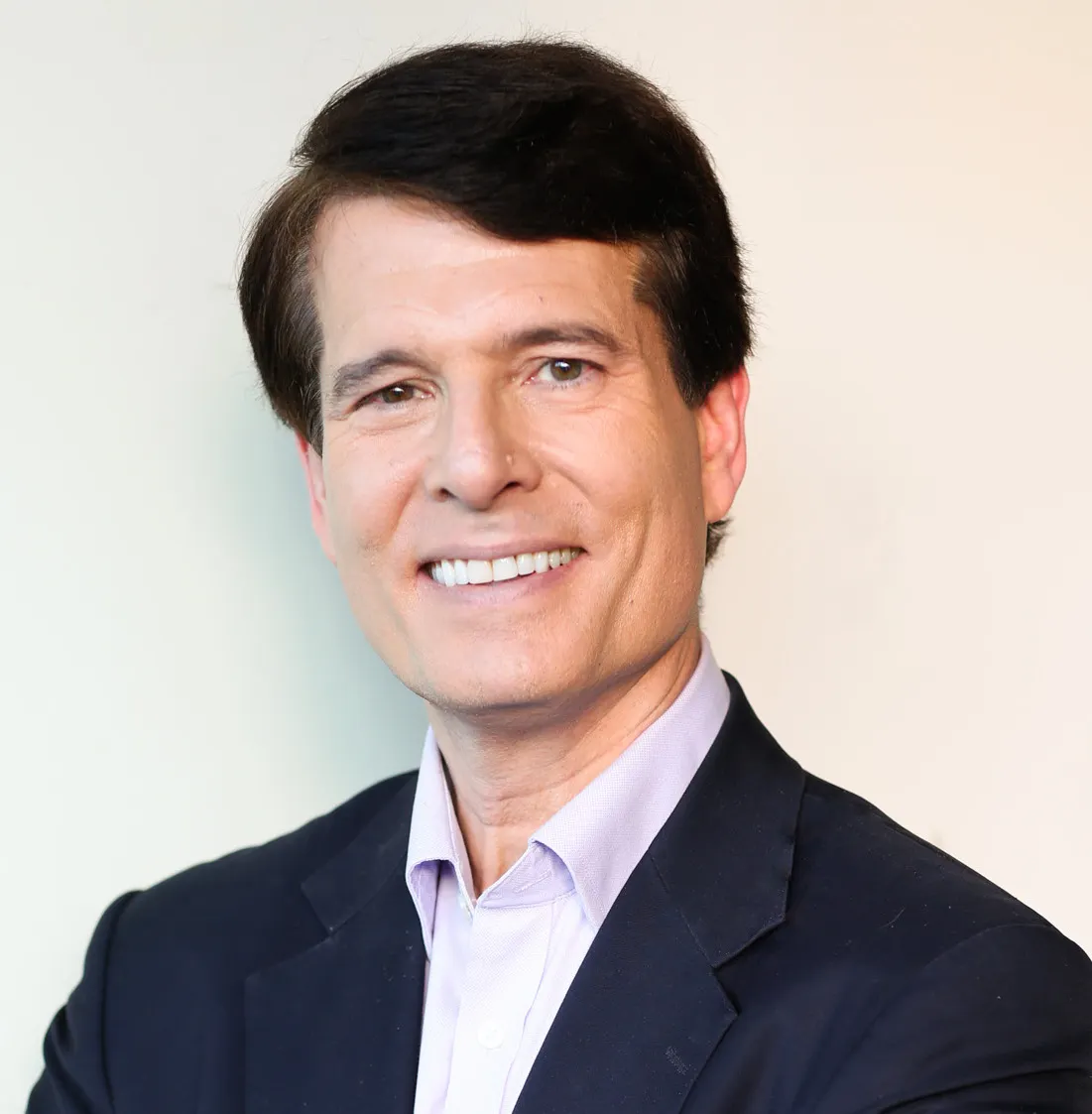
There are five or six companies working on this, some of them are ahead. What is it that would make me want to take the chance on Oryon? There were actually two things in terms of their data.
One was the unilateral testing. I looked at their data comparing one side to the other, and I thought: This all makes sense. The side that got the implant is controlling the other side of the body and showing the biggest change. The other side is showing some improvement, which I would have expected.
And then the second thing was they were doing imaging studies. The imaging was tracking functional results. Not all the patients responded exactly the same, which is good. If they did, I'd be wondering. That's not biology.
I looked at the whole thing, and I said there is a reasonable chance this could be best in class. We have a long way to go to prove that. We know in biotech that you never have all the information you need to make a decision. This was enough information for me to make the decision.
You see autologous as an advantage for Oryon. Had the company been focused on donor-derived cells, would you have found it as interesting an opportunity?
This is retrospective, so take that for what it's worth. I think I would have looked at Aspen and thought: I like autologous, and the thing in favor of donor cells is the manufacturing. Now, that's not trivial. It's expensive to make these cells, and when you're doing it patient by patient, you don't have economies of scale the way you do with allogeneic.
Frankly, if it turned out that these patients were followed for several years, and allogeneics [showed similar] outcomes and were just as safe even with the immune suppression — if all that were true, then I would say it's cheaper to make the allogeneics, and probably they could then beat everyone on price and reimbursement.
But the bet I'm making is that [because of various immunological concerns], autologous really will have benefits. As part of my diligence, I talked to doctors in the field, many friends and colleagues who know Parkinson's. I called them up and said, “Hey, what do you think of this?” I didn't get a single one who didn't say, “Oh, if I can avoid immune suppression, then I will.”
Parkinson’s doesn’t have a great array of treatment options. And yet, cell therapy can be a lot to ask of a patient. What demand do you see for these kinds of medicines?
I don't know, to tell you the truth.
I've done straw polling in my networks. I have 250 Parkinson's doctors in my database who I personally have interacted with over the last 10 years. There is an enormous receptivity to something like this, based on everything I've heard.
Even though the company's not public, just through the grapevine of the neurologists and neurosurgeons and other people in the academic world who are involved, we already have a few hundred people on the waiting list who called in and said, “Yeah, could you consider me for the trials?” I'm not surprised, because this disease sucks, and you can quote me on that.
Do you see this as a market where multiple cell therapy products can be successful?
It doesn't matter what condition, there's virtually always space for multiple entries. There are over a million people with Parkinson's in the U.S. Tens of thousands of new cases in just the U.S. alone are diagnosed every year. You can get about an equal number or more for the E.U., and then Asia is astronomical. So there's going to potentially be a humongous demand.
The icing on the cake would be if the data show advantages to Oryon's approach. The jury is completely out on that. It's going to be a few years before we really know for sure.
If it turns out that there is an advantage, then we can enter the market as a fast follower with those advantages to talk about. If it turns out that no, we're entering the market in follow up, it won't be as big an opportunity for Oryon. But will it be a substantive market? Yes.
What lessons from your time at Acorda that you think will be helpful as you helm Oryon?
I learned a lot about the Parkinson's market and the way the doctors think. It is true that this is a particular indication where the doctors tend to be slower on uptake of new drugs. One reason is that they tend to be more conservative. They're dealing with an older, frailer population. Comparing it to other neurologists in MS, they treat people in their 20s, and there's a different feel to it. They go, “Yeah, I'll try anything.”
Now, our insurance system also doesn't help, because any new branded therapy is going to be costly compared to generics. They have to go through hurdles with insurance and step edits and prior authorization.
My sense of that population is they will respond far more positively to something like this, because it's not just another symptomatic drug. This is biologically, if you will, turning back the clock, at least on the motor symptoms of the disease.
Late-stage studies are often expensive. How far do you expect Oryon’s funding to stretch before you have to raise more?
In terms of recruiting and getting [the Phase 1/2 study] done, we should be able to get all the patients in before the end of 2026 and to have most of the follow up done and really talk to the FDA about Phase 3 by mid-2027, to then start Phase 3 in late 2027 or the first half of 2028.
I'm not going to commit to when we would raise money. But I will tell you, given my experience, I'm always raising money, even when I'm not raising money.
Once I have a core group in place that's handling the absolute key clinical, regulatory, manufacturing, and development issues and [working to] compress the timelines and make it more cost efficient, I'm going to be talking with investors just to prepare the way, just to get people interested.
When the time comes for the next round, that’s not when I'm going to start. I will have already started for months.