This is the first installment of a two-part series examining pharma’s year ahead. The second installment looks at the various trends in AI and drug development.
Change and controversy dominated pharma’s regulatory landscape last year. But after months of uncertainty following the start of a new presidential administration and fresh regulatory leadership, a clearer picture of health priorities in 2026 has emerged.
The FDA has taken steps to speed drug approvals through a new priority voucher program and the launch of an AI system that could automate reviews. The agency has also taken a more flexible approach to rare disease drug applications to usher more treatments to market.
Meanwhile, the Trump administration has been striking deals with large pharmas that allow companies to avoid tariffs and win speedier drug reviews by making commitments to lower prices.
At the same time, however, the FDA’s proposed stricter guidelines for vaccine clinical trials could have a cooling effect on drugmakers’ motivation to invest in the space.
How will the market react to the changes that have taken hold?
After a year of sweeping health agency and industry layoffs, many leaders believe the positive momentum generated by innovation will override external headwinds, triggering rising investment and dealmaking.
Here are more predictions from pharma executives for how the industry’s policies and financial outlook could take shape in 2026.
Dealmaking and the market
A biopharma comeback

“We have all the right ingredients for a big comeback in biopharma. After years of reductions and layoffs, the industry has learned how to be more efficient. I expect the funding gains we are starting to see in the public sector will feed into the private sector, with more funding events in 2026 than 2025. However, there will be continued pressure to increase clinical development speed at lower costs. International trials will continue, but biotechs will also look for creative solutions to get clinical data more efficiently.”
Sarah Hein, CEO, co-founder, March Biosciences
M&A will rebound

“In 2026 we are predicting M&A deal value will finally return to its historical normal range around $180 billion to $200 billion. The underlying causes are twofold: The industry needs to replenish its top-line revenue to mitigate patent losses; and the top 25 pharma companies have a combined firepower of $1.38 trillion to deploy toward acquisitions of later-stage assets.”
Arda Ural, life sciences leader, EY Americas
A more stable but less lucrative environment

“As we move into 2026, the geopolitical fog that has weighed on pharma is expected to lift, bringing greater clarity to global policy and trade. Progress on most favored nation pricing and tariffs should ease long-standing uncertainties and create a more predictable environment for cross-border collaboration. With this stabilization, companies will be able to unlock delayed investment decisions particularly in R&D, helping re-energize pipelines. However, the new normal will be less lucrative than [in] previous years. Success will require greater agility, stronger cost discipline and a willingness to rethink traditional operating models.”
Graham Clark, CEO, Phastar
Pharma will strike more deals with Chinese companies

“The value of deals with Chinese pharma and biotech companies nearly doubled from $51.9 billion in 2024 to $92.2 billion as of November 2025. I expect this trend of rising deal value to continue in 2026, fueled by factors such as pharma’s impending patent cliffs, the ease and speed with which Chinese companies can generate clinical data, and China’s growing dominance of certain key modalities and mechanistic approaches in high-value [therapeutic areas] such as oncology.”
Mark Lansdell, director, asset and portfolio strategy practice lead, Evaluate
MASH will steal the show

“MASH will be pharma’s hottest bidding war, with multiple $5 billion-plus deals and at least one blockbuster acquisition that scoops up an entire liver-disease platform. With a wave of late-stage clinical readouts approaching, large pharma players that still lack a meaningful position in MASH are likely to act aggressively if key datasets further derisk these assets. Companies with differentiated mechanisms and advanced clinical programs, including leaders like Madrigal Pharmaceuticals and Altimmune, could become attractive acquisition targets as MASH consolidates into a platform-level race.”
Jessica Owens, co-founder, Initiate Ventures
The obesity market will expand

“Obesity is poised to remain a top-performing area in 2026, driven by the rise of oral and combination drugs. As competitors work to match Novo Nordisk’s early lead, oral treatments should capture meaningful market share, particularly among patients who prefer alternatives to injectables. We also expect existing FDA-approved drugs to receive expanded indications in obesity-related conditions such as chronic heart failure. And combination therapies will emerge as a promising innovation. Early data suggests these drugs address key challenges in obesity, such as minimizing side effects and reducing dosing frequency.”
Madeline Verbeke, supervisor, clinical advisor, MMIT
New global launch strategies will emerge

“The implementation of the most favored nation policy means 2026 will bring a new world of dealmaking with fewer dollars to play with, flipping long-standing industry norms. The existing model of launch sequencing won’t work, and to protect the U.S. price base, manufacturers may delay launches or seek materially higher prices in MFN reference countries. We could also see products launching earlier in smaller markets that aren’t part of the reference basket, despite overall lower relative revenue contribution. Manufacturers are likely to protect or enhance R&D spend since innovation is the engine that drives new drugs to market with strong price potential.”
Max Vargas, vice president, evidence and access strategy, Certara
Smart companies will adapt commercialization plans

“In 2026, the smartest biotechs will stop equating commercial readiness with fixed infrastructure built years ahead of approval. They'll approach commercialization like they already treat development and manufacturing: specialized partner networks assembled around an asset and reconfigured as conditions evolve. In a landscape where timelines slip, labels narrow and policy can shift overnight, adaptability stops being a secondary consideration and becomes the operating model. Post-approval, you internalize only what gives your company a true competitive edge. Everything else stays flexible.”
Dr. Paul Peter Tak, CEO, president, Candel Therapeutics
Policy and regulations
Pharma will speed approvals through FDA pathways

“In 2026, companies will lean more heavily into diverse regulatory pathways — including the new national priority voucher pilot program — to bring medicines more quickly to patients. This will be especially critical in rare diseases, where patients too often face limited treatments. As the FDA refines review approaches, companies will sharpen strategies for using these routes through research support, deepening collaborations with patient groups and expanding tailored access solutions.”
Vicky Brown, senior vice president, therapeutic area head, oncology and emerging areas, Boehringer Ingelheim
Regulators will crack their whips

“In 2026, we expect pharma regulatory enforcement will intensify on several fronts, including AI and healthcare fraud and abuse. It is likely that we will see additional AI guidance and enforcement activity from the FDA and the evolving EU AI Act that will affect manufacturing, clinical trial operations, safety surveillance, and other aspects of drug development and marketing. We also predict that 2026 will see a rise in pharma industry Anti-Kickback Statute and False Claims Act investigations.”
Robert Wells, shareholder, chair, Health Law Group, Baker Donelson
Platforms like TrumpRx won’t transform access

“Anything that expands access is good, but programs like TrumpRx may not move the needle on access in a meaningful way. For most patients with insurance, these drugs could already be accessible and usually cheaper through their plans. Direct-to-consumer options and discounts will help a small subset of patients, such as those who are underinsured or can’t get coverage, but it won’t transform access at scale.”
Jesse Mendelsohn, senior vice president, Model N
Talent will move overseas

“Increasing numbers of seasoned biotech professionals are looking outside the inhospitable environs of the U.S. Substantial changes in scientific policy and funding, economic uncertainty, and shifting immigration policy, combined with a heavily restructured early-stage biotech landscape will prompt expats to reconsider their long-term plans. Europe is making meaningful steps to encourage such movement, and this could lead to a significant talent migration as researchers and executives turn to more welcoming shores.”
Jane Rhodes, CEO, AstronauTx
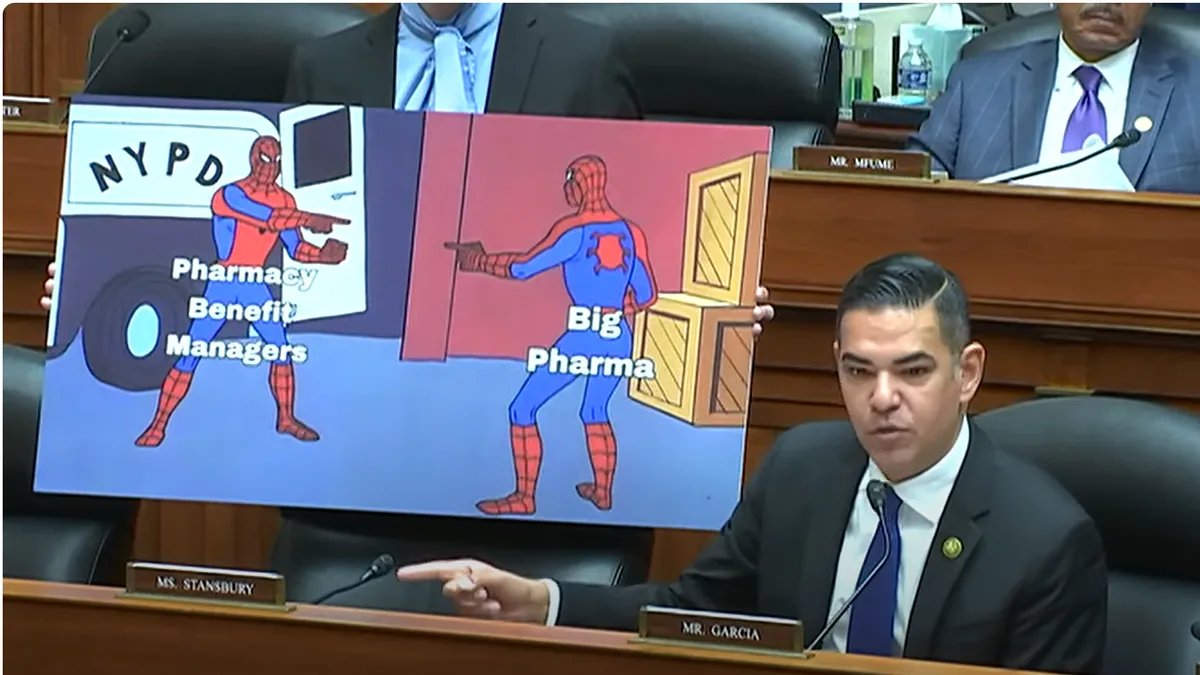
PBMs will shift tactics

“Pharmacy benefit managers will need to change their business model in 2026, which could drive up insurance premiums. Their current rebate-driven strategy is no longer sustainable given changes and scrutiny of manufacturer list prices that have traditionally driven the rebates used to subsidize employer-sponsored plans and fund PBM revenue. To protect margins, the organizations may rely more on administrative fees and intensify formulary negotiations with pharma companies to squeeze out higher manufacturer rebates, the cost of which could ripple through the marketplace.”
Michael Grosberg, vice president, Model N
FDA will help speed innovation

“A major force shaping 2026 will be the FDA’s commitment to faster, smarter pathways for therapies addressing serious unmet needs. The agency is leaning into real-world evidence, digital endpoints and earlier sponsor engagement, steps that meaningfully reduce bottlenecks. Expanded post-marketing evidence models are also helping companies move with greater confidence and speed. And we’re watching pilot programs that explore significantly shorter review timelines. Together, these shifts signal a year in which regulatory modernization becomes a true driver of innovation.”
Seth Lederman, CEO, Tonix Pharmaceuticals