Merck & Co. wasn’t always a power player in oncology. Long a leader in infectious diseases and immunology, the arrival of Keytruda in the 2010s rewrote Merck’s story, eventually solidifying its dominance in cancer care.
Now, the times are changing again.
Keytruda sales are slated to peak at over $30 billion this year before biosimilar competition begins eroding its performance after key patent expirations in 2028. The situation has left Merck as pharma’s most patent-exposed company in the near term, according to pharma market research firm Evaluate, and the pressure is on to define what its next era will look like. But the company is no stranger to that challenge.
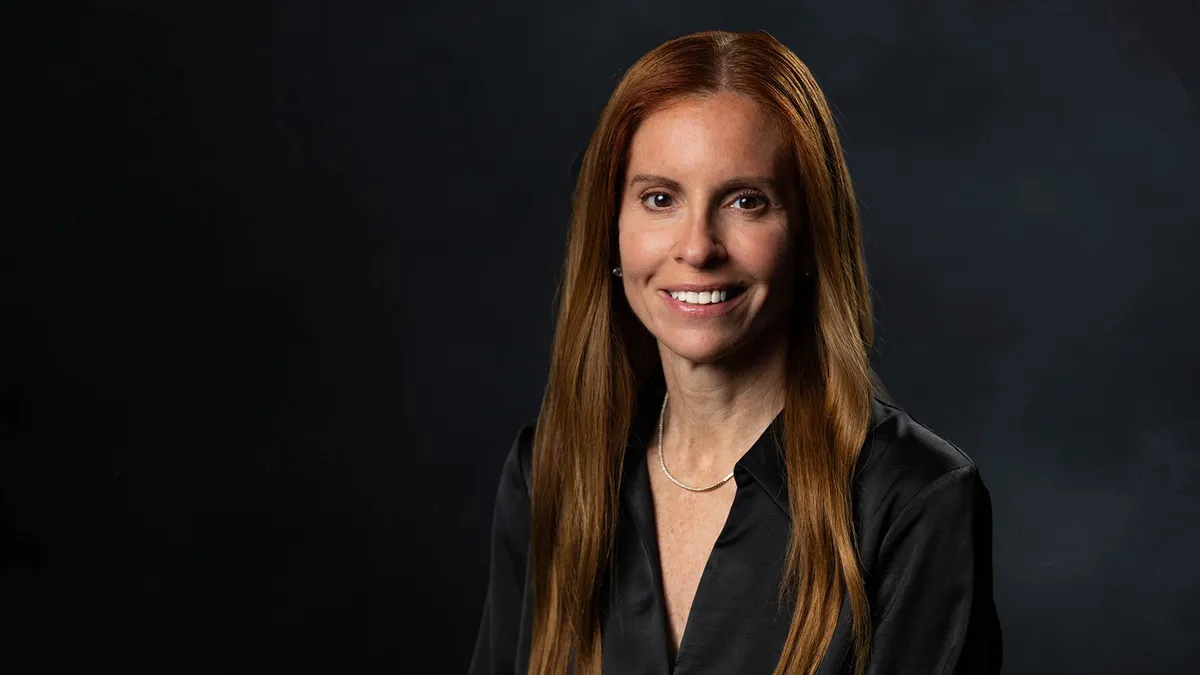
“Merck has a really long history of reinventing itself through innovation,” said Elizabeth Naldi-Jacob, Merck’s vice president of business development.
M&A is, of course, crucial to driving that innovation, and Merck has become one of the industry’s most active dealmakers in oncology and beyond.
The company picked up Terns Pharmaceuticals earlier this year in a deal valued at $6.7 billion to expand its footprint in hematology and snag a potential best-in-class candidate for chronic myeloid leukemia. Merck also made a play last year in the infectious disease space with its acquisition of Cidara Therapeutics, and in cardio-pulmonary with its purchase of Verona Pharma.
Earlier deals are also beginning to bear fruit. An inflammatory disease asset Merck picked up in its $10.8 billion acquisition of Prometheus Biosciences in 2023 recently scored a mid-stage clinical win.
Although Merck was rumored to be in talks with Revolution Medicines early this year about a potential deal valued around $30 billion, the company has generally zeroed in on acquisitions that fall into what its leaders have called the $1 billion to $15 billion “sweet spot.”
This string of successful acquisitions has helped Merck build what Naldi-Jacob describes as “one of the most diversified pipelines we've had in a very long time.” But it also came with a few speed bumps.
Charges tied to the Terns deal dinged Merck’s profit outlook for 2026, the company said in its most recent earnings report. Merging companies together can also bring unique operational challenges.
Here, Naldi-Jacob explains how Merck is navigating the potential strain of dealmaking, its high-level M&A strategy and how the company plans to maintain a strong foothold in oncology while exploring opportunities in other areas like obesity.
This interview has been edited for brevity and style.
PHARMAVOICE: Merck has been such a strong competitor in the oncology space. Is the company too focused on oncology? How do you address that potential issue?
ELIZABETH NALDI-JACOB: Actions speak for themselves. If you look at the two deals around $10 billion we did last year, neither of them were in oncology. One was in respiratory COPD with the acquisition of Verona, which was a commercial-stage asset that we think could be a multibillion-dollar opportunity. The other one, which was slightly below $10 billion, was Cidara, which built on our legacy in antivirals and could produce the first long-acting antiviral for influenza.
Obviously we're going to always try to maintain our leadership position in oncology. So much of the science and advancement happens in oncology because data reads quicker and the trials are shorter. We have over 16 programs in oncology right now in clinical development. And we just did the acquisition this year of Terns, which will grow our presence in hematology.
But from a business development perspective, we're looking to diversify beyond oncology. Our deals show our strategy, that we're therapeutic area agnostic, and that where the science takes us, we will follow.
The vaccine space has faced a lot of notable headwinds in the last year. Has that changed the calculus for Merck?
First and foremost, we look for where there's scientific innovation and [where] we think we can make a difference in patients' lives. We're committed to vaccines. It's a legacy of ours … and we're going to continue to invest in vaccines. Yes, there's a lot going on in the geopolitical world related to potential legislation that could or could not happen, but I don't think that's dissuading us from continuing to develop or look for external opportunities in vaccines.
Are there any therapeutic areas where Merck is not invested but would like to be?
If you think about what we've done in immunology, that's a space that we now have a beachhead with our acquisition of Prometheus Biosciences, and we're doing a lot in early-stage discovery and R&D, trying to find assets that we can combine or build upon. So immunology is an area we're going to continue to become a strong leader in.
We're also in cardio-metabolic, pulmonary and respiratory infectious disease vaccines. But one area that we're not considered to be a leader in [is] neuroscience. Everyone hopes to crack that nut, but it's a difficult one.
So far in the obesity space, Merck has made just one significant move: licensing an early-stage oral candidate from Hansoh Pharma. What can you tell me about Merck's potential future strategy in obesity?
It is early, but we're putting a lot of discovery efforts into this space to figure out how the market's going to shift as we enter into this world of oral regimens. We're also looking to find the next best combination agents that you could use with a GLP-1 to develop a very differentiated potential therapy.
Are we later than people who are in the injectable market today? For sure. But in obesity, we’re focusing on trying to think of the next wave and where we can make a difference, and I think that will be through combinations and what we can do with our oral GLP-1.
So you haven't ruled out making a bigger play in obesity?
No.
When it comes to dealmaking, you're competing against Big Pharma peers who have similar strategies. How do you compete with them? What does Merck do differently?
We have constant contact with our executive team, we can make decisions very quickly, so we never lose a deal because Merck is too slow or Merck needs to go through an approval process. Both our executive team and our board members are willing to huddle very quickly, and so when we find something that fits the strategy of high science, solves an unmet need and is potentially best-in-class, or first-in-class, we'll move quickly.
Public statements from Merck’s leadership suggest that the company’s dealmaking is expected to ramp up in the coming years. Is there ever a point where Merck is in danger of making too many deals? Does it become a strain on the organization?
That's where portfolio management is so key, and it's central to every deal we do. With every opportunity, whether it's internal or external, we come back to that one-pipeline mindset. So you have to think about every candidate from a manufacturing capacity perspective and how a commercial team is going to bring it to market. Overall, you have to weigh the pros and cons of potential deals against the potential assets we want to develop internally with the impact to the overall portfolio. We're thinking about that all the time.
What lessons have you learned about portfolio management?
There's definitely more operational freedom when you are developing internal assets because you are making the decisions yourself. Getting alignment internally at any company can be challenging, but you learn how to do that pretty well. But when you enter partnerships with other companies, getting two companies to align on decision-making and moving with speed can be very challenging, and so you just want to make sure that you do due diligence not only on the assets but also the company that you will be working with to bring those assets forward. You need to have like-minded companies with similar values and strategies that have the same end goal in mind.