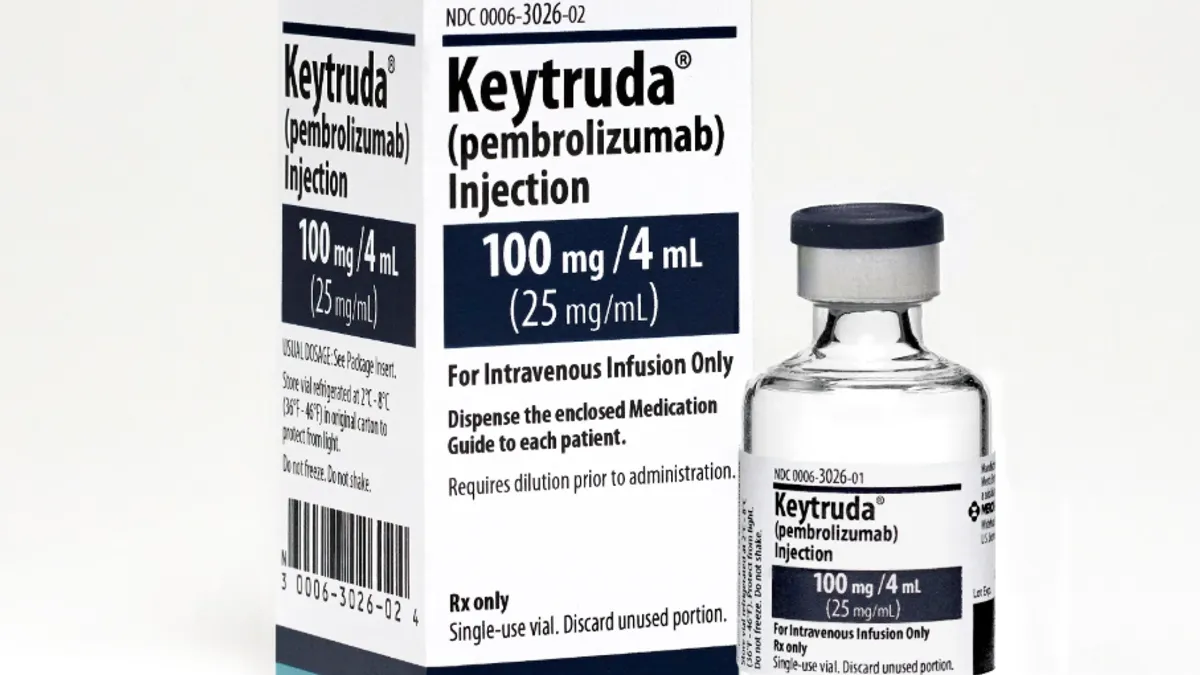
The Keytruda biosimilars are coming.
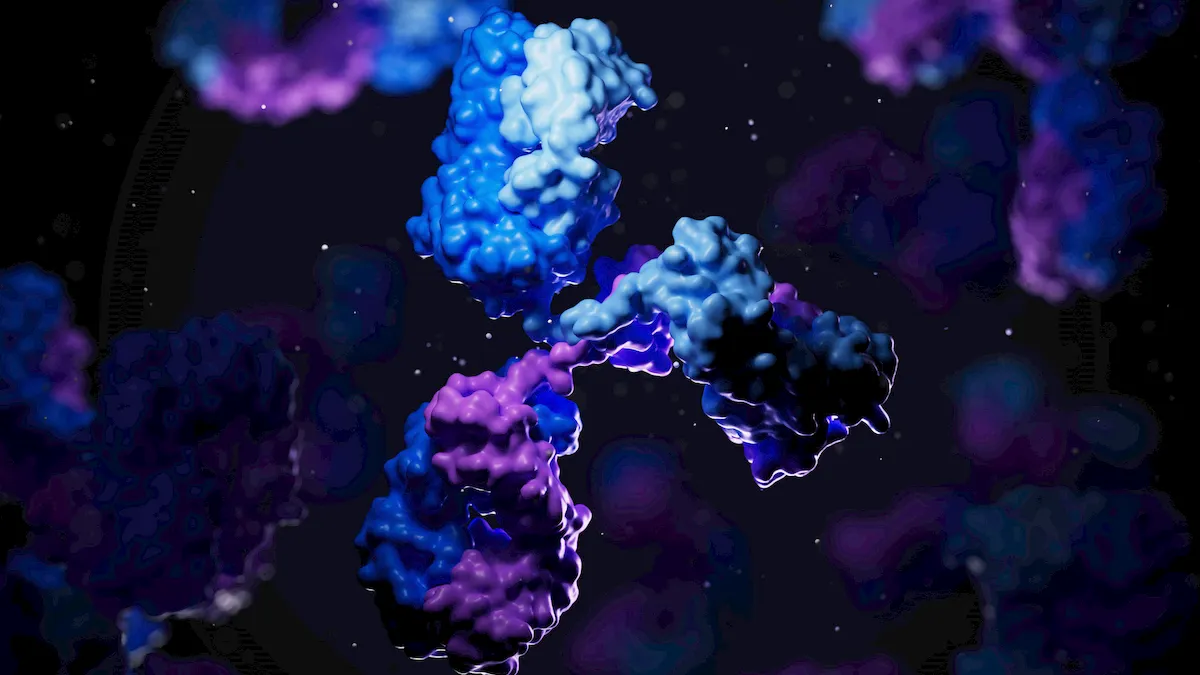
In October, the FDA accepted the first publicly announced application for a Keytruda copycat dubbed FYB206, which it could approve as early as the third quarter of 2027. About a dozen other candidates are also in the works, as Keytruda approaches the dreaded patent cliff and key expirations begin in 2028.
An FDA nod for FYB206 will open the door to competition for the world’s bestselling prescription drug, which brought in $31.7 billion for Merck & Co. in 2025.
Even so, the path to growth for these biosimilars may be uphill.
Branded manufacturers often make strategic deals with PBMs and other stakeholders along the pharmaceutical supply chain, which can create financial incentives that favor the established products, Michael Abrams, managing partner at Numerof & Associates, pointed out.
“What we have at a macro level is the sum total of a lot of deals, many of which I think are probably anti-competitive,” he said. “Most of which are so well hidden that nobody is in a position to evaluate them. And so we have a system that works in favor of the established status quo.”
Without unwinding this tangle of deals between drug companies, PBMs, insurance companies, pharmacies and hospitals, there’s little chance of a market in which competition reliably translates into lower consumer costs, Abrams said. And this complex web that favors branded drugs could prevent Keytruda biosimilars from taking off.
Regulatory support collides with market hurdles
An estimated 118 biologic medicines, representing about $232 billion in potential sales, currently stand to lose patent protection by 2034. That doesn’t mean their biosimilars will take over the market. And the challenges their biosimilars will face in the marketplace come despite federal efforts to smooth the path to market for these drugs, Abrams said.
For example, the FDA’s Biosimilars Action Plan, first released in 2018, outlined strategies to support biosimilar development and market adoption.
FYB206’s developer Formycon and partner Zydus Lifesciences Limited, which was tapped to commercialize the product in the U.S. and Canada, said the FDA agreed with the company on a development pathway that didn’t require a comparative phase 3 efficacy trial.
“This enabled us to accelerate the program and substantially reduce development investment while maintaining the rigorous scientific standards required for biosimilar approval,” Dr. Stefan Glombitza, CEO of Formycon, stated in a press release.
Abrams said this could set a precedent for other products, provided the approval goes smoothly.
“The FDA and the sponsor had to agree on tests and measures that would be reported to FDA to assess whether this biosimilar is as safe and as effective as the reference product,” he said. “And if it goes as they anticipated, this will get approved and the precedent will stand, and then other biosimilars can follow that same path.”
But there are still questions hanging over which indications FYB206 could be approved for. Keytruda has notched FDA nods in over 30 indications to date.
“If FYB206 is approved as a biosimilar to Keytruda (pembrolizumab), theoretically it could receive approval for virtually all of Keytruda's indications without conducting separate clinical trials in each cancer type,” Abrams said. “However, some indications could still be excluded if Keytruda’s indication has unexpired orphan-drug exclusivity or other protections that prevent FDA approval of a biosimilar for those uses.”
Formycon and Zydus might opt to omit certain indications to avoid infringement disputes, or the FDA might require additional evidence for some uses, he added.
While the companies may be able to get the drug approved faster thanks to regulatory tailwinds, that might not be the biggest hurdle for any incoming biosimilar — a situation that could dissuade more biosimilar development down the road.
“If nobody wants to buy [FYB206] because the system is rigged against it, [companies] aren’t going to line up to develop biosimilars even if [development] is a little cheaper and faster,” Abrams said.
Consumers often pay high prices for brand-name biologics, which make up an estimated 5% of prescriptions, but 51% of drug spending, according to the FDA.
To help offset these costs, the FDA has approved more than 85 biosimilars to date. Biosimilars Forum, a nonprofit industry advocacy group, credits these drugs with saving the U.S. healthcare system some $56 billion, and says they have the potential to save as much as $181 billion more in the next five years because the drugs, on average, cost half the price of brand-name options.
But the market share for biosimilars remains below 20%, even though they’re evaluated for safety and efficacy, according to the FDA.
“These savings are being completely left on the table because PBMs have prioritized in their formularies high-cost, high-rebate drugs over lower-cost biosimilars,” Biosimilars Forum states on its website.
The organization is advocating for measures such as PBM reform and other policies that remove competitive barriers to increase access to these drugs.
Changing those market factors will be a big challenge for legislators, largely because of the system’s complexity, Abrams said.
“We don’t have anybody who is expert enough who follows this on a regular basis or can speak with credibility about what’s really going on,” Abrams said.
Legislation aimed at leveling the playing field has really just nibbled around the edges of the issue so far, he said.
For now, companies will likely be watching this potential first Keytruda biosimilar test case to see how it plays out. In order for companies to continue to invest time and energy into biosimilars, it has to be worthwhile to make them, Abrams said.