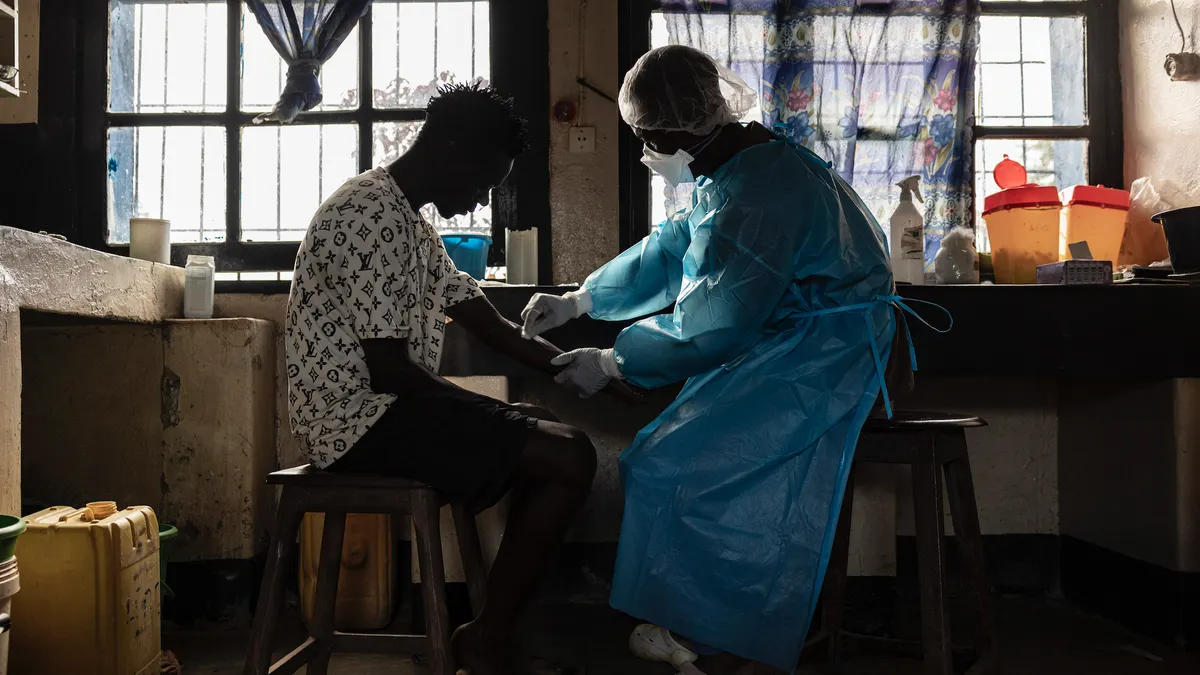
There are no approved vaccines or therapeutics for Bundibugyo virus, the Ebola strain that’s tearing across Congo and has already killed more than 700 people while infecting at least 1,926.
Now, the World Health Organization is launching enrollment for its first-ever treatment trial for the strain, as they race to find viable ways to tackle it. One potential contender is MBP-134, a two-monoclonal antibody cocktail developed by Mapp Biopharmaceutical with funding from the Biomedical Advanced Research and Development Authority. Since all existing supplies of MBP-134 were manufactured with BARDA funding, HHS is donating the doses needed for the trial.
Gilead Sciences’ antiviral remdesivir, which is approved in about 50 countries to treat COVID-19, is also being tested in the trial. Gilead also said it would donate remdesivir doses for the trial, in addition to the emergency supplies it donated in response to the Bundibugyo virus outbreak in Uganda last month.
The study’s goal is to determine whether MBP-134 and remdesivir used individually and in combination can improve survival among people diagnosed with Bundibugyo virus. If it succeeds, it would also mark a needed advance in the wider field of Ebola drug R&D.
A sparse developmental landscape
Treatments for all Ebola strains are incredibly sparse. Merck & Co.’s Ervebo, which won FDA approval just three years ago, is the only globally licensed vaccine. And only Regeneron’s Inmazeb and Ridgeback Biotherapeutics’ Ebanga have been approved as treatments.
But these options only cover the Zaire ebolavirus strain. Zaire is the most common and most lethal, but it’s still just one of four identified orthoebolaviruses that cause illness in humans.
This dearth of weapons to fight the virus is colliding with the fastest-growing Ebola outbreak in history that’s rapidly spinning out of control. As of mid-July, at least 80% of cases originate from unknown transmission chains and are often emerging faster than they can be tracked.
To make matters worse, the current Ebola drug development landscape is meager. Recent research from the INTREPID Alliance shows that there are no new antiviral compounds targeting Ebola in clinical development. While some companies are investigating antivirals for Ebola that have been approved for other diseases, none are targeting the Bundibugyo virus strain.
In the meantime, the Coalition for Epidemic Preparedness Innovations said it will “urgently accelerate” three investigational vaccines targeting the Bundibugyo virus. WHO has also released a new target product profile to guide R&D for future Bundibugyo virus vaccine candidates.
Will the emerging treatments work?
Insights into the effectiveness of MBP-134 and remdesivir against Bundibugyo virus are extremely limited.
MBP-134’s preclinical testing, such as animal trials, has shown its promise against multiple Ebola strains, including Bundibugyo. Its only human testing was a phase 1 clinical evaluation in healthy volunteers that determined the product to be safe and well tolerated, the company reported.
“Mapp’s mission is to develop monoclonal antibody drugs for neglected diseases, of which Ebola is a good example,” the company’s president, Larry Zeitlin, told PharmaVoice via email without providing additional details on the drug or the study.
Remdesivir’s potential effectiveness against Bundibugyo virus is also uncertain. Although it has shown “promising preclinical activity across multiple filoviruses,” a virus family that includes Ebola, the “safety and efficacy of remdesivir for the Bundibugyo strain have not yet been established,” according to Gilead.
WHO’s new trial has been established as a platform trial, which allows for additional treatments to be added as they become available. Patients of any age can enroll.