The COVID-19 pandemic may have come and gone, but its effects on the biotech industry have stretched on for years. Now, after half a decade of stress for smaller drugmakers, some venture capital investors are seeing new signs of optimism.
The pandemic brought a massive influx of cash into the biotech markets for public and private companies, contributing to a “frothy” environment in which biotechs thrived. But when many clinical programs didn’t materialize and the cost of development rose, the bubble burst, leaving a difficult road ahead for many companies without data to lean on.
Just last year, the funding environment for private biotechs was still in the dumps, reeling from skittish investors and an uncertain economic climate. Many companies were forced to shut their doors, reduce their workforce or cut programs.
At the same time, pharma began opening up its pursestrings for a flurry of deals including $10 billion-plus acquisitions from Johnson & Johnson, Novartis, Pfizer and Merck & Co. Even biotech IPOs opened up in the second half of the year despite a slow start.
"Investors aren’t sitting on cash anymore — they need to deploy it. People have learned how to live with uncertainty and we’ve seen some of that optimism come back into the sector."

Omar Khalil
Managing director, Santé Ventures
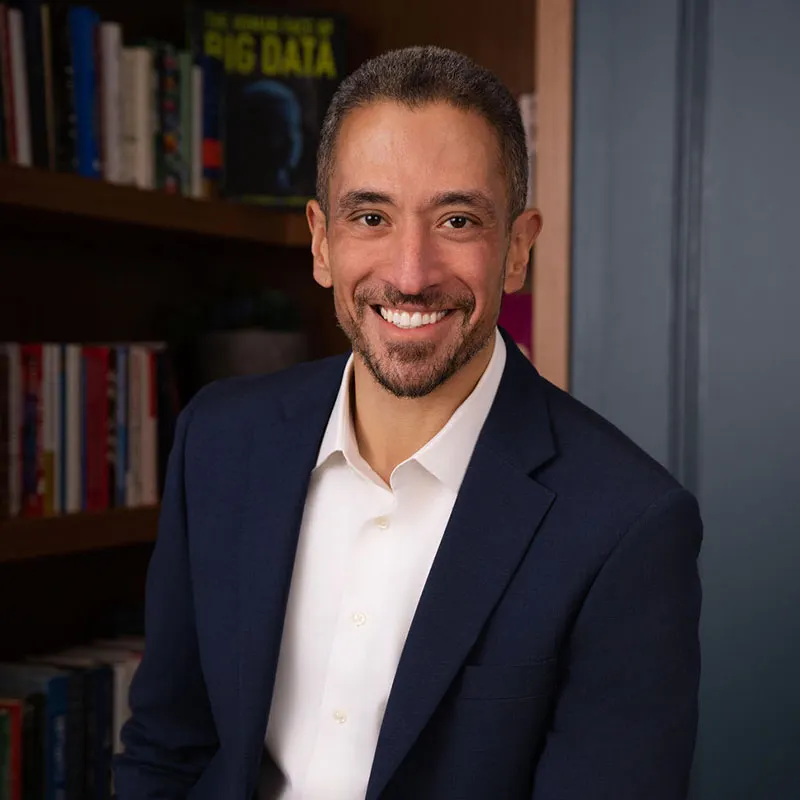
Things are looking up for biotechs as investors become more focused and disciplined on the early-stage prospects, said Omar Khalil, managing director at the venture capital fund Santé Ventures, which recently closed a $330 million funding round (its fifth) in the life sciences arena.
Here, Khalil explains how the biotech industry has changed since the firm launched in the early 2000s, the challenging funding environment of the last few years and the factors driving the potential beginnings of a biotech comeback.
This interview has been edited for brevity and style.
PHARMAVOICE: So much has changed in biotech since Santé Ventures got its start two decades ago. How would you describe those changes and how they’ve shaped your focus along the way?
OMAR KHALIL: Looking back 20 years ago, the amount of capital flowing into biotech was very different. If you look at 2005 biotech venture dollars, it was a fraction of what it is today, and the externalization of R&D from pharma had not been as complete as it is now. Companies were less likely to want to acquire or partner something early, whereas now, the ecosystem has matured so much that there’s an expectation that biotech is feeding the pipeline and pharma does the late-stage development and commercialization.
The types of companies people are investing in have changed a lot, especially as we greatly expand our understanding of biology and open the doors to what we couldn’t have even imagined 20 years ago. Back then, a pretty common deal people would get excited about would be maybe a repurposed drug or an accelerated pathway to minimize technical risk. Over time, there was a greater appetite for programs that have the opportunity to move the needle from a patient perspective. Of course, investing in a new modality involves more risk. But you’ll always see waves, and in the last few years, there’s been less risk taking, especially for later-stage investors around new targets and novel biology.
What have been the most difficult aspects of the last few years? And what was your strategy to get through such a challenging funding environment?
One dynamic that has changed is inflation — not necessarily the consumer price index, but for biotechs it was the cost of running clinical trials that grew tremendously. A lot of those complexities around clinical development have expanded, and to get from one milestone to another requires more capital. A lot of tradeoffs had to be made, and every company in the ecosystem had to prioritize and trim resources.
We tend to have fairly focused capital plans, so you typically don’t see us invest in the larger teams with a couple hundred million dollars. The teams we invest in are already efficient and focused, and so we didn’t have any portfolio companies that had to wind things down because there was no more capital available. We’ve been able to get everybody through from a capital standpoint. Sometimes there may have been clinical data that made us decide to change track, but financing was never the driving factor.
Biotech valuations shifted at the beginning of this decade. Can you talk about what you’re seeing now with valuations following the post-COVID downturn?
Valuations got very frothy in the public and private markets. We saw in the COVID bubble that preclinical companies were able to go public at billion-dollar valuations, and that trickles down to private companies. Your ability to raise more capital at higher valuations is easier to make the math work. The flip side is that when public valuations collapse like they did beginning in 2022 and into the following years, that has a dual effect on private companies. Investors look at private valuations and say, ‘Why would I invest in a private company when I can invest in a public company that’s potentially further along and a much lower valuation?’ So not only did the valuation ultimately get corrected lower, but the capital influence of the private side dried up.
Now, over the last six to eight months, if you look at the biotech index and the IPO window, you’re starting to see those public valuations go up. It hasn’t gone crazy, but we’ve seen consistent improvement. And that’s starting to trickle down to the private markets. For pharma companies filling their pipelines, it was much harder to justify transactions with those aggressive valuations. Now that valuations are starting to correct, I’m hearing more pharma companies interested in earlier stages. The valuations line up with them moving upstream again.
What’s the main driver behind this nascent biotech comeback?
The unsatisfying answer is that markets are cyclical. These things happen. But the COVID bubble has a lot to do with it — markets got too aggressive and too many companies went public that shouldn’t have. We needed some time to shake that out of the system. At the same time, we had the inflation and interest rate shocks that took capital away from high-risk asset classes to less risky asset classes, all of which pulled down the valuations. The companies that survived are [also] much higher quality than what we had three or four years ago, with more time to advance better data with a compelling story.
With the exception of geopolitical uncertainties, the macroeconomic perspectives have improved for capital inflows. Investors aren’t sitting on cash anymore — they need to deploy it. People have learned how to live with uncertainty and we’ve seen some of that optimism come back into the sector.
How has the industry changed as a result of these shifts?
Right now, the focus is on clinical data. You can see that with the emergence of China on the biotech side. There has been kind of a reset of the key driver of the industry toward the impact for patients and the impact on the healthcare system. How that may manifest is more licensing of assets in phase 1 or 2 that are mostly fast followers. That wave may lead to a glut of clinical stage programs with comparable data and little differentiation.
What do you expect down the road as this biotech comeback matures?
From our standpoint as early-stage investors, we’re looking for novel technologies that could be best in class. In a world where there may be six or seven competitors from China around a single class, that’s harder for us to get conviction on. The validated targets get crowded, and so there has to be a release valve somewhere else.
And the timing for that is great because the pendulum is swinging back. The timing is more difficult to predict, but hopefully investors who are looking at their portfolios and see them weighted in those validated targets will want to diversify and invest in some more novel approaches as well.