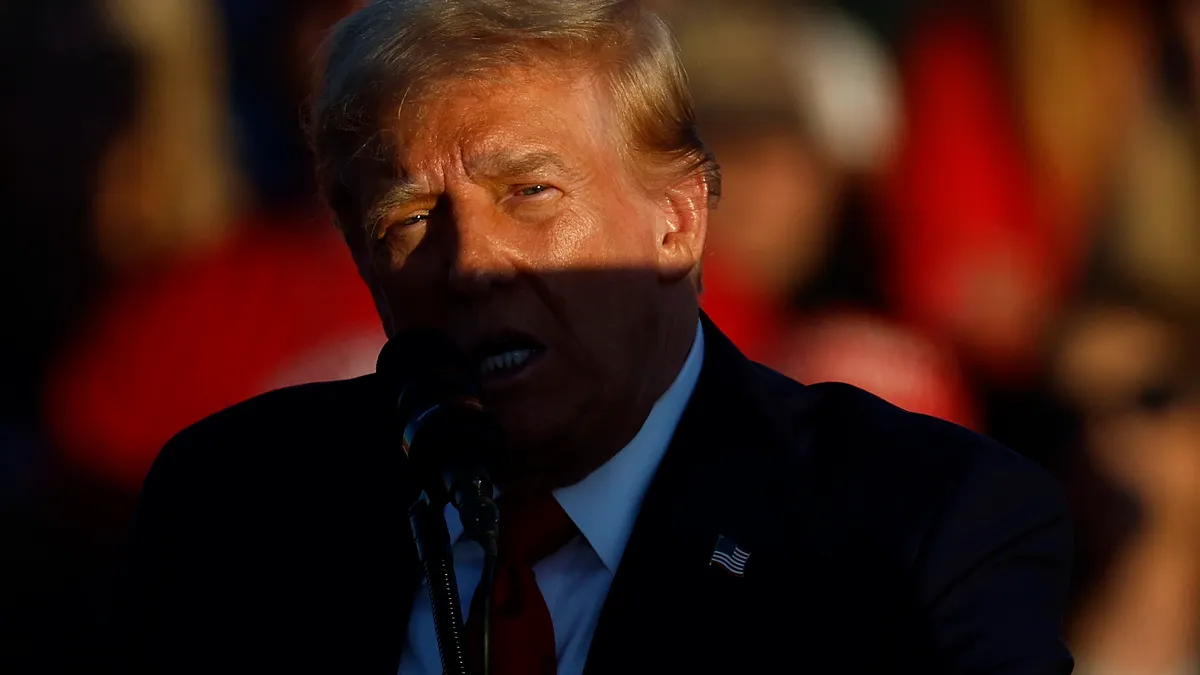
President Donald Trump’s direct-to-consumer drug platform — which prominently features an image of him in the Oval Office — has become a key feature of his ongoing pricing deals with Big Pharma companies. But the platform, dubbed TrumpRx, is running into trouble getting off the ground.
TrumpRx’s anticipated January launch has been delayed amid scrutiny from a group of senators raising questions about the website’s legality and potential conflicts of interest. They’re now pushing for an Office of Inspector General review before the website goes live.
A letter from Senators Richard Durbin, Elizabeth Warren and Peter Welch outlines concerns about the portal, which they say could be used to steer patients toward high-cost drugs in violation of the Anti-Kickback Statute. They also warned it could drive unnecessary and costly prescriptions, and raised additional concerns about its ties to the president’s son.
“There appears to be possible conflicts of interest involved in the potential relationship between TrumpRx and an online dispensing company, BlinkRx, on whose board the president’s son, Donald Trump, Jr., has sat since February 2025,” they wrote. In July 2025, BlinkRx launched a service helping drug manufacturers establish DTC programs, just before the TrumpRx announcement.
Smoke and mirrors?
TrumpRx refers consumers to drug manufacturer websites where they can buy discounted drugs directly from more than a dozen drug companies that made deals with the administration. The terms of those deals have largely been hidden from public view, which has triggered a FOIA lawsuit by Public Citizen demanding more information specifically about the agreements with Pfizer and Eli Lilly.
Pharma DTC sites, including those accessed through TrumpRx, typically offer cash-pay pricing, meaning patients can’t use their insurance plans to cover the cost. This structure bypasses the usual pharmacy benefit manager intermediaries, allowing direct purchases and lower prices from drugmakers.
In many cases, the discounted prices offered through these websites are more than a patient would pay if they went through insurance. As a result, the program may only benefit uninsured Americans, which is about 8% of the country, those with high deductibles or patients with insurance that doesn’t cover a specific drug. In addition, pharma companies have already raised prices on many TrumpRx-listed drugs this year.
While federal insurance programs won’t pay for medicines on TrumpRx, the senators said they fear the initiative will still end up costing taxpayers money.
“We are concerned that DTC advertising, including in relation to TrumpRx, will steer customers to prescriptions that may be reimbursed by federal health programs, creating the potential for unnecessary or wasteful spending,” they wrote.
DTC scrutiny
Pharma DTC platforms and advertising already faced scrutiny before the administration announced TrumpRx.
“Last year, we released a report on an investigation of Eli Lilly’s and Pfizer’s DTC platforms, and their use of hand-picked telehealth companies to steer patients toward their own specific, high-cost medications,” the senators wrote. “We found that Eli Lilly and Pfizer spent up to $3 million combined for partnerships with telehealth companies, who funneled patients to the manufacturers’ products.”
These drugmaker-owned DTC sites offered patients prescriptions following quick telehealth visits, according to the senators.
“In one instance, 100 percent of the patients routed to a virtual visit with one of Eli Lilly’s chosen telehealth companies received a prescription,” they said, citing an earlier report.
HHS recently released guidance on how DTC sites can avoid anti-kickback statute violations, and the senators said they’re not certain DTC sites linked to TrumpRx clear the bar.
“While HHS stated that the January 27 guidance document ‘clears [the] path’ for the TrumpRx website, we do not believe HHS OIG has adequately addressed whether TrumpRx and affiliated DTC platforms will be compliant with federal law, including the Anti-Kickback Statute,” they wrote.
They’re now looking for details about the TrumpRx program to ensure proper oversight.
“Because of the practices that some pharmaceutical manufacturers have used to advertise and steer patients, we believe additional safeguards and transparency are required for any ‘.gov’ website that will be promoted extensively by the White House and pharmaceutical manufacturers,” they said.
Going forward, they’re seeking specifics about how the program will comply with the law and provide safeguards against potential conflicts of interest, including ties to Trump Jr. and BlinkRx. They asked for this information by Feb. 15 or before the website launches.