This is the second installment of our two-part series examining pharma’s year ahead. Our first installment looked at industry predictions for the biotech market and regulations.
As AI finds solid footing in pharma R&D, the technology is slated to yield significant rewards.
Industry leaders expect that up to 30% of preclinical work could soon be accomplished using some form of AI, according to a recent survey, and ultimately predict a 16% reduction in drug development costs with the use of AI in general.
To get there, the technology will have to keep delivering disruptive transformations in pharma — an ongoing trajectory that industry leaders believe will continue through 2026.
But pharma’s therapeutic breakthroughs still also come from the daily toil of dedicated scientists targeting unmet needs for patients. In the coming year, companies have their sights set on creating the next wave of innovations in major therapeutic areas like cancer and CNS, while also making clinical trials more efficient and accessible.
How will all this play out in 2026?
Here, pharma industry leaders offer predictions for the next changes in drug development — including new AI use cases, up-and-coming modalities, the shifting role of patients in R&D and more.
AI’s next era
AI will transform target discovery

“In 2026, agentic AI will reshape target discovery by helping us see the causal biology that defines where true disease modification is possible. We’re moving past predictive models into systems that integrate human genetics, perturbation data and multiomic profiles to understand what’s correlated with disease, and what drives it. This clarity is exposing tractable mechanisms, refining pathway maps, and revealing intervention points that were invisible to conventional discovery. As these models mature, they’re improving our ability to prioritize targets that are both genetically anchored and therapeutically actionable.”
Dr. John Lepore, CEO, ProFound Therapeutics, CEO-partner, Flagship Pioneering
More collaborative R&D models will emerge

“In 2026, life-science R&D will cross a meaningful inflection point as AI-augmented molecular design becomes the default mode of early discovery. Winning organizations will deliver the predictive power of models directly into scientific context — embedded into electronic notebooks, analysis platforms and design workflows — so scientists can act on high-confidence insights. The industry will also increasingly recognize that true competitive advantage lies not in algorithms but in training the data behind them. And as the benefits of collaborative model improvement outweighs long-held concerns over data sovereignty, the industry will shift toward a framework where pharmas can benefit from collective intelligence, which will become standard practice by the end of the year.”
David Gosalvez, chief strategy officer, Revvity Signals
Results from AI’s first clinical tests will emerge

“After years of overpromising, 2026 will be the first cycle in which AI-native drug discovery platforms deliver clinically meaningful inflection points, not just computational milestones. The industry will be watching companies like Generate:Biomedicines as AI-engineered biologics move into advanced clinical stages, testing whether these platforms can consistently translate computational design into human data.”
Jessica Owens, co-founder, Initiate Ventures
AI will be leveraged more in late-stage development

“Either getting a drug on the market or failing can come down to a single percentage point. Biopharma has tried to get ahead of this by using AI to discover more targeted candidates. In 2026, they’ll realize they need AI further down the pike, and invest in AI-driven biomarkers, while designing smaller, more efficient trials or simulating options. In summary, biopharmas will go from needing virtual cells for early discovery to virtual patients to test different scenarios and assumptions at the clinical phase.”
Kevin Brown, CEO, co-founder, Standard Model Biomedicine
Agentic AI will transform clinical work

“By 2026, agentic AI will reshape clinical development from end to end, moving the industry from retrospective review toward continuous, intelligent oversight. These systems will not only automate tasks but actively collaborate with teams, anticipate risks, and surface insights that are difficult for humans to detect at scale. In medical coding, protocol interpretation and quality oversight, the same pattern is expected to take hold as agentic AI enables faster, more focused attention on critical data. As these capabilities mature, the industry will see self-updating study environments where data, context and risk models refresh in near real time.”
Usama Dar, chief product and technology officer, CluePoints
The AI market will start to consolidate

“In 2025, the market was hungry to invest in AI applications, but macroconditions and policy changes squeezed payer and provider systems with a laser focus on tangible ROI. In 2026, we will see the wheat separating from the chaff and a real-time surfacing of the best AI companies in health tech. As a result, we anticipate the beginning of market consolidation and a focus on the applications and agents that impact core top-line and productivity challenges — like revenue cycle and offloading of administrative burden on clinicians so they can do the real work.”
Megan Shaw, CEO, president, Pittsburgh Life Sciences
AI governance will become key

“By 2026, AI governance will evolve from a checkbox compliance exercise into a core operational discipline, driving safer and faster decisions throughout pharmacovigilance. Regulators are increasingly aligning around principle-based expectations, focusing on risk assessments, evidence of controls and auditable processes, rather than endorsing specific tools. While the framework for governance is unlikely to change, its substance will. As AI extends beyond document assistance into critical workflows like signal detection, benefit-risk analysis and medical review, areas like explainability, privacy and monitoring will become more important.”
Marie Flanagan, director, product management in digital projects and solutions, IQVIA
Drug development advances
Global alignment will improve R&D
“Clinical development in 2026 will be increasingly defined by the globalization of efficient, well-run trials. Companies will adopt leaner operational models and emphasize delivering clear clinical results rather than broad pipelines. China’s expanding clinical development ecosystem will enable faster, less capital-intensive studies that support rapid iteration and more decisive readouts. The organizations that succeed will be those that pair strong science with rigorous operational execution and discipline, focusing on generating meaningful clinical outcomes that translate into real benefit for patients.”
João Ribas, principal, Seed Investments (Novo Holdings)
Antibody advances could change cancer outcomes

“Treatments for advanced and recurrent cancers have lagged behind patient need, but we're seeing remarkable momentum as novel modalities spanning antibody-based therapeutics, including bispecifics and antibody-drug conjugates, as well as other emerging drug formats, rapidly advance through late-stage development. Bispecific antibodies and ADCs are transforming the treatment landscape for hematologic and solid tumors. In 2026, several highly anticipated phase 3 readouts and regulatory filings from this innovation wave will bring meaningful hope to patients battling the most aggressive cancers.”
Dr. Tahamtan Ahmadi, executive vice president, chief medical officer, head of experimental medicines, Genmab
R&D will be more integrated, inside and out

“We anticipate more targeted and personalized therapies to treat chronic and rare conditions, due in part to the proliferation of multiomics in companion diagnostics and the need for diagnostic assays for newer FDA approved therapeutics. By integrating various omics disciplines, researchers are able to better understand the molecular basis of disease, moving beyond single biomarker models to more robust, multi-layered systems. This integrated approach can lead to improvements in target validation, patient selection and clinical trial retention.”
Madhuri Hegde, senior vice president, chief scientific officer, Revvity
DEI will change but remain critical

“Administrative changes in DEI and regulatory rollbacks caused uncertainty in 2025 and potentially deprioritized incentives for critical initiatives like inclusive clinical trial recruitment. Moving into 2026, we will still see companies embracing the principles of DEI in clinical trials — it will just look and sound different. Rather than being a siloed initiative driven or removed by policy, DEI will be integrated into core business operations. One area we’ll see this is in clinical trials for GLP-1s. As demand continues to surge, diversity will play a crucial role in regulatory reviews for these drugs.”
Katrina Rice, chief delivery officer, biometrics services, eClinical Solutions
Health equity will impact reputation

“In today’s corporate landscape, I predict the most admired companies will be those that put the whole person at the center of everything they do. Leaders are integrating health equity into their culture and everyday decisions, ensuring equitable access to care. True differentiation will come from organizations boldly demonstrating real impact, not just through the medicines they deliver, but how they support communities. As we look to 2026, health equity will become inseparable from a company’s legacy, reputation and the trust they earn.”
Wendy Short Bartie, executive vice president, corporate affairs, Bristol Myers Squibb
Adaptive trial design will reign supreme

“In 2026, I anticipate a major shift toward improving R&D probability of success, especially in phase 2. We should expect to see earlier terminations, smaller adaptive studies, and advanced modeling and simulation to become standard practice. This disciplined approach will reduce wasted investment and accelerate promising assets. Organizations that embrace data-driven decision-making and portfolio agility will outperform those clinging to traditional trial designs.”
Aaron Mitchell, principal, ZS
More therapies will cross indication boundaries

“Boundaries between disciplines will significantly blur in 2026 due to overlapping immunobiology. For example, we’ve seen the mRNA-based COVID vaccines prolong survival in patients with cancer, and we’ve seen that the Epstein-Barr virus reprograms autoreactive B cells to drive autoimmunity in Lupus. The overlapping immunobiology also means that once a target is derisked and a molecule demonstrates an acceptable benefit/risk profile in one indication, it can be rapidly repurposed in another indication.”
Dr. Anne Kasmar, senior vice president, global therapeutic area head, infectious disease and vaccines, Parexel
CNS will win a needed breakthrough

“I anticipate that 2026 will mark a new chapter in CNS drug development. Specifically, I predict it will be the year that blood-brain-barrier shuttles and oligonucleotide-based therapeutics become the new ‘power couple.’ For over a decade the potential of such medicines to make a transformatory impact to a range of CNS disorders has been clear through their ability to make targeted changes to specific disease targets. Yet the realization of this potential has been held back by delivery issues. The development of BBB shuttles should enable systemic or subcutaneous dosing of such therapeutics, removing their Achilles heel. The value that this will unlock and the impact on the CNS space will be huge — I expect to see an uptick in related partnerships and deals during the year.”
Dr. Jan Thirkettle, CEO, Harness Therapeutics
The next wave of cancer drugs will gain steam

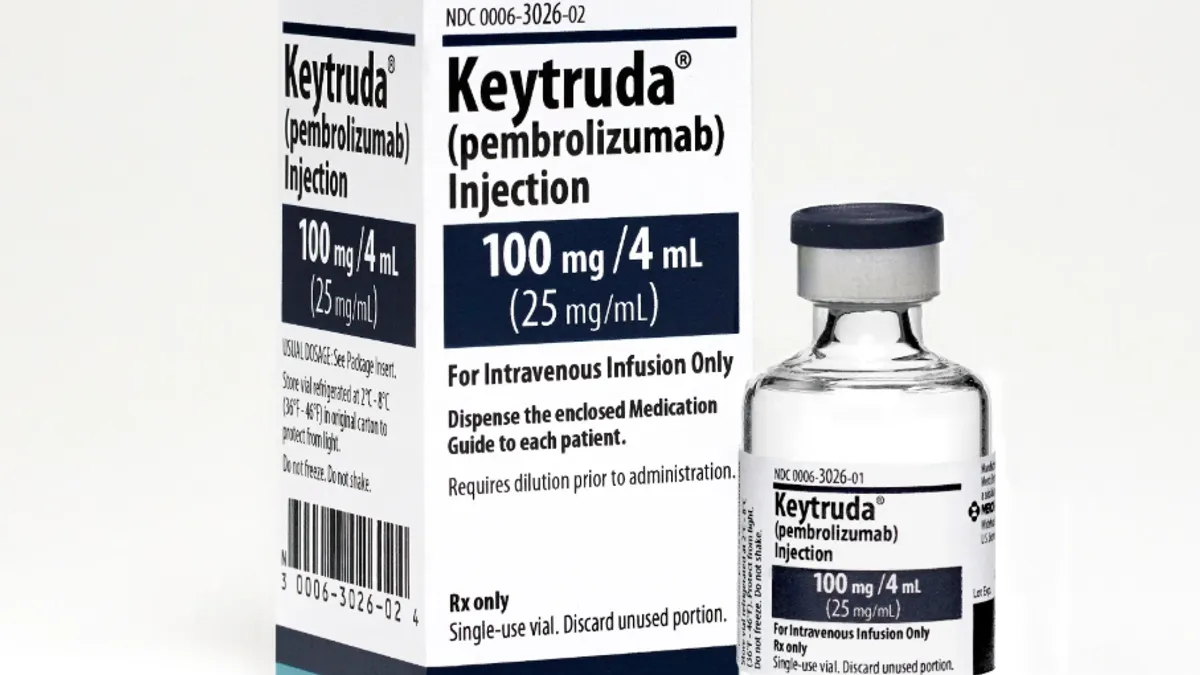
“PD-1 and VEGF-targeting drugs saw huge leaps forward in 2025 with some emerging as frontrunners to challenge Keytruda. ADCs also exploded with readouts that could move established players such as Enhertu into earlier disease stages. The next wave of ADCs that are differentiated by both target and payload are set to announce themselves by 2027, meaning that 2026 will build more excitement. Targeted radionuclide therapies were also an interesting area that’s gained momentum across prostate cancer and neuroendocrine tumors. Although we may not see a lot of approvals here in 2026, expect key data from the next generation of alpha-emitters to help drive fundamental paradigm shifts in 2027 and beyond.”
Ethan Smith, therapy area director, Norstella
Oncology’s next leap will come from unified datasets

“In 2026, major real-world data providers will start teaming up with leading oncology foundations to build unified datasets that combine natural history information, genomic profiles, and longitudinal clinical data. Foundations bring deeply curated patient registries, while RWD organizations contribute the technology required to clean, link and standardize complex datasets. These partnerships will create high-value data assets that improve patient stratification, reveal rare subpopulations earlier and strengthen real-world endpoints used in clinical development.”
Vikas Mahajan, associate vice president, data, analytics and AI, Indegene
Patients will play a stronger role in cancer research

“Patients will continue to reshape oncology in 2026 by pushing for personalized, precision-based therapies that preserve quality of life while delivering meaningful benefit. With patients taking a more active and informed role in their care, advocacy must return to its original purpose — standing firmly with the patient. This shift will place greater pressure on regulatory structures that slow access to promising therapies. Ultimately, rising patient expectations, the growth of precision medicine and a renewed focus on long-term survivorship will move cancer care toward a model grounded in treatments that strengthen the whole person."
Dr. Nathan Goodyear, integrative medicine physician, Williams Cancer Institute
Dosing strategies will shift

“In 2026, the FDA’s Project Optimus initiative will become the expected standard for dose optimization in oncology drug development. Sponsors can no longer rely on legacy habits built around maximum tolerated dose, which can expose patients to unnecessary toxicities. Regulators and clinicians will expect dose selection supported by the totality of the evidence, integrating pharmacology, exposure response, safety and patient experience. This shift will push companies to design smarter early phase studies and accept that dose optimization is not optional but foundational.”
Pascal Piedbois, chief medical officer, One2Treat