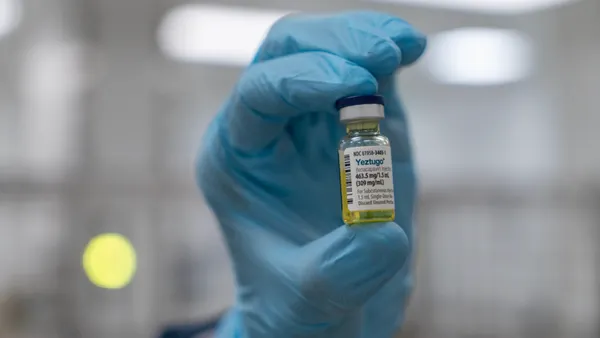
After losing significant ground to rival Eli Lilly in the GLP-1 space over the past two years, Novo Nordisk is defending the one arena it now dominates — oral therapeutics. But with Lilly preparing to launch its obesity pill orforglipron as early as the second quarter, can Novo's grip on the oral market last?
This year got off to a rocky start for the Danish pharma giant. The company said last month it’s expecting a drop in sales and profits in 2026 as it faces federal pricing constraints, and fierce competition from Lilly and compounding pharmacies.
The company's shares plummeted after a string of disappointing clinical readouts, wiping out nearly all the stock gains made since its blockbuster obesity shot Wegovy was approved almost five years ago.
Faced with mounting pressure on multiple fronts, Novo is doubling down on next-generation oral peptides with improved tolerability while forging new partnerships to bolster its pipeline. But Lilly is now encroaching on the oral space too.
Novo’s track record with pills
Novo became an oral pioneer with the first-ever GLP-1 pill, Rybelsus, which was approved by the FDA in 2019 for type 2 diabetes. The pharma giant hit another milestone at the end of last year when the agency OK’d an oral formulation of Wegovy, making it the first oral GLP-1 approved for weight loss.
Since its U.S. debut in early January, Wegovy pill sales have soared. More than 600,000 prescriptions were written in the first two months alone, the drugmaker said, with many of them going to patients new to GLP-1 drugs.
At the same time, Novo has found itself on the losing end of multiple head-to-head trials against its main competitor in the ongoing battle for improved injectable options.
The company recently reported that its closely watched next-gen obesity shot CagriSema failed to top Lilly's dual GLP-1/GIP agonist Zepbound in a direct comparison study.
The fixed-dose combination of Novo's best-selling drug semaglutide and the amylin analogue cagrilintide had been initially championed as the candidate that could leapfrog Lilly's Mounjaro and catapult Novo back into the market lead. But when CagriSema fell short of Zepbound's 25% weight loss benchmark, those hopes were crushed.
Days later, Lilly reported another win, this time for diabetes. The company’s GLP-1 pill orforglipron outperformed Novo's Rybelsus in the first-of-its-kind late-phase study, triggering greater weight loss and lower blood sugar levels. However, those benefits from the pill, which is currently under FDA review, came at the expense of higher side effects.
Patients taking orforglipron were in fact more likely to stop treatment because of side effects than those taking Rybelsus. Discontinuation due to adverse events occurred at roughly double the rate in the orforglipron groups, regardless of dose
Novo's oral bid
With tolerability becoming a key competitive differentiator in the GLP-1 arena, Novo is focusing on improving its oral drug delivery –– a notoriously difficult task in the development of obesity and diabetes treatments. To get there, Novo has turned to dealmaking.
A day before the Rybelsus trial results dropped, Novo announced it inked a deal worth up to $2.1 billion with biotech startup Vivtex Corporation that could lead to new oral biologics for obesity, diabetes and other metabolic diseases. The partnership combines Novo's decades of experience in protein and oral peptide engineering with Vivtex's proprietary drug screening technology to identify promising oral assets with improved bioavailability and tolerability.
The duo's collaboration aims to overcome the challenges of developing oral biologics, which are generally poorly absorbed in the GI tract. If Novo can develop a biologic that is easier to take while maintaining solid efficacy, the large pharma could reclaim some market ground. But with a wave of new contenders making their way through the clinic, Novo's standing in the oral GLP-1 market is likely to stay shaky.