Can drugmakers find a way around the pharmacy benefit manager model often blamed for rising drug costs? Some pharma companies are giving it a shot by reaching out directly to large, self-insured employers.
For years, employers have sought to streamline their relationships with drugmakers to lower costs. But until recently, there was no clear path around PBMs, the intermediaries who distribute, formulate and process claims.
These middlemen often charge fees that erode the value of manufacturer rebates, said Drew Wilkins, a managing director at Deloitte, focused on commercial life sciences.
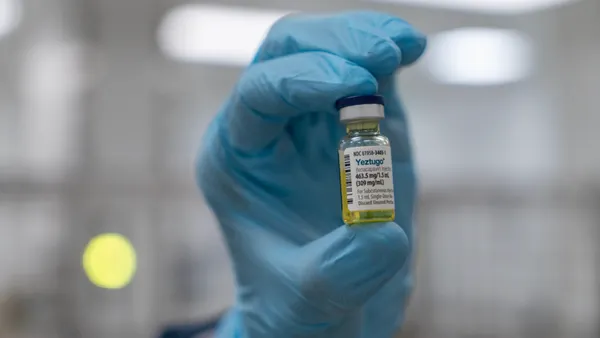
But amid growing political pressure to reduce drug costs and intense demand for GLP-1 drugs, pharma giants Novo Nordisk and Eli Lilly are this month testing a new direct-to-employer model that would allow self-insured companies to negotiate weight loss treatment prices directly with manufacturers.
The two companies are partnering with Waltz Health, a digital health company with a program that enables companies to purchase drugs at a fixed price. Waltz will administer the program, including patient eligibility, screening pharmacy and prescription-related tasks, as well as offering customer service support.
While these programs are currently limited to GLP-1 medications, Wilkins said they could mark the beginning of a broader shift, with more drugmakers adopting similar approaches and expanding drug offerings.
“We're going to begin to see other manufacturers and large employers push on this and identify where it makes sense to have these models and how we can start to see them emerge,” he said.
Additional manufacturers could join the market as soon as the end of this year and eventually add more drugs.
“Early Alzheimer's, other cognitive disorders and diseases like muscle weakening could be interesting candidates for these models, and a way to tap into an eager population trying to think about their overall health and wellbeing in the long run,” Wilkins said.
Other products may be less suited for the model.
“I do not expect that you'll see it in things like rare diseases or oncology,” Wilkins said.
Meeting GLP-1 demand
GLP-1 drugs marked a natural starting point for a direct-to-employer venture because of the highly competitive space they inhabit and a surplus of consumer demand. A growing body of evidence shows that these drugs confer broader health benefits and potential cost savings over time, which makes them appealing to companies with long-term employees, Wilkins said.
Employees could share in those savings under the new model. Under the traditional model, the patient typically paid a percentage of the list price, not the lower net cost that includes a manufacturer’s rebate.
“So, if the drug is $1,000 and you have a 20% co-pay, you're paying off that $1,000 even though the net price is probably closer to $500,” Wilkins said. “If we get rid of rebates and move closer to that net price, your co-pay … should be reduced as well.”
The model would also give patients broader access to GLP-1 drugs. Currently, only about 19% of companies with 200-plus employees provide GLP-1 coverage.
Direct-to-employer programs will likely be adopted primarily by mid-size and larger companies, but they could open the door to new drug pricing approaches more broadly. True innovation might not occur at the outset, Wilkins said, but a closer relationship between the manufacturer and the employer could drive change.
“They'll be able to think about things like, what about a subscription model? What about other types of risk-based contracts, value-based contracts? The data flow will be cleaner, easier and better able to align the incentives,” he said.
But the trajectory will largely depend on how this initial foray plays out.
This model could also spur PBM changes. Some PBMs, feeling the pricing pinch, have already moved to secure new GLP-1 rebates and discounts from manufacturers for group health plans that could lower costs for patients.
But with the advent of direct-to-employer programs, PBMs could be incentivized to adjust their fees to stay competitive, driving down drug prices overall, Wilkins said. One shift might include basing PBM fees on service delivery rather than drug costs. It might not cost the PBM more to deliver services for a $10,000-a-year product versus a $100,000-a-year product, he said.
Grappling with the unknowns
While this direct-to-employer model ostensibly cuts out traditional PBMs, there’s still technically a middleman involved. In theory, Waltz and other potential intermediaries could come to resemble PBMs over time. But Wilkins said he hopes the model will bring change, even if it takes time to get there.
“I think if it proves itself and demonstrates that it really is a way to lower costs to self insured employers and patients, while also being accretive to manufacturers, it could really trigger a wider paradigm shift in how we structure the access landscape, how we provide drugs, and how drugs are purchased and provided to patients,” Wilkins said.