Hemophilia gene therapies arrived on the market a few years ago with blockbuster expectations. But now, one therapy has been pulled from the market while two are fighting an uphill battle for reimbursement and a solid place in a wobbly market, according to Dr. Michael Recht, chief medical and scientific officer for the National Bleeding Disorders Foundation.
Analysts predicted Biomarin Pharmaceutical’s hemophilia A gene therapy Roctavian would hit peak sales of $2.2 billion. Instead, Biomarin is now looking to offload the drug due to weak commercial uptake.
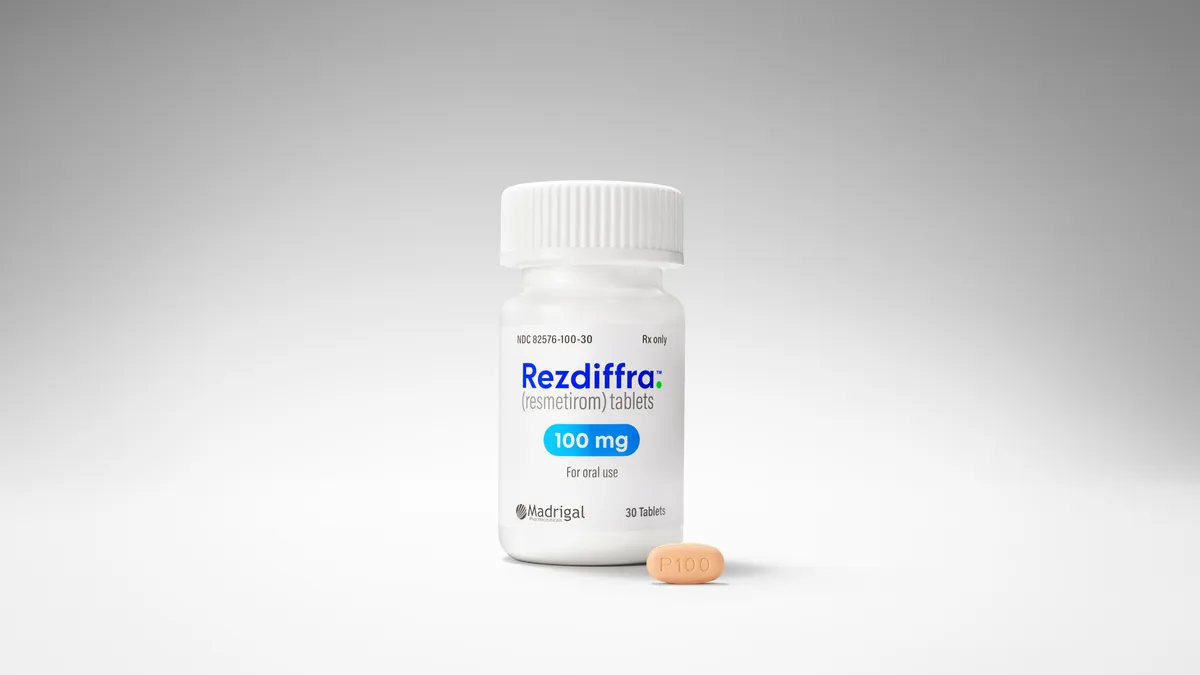
In a similar position, Pfizer pulled its hemophilia B treatment Beqvez from the market while CSL Behring’s Hemgenix, which was first to market, is also significantly underperforming in hemophilia B.
Dismal sales came as a surprise to many who saw hemophilia gene therapies as a major scientific leap forward and a promising one-time alternative that could free patients from frequent clotting factor infusions or injections.
But gene therapies come with a high price tag. Hemgenix became the world’s most expensive drug when it was approved in 2022, with a list price of $3.5 million per dose. Still, treatment could be worth the sticker shock, and CSL estimates that Hemgenix could save up to $5.8 million per person by eliminating the need for once or twice-weekly clotting factor injections.
“It’s a value-laden intervention,” Recht said. “It’s just shockingly expensive.”
Reimbursement hurdles
Payers have balked at the bill for gene therapy treatments, although Recht said all of his interested patients have been able to get them.
“As part of an advocacy organization, when we’ve spoken to the payers, what we've heard is, ‘Well, the average time someone is on a specific health plan, since the Affordable Care Act has been around, is under two years. So, why should we pay for lifetime therapy when that person might be on our plan for under two years?’” Recht said.
Still, an NBDF data analysis found that rapid plan hopping is not as common as insurers claim. Since the introduction of the Affordable Care Act, people typically only change plans when they change jobs, he said.
“I’m very hopeful there will be products to address the unmet needs of the inheritable bleeding disorders population.”

Dr. Michael Recht
Chief medical and scientific officer, NBDF
Beyond reimbursement, structural disincentives further complicate adoption. The Hemophilia Treatment Center 340B Factor Program offers certified organizations discounts for medications and supplies. The centers can then reinvest those savings back into facility programs.
The money for gene therapy, however, typically gets paid to a hospital, Recht said.
“So the hospital would get all the income from the gene therapy, and the treatment center could lose $500,000 to $750,000 a year in revenues from someone on prophylaxis,” he said.
This discourages partaking in gene therapy, he said.
“To me, that is not a compelling reason at all, and potentially an unethical reason if this is the right drug [for a patient],” Recht said. “But this is what I've heard from some of my colleagues.”
Making the gene therapy leap
While gene therapy isn’t the best option for all patients, it could be for a subset, Recht said. But many can afford to take a wait-and-see approach because other treatments are effective.
“There are some really great non-gene therapy options for people with hemophilia A,” Recht said. “[Hemlibra] is a great drug, and has changed the way I’ve treated people.”
Many patients also don’t qualify for treatment. Hemgenix targets hemophilia B, which makes up only about 15% of overall cases, and some patients, including children and those with certain liver conditions, are excluded.
For Beqvez, uptake obstacles proved too difficult to overcome.
“I think Pfizer's [Beqvez] was a perfectly good product,” Recht said. “But as the second to market with the results of their phase 3 maybe not as robust as the Hemgenix clinical trial, I think that played a big role.”
Roctavian, a hemophilia A option, targets a broader pool of patients, but has also faced challenges.
“The durability is the biggest issue,” Recht said, noting that it’s still uncertain how long the treatment will last, although recent data showed it was still working after five years. “To get 10 years of not having hemophilia, that's still 10 years of not having hemophilia.”
The market’s future
Despite the market struggles, the future for hemophilia patients is promising.
“I'm very hopeful there will be products to address the unmet needs of the inheritable bleeding disorders population,” Recht said.
Novo Nordisk, for example, recently submitted an application for Mim8, a drug that Recht predicts could be as safe and effective as Hemlibra, but potentially more appealing to patients because it uses a pen-injector.
Interest in gene therapy hasn’t waned, and companies are still looking for a way in. Be Biopharma is in phase 1 with BE-101, a cell therapy with a twist.
“They’re putting the vector into a person’s own B cells,” Recht said. “The fascinating part about this is if this is safe and it works, it will be re-dosable because you won’t have an immune response like you do with an adeno-associated virus vector.”
Startups are also testing gene editing for hemophilia, Recht said. However, many of these treatments are years from reaching patients.
While determining the best uses for all the existing medications remains a challenge, there are more options than ever.
“Where we are today in the 30-ish years of my career … is a miracle,” he said.