Remember biotech IPOs? Back in 2021, more than 100 private companies made the leap to the public markets. In 2025, that number dwindled to only 11 as the industry reeled from a difficult funding environment and investor skittishness.
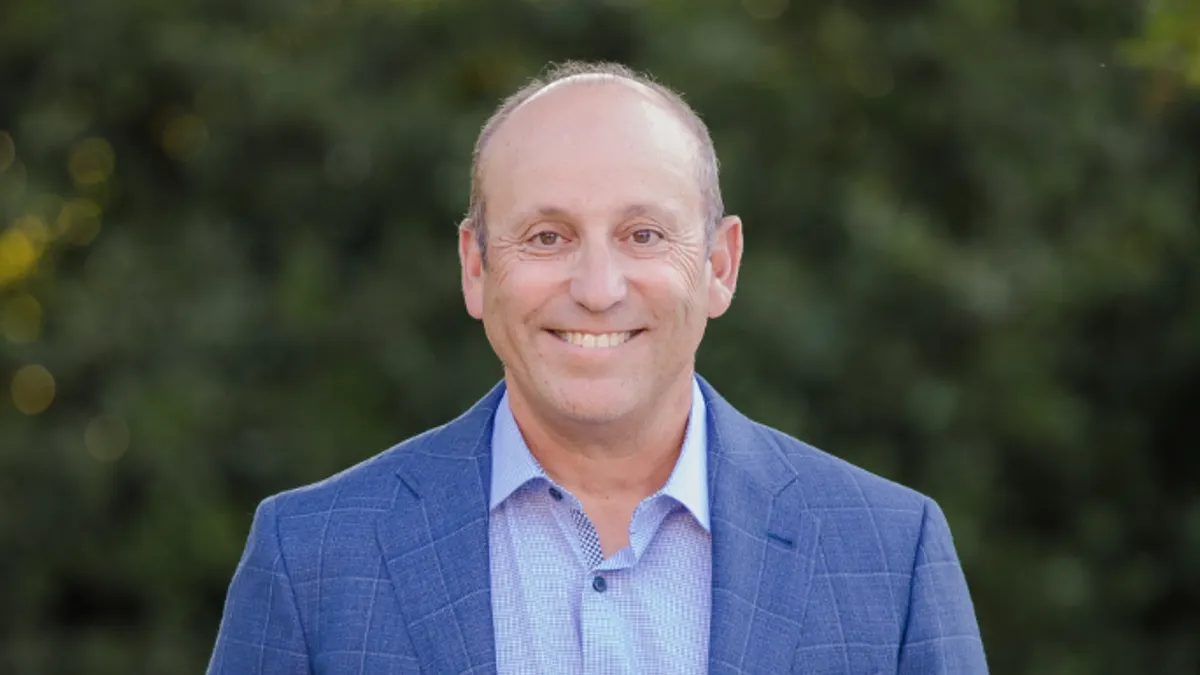
Evommune, which has two mid-stage immunology candidates, was one of the biotechs that pulled the trigger last year. And while Luis Peña, the company’s CEO, president and executive director, acknowledges the difficulty of the “post-bubble hangover” that has persisted for most of the decade, he also said it was the right move for Evommune to enter the public investor conversation.
So far, the company is firing on all cylinders. Following positive topline phase 2a data for its IL-18 atopic dermatitis biologic EVO301 in February, shares almost doubled as investors saw the mid-stage win for what it was: a chance for the small biotech to snag a lucrative spot in a field dominated by larger competition.
Evommune, which is carrying forward with a dose escalation study in phase 2b, will face two Big Pharma rivals if it makes it to the regulatory finish line. Sanofi and Regeneron’s megablockbuster Dupixent is the outright leader with more than $18 billion in sales last year, and Eli Lilly’s Ebglyss, a relative newcomer, is one of the pharma giant’s rising stars.
But Peña isn’t intimidated by the outsized challengers. In fact, he thinks there’s room for plenty more atopic dermatitis options for patients. Here, Peña explains the road leading up to Evommune’s IPO, how the company is meeting shareholders’ expectations and what’s on the horizon for the field of immunology.
This interview has been edited for brevity and style.
PHARMAVOICE: Evommune was one of only a few IPOs last year. Can you talk about the road leading to that and how the company stood out among so many struggling biotechs?
LUIS PEÑA: In the broader biotech environment, it’s been a tough haul since the bubble of 2021. Anytime there’s a funding bubble, there comes a post-bubble hangover, and that’s what we had. What’s exciting in biotech is that we continue to forge into new horizons of medicine and healthcare, and it’s still picking up speed as a biotech revolution. But in terms of funding in the post-bubble hangover, a lot of companies were funded that didn’t have the principles to sustain that kind of capital investment. If you want to make a program go forward, you need to monetize it — investors need a return. So many companies were funded based on the premise that it [was] an exciting time in biotech. These are companies with talented individuals and great ideas, but then they can’t find short-term success.
We needed to get through that as a company based on the right principles, [we] can succeed no matter what the winter brings [with] an experienced management team, key value inflection points short-term and multiple shots on goal.
How would you characterize the “biotech revolution” as it stands today?
Through the 80s and 90s, genetic engineering allowed us to produce biologics that were impossible before. Then the later 90s and early 2000s were about monoclonal antibodies, the next phase of biologics. Then right around the same time, we had DNA sequencing, which brings us to the promise of personalized medicine. But as we started running, we ran into the bump of processing that much data, and so the next phase of the revolution is around handling that data and building databases. That part of the revolution is here, and AI is a big part of it, and the technology is doubling every six or seven months.
After your success as a private biotech, how are you scaling up to meet shareholders’ expectations as a public company?
The premise for us was the focus on chronic inflammation. If you have eczema, it can seem like an annoying but somewhat harmless skin disease. But the reality is it’s systemic, and you’re seeing a manifestation that can become more severe, putting patients at risk of metabolic disease, heart disease and other conditions that can limit your lifespan. For us, it’s about treating chronic inflammation, and we’ve made it clear from day one with all our investors that we’re driving a portfolio. It’s gotten us to a point where we’ve two mid-stage clinical programs with multiple value inflection points
As a public company, we need to be focused on keeping that investor base informed. And then the more we execute and stick to what we said we’d do, the more trusted we’ll be. We’ve been on a roll for two and a half years doing exactly that, and that builds credibility. The difference now is that there’s always a hub of investors ready to go.
In a field with Sanofi and Regeneron’s Dupixent and Eli Lilly’s Ebglyss, how does EVO301 stand apart in atopic dermatitis?
In the early 2000s, TNF inhibitors were revolutionary for those with severe psoriasis. But with biologics, they render themselves ineffective for a patient over time, and so you’d better have another one available. That’s why in psoriasis you have 11-plus biologics, nine blockbusters with a $20 billion market, and rightly so.
But with atopic dermatitis, we’re far from being there. Two-thirds of patients still don’t have a good response or they need to be on other therapies. And so we probably need 15 biologics, honestly, because it’s more heterogeneous [than psoriasis]. We need some that hit different targets. And so the field is far away from where it needs to be, but our phase 2 trial cements IL-18 as a target for atopic dermatitis. We’re excited about it not just specifically as a unique molecule, but also that it offers a powerful option for patients.
What is the next horizon for immunology beyond the megablockbusters of the last decade?
Where you have heterogeneous disease like atopic dermatitis, you’re always trying to figure out how to make inroads with different targets for different patients. The databases aren’t big enough, and we don’t know how to get to the subgroups. Someday we’re going to understand that IL-18 is better for one patient and IL-13 may be better for another patient — we’re probably decades away from that, but we’ll get there.
Getting into multivalent molecules that hit multiple targets is going to be exciting, and we should be able to make huge inroads there. Or combining with a GLP-1 in metabolic disease can also be incredibly exciting. We love that we’re right there in the middle of it and have the kind of team that can address it.