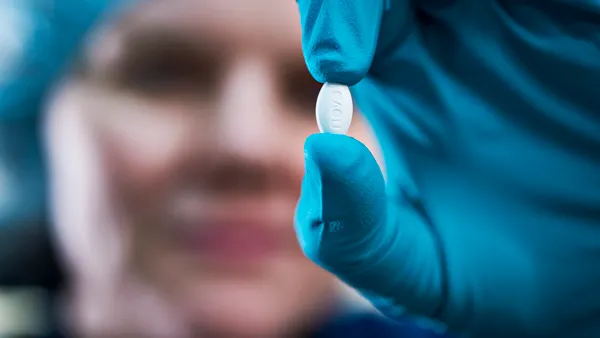
Botox has been synonymous with aesthetics for decades, even achieving the elusive and sometimes frustrating status of being shorthand for an entire category of products.
But Botox’s first approvals in 1989 weren’t aimed at reducing wrinkles. Instead, they targeted two rare eye muscle disorders, showcasing the potential of the neurotoxin in therapeutic indications.
“Since then, in the U.S., we have [won approval for] over 15 indications, and that includes aesthetics and therapeutic indications collectively,” said Emily Barry, vice president, head of toxin office strategy and advancement at AbbVie.
Botox’s regulatory wins have included nods in overactive bladder, migraine headaches and muscle stiffness in patients with limb spasticity. Now, AbbVie is drawing on that history to advance the science more broadly around neurotoxins and expand its pipeline with two new candidates, while seeking new therapeutic indications for Botox as well.
“We’re investing in what we call next-generation capabilities,” Barry said. “That will allow us to set ourselves up for success to meet the needs for both aesthetics and therapeutics, but also ensure we’re meeting those key components around quality, reliability and scalability for the future of the pipeline.”
New therapeutic inroads
AbbVie’s “next-generation toxin” AGN-151607 is advancing into clinical trials next year for ventral hernia repair and essential tremor.
“Those are indications that have really high unmet need. There are no toxins currently available in those areas,” Barry said.
AbbVie previously studied the drug, which is a type of botulinum toxin type A, to prevent postoperative atrial fibrillation, but pivoted after its endpoints weren’t met.
In addition, AbbVie announced in October that it hit its primary endpoint in a phase 2 trial evaluating the safety and efficacy of Botox compared to placebo in treating upper limb essential tremor.
The positive results buoyed AbbVie’s outlook for using neurotoxins, including AGN-151607, to treat the condition, which can impact hands and arms, and take a toll on patients’ daily life.
“Based on that, we have the confidence to take our next-generation toxin into development with [essential tremor],” Barry said.
AGN-151607 also builds on AbbVie’s broader movement disorder portfolio, which includes Vyalev, a 24-hour infusion to treat motor fluctuations in adults with advanced Parkinson's disease that was approved last year, as well as Duopa in the same indication. Its next hopeful in the space, an oral drug called tavapadon, was submitted for approval to treat Parkinson’s in September.
“If you look at that foundation we’ve established in movement disorders, and if you look at the foundation that’s been established with Botox, also in movement disorders in conditions like spasticity … we are excited about the opportunity to now go into a new portion of movement disorders,” Barry said.
Reclaiming the aesthetics market
At the same time, AbbVie is expanding its aesthetics offerings in the neurotoxins market. The company submitted an application to the FDA in April for TrenibotE to treat glabellar lines, aiming to offer patients a neurotoxin injection that works more quickly and wears off faster than Botox.
“You can imagine someone who wants to maybe experiment before they commit to what we call a classic-duration toxin like Botox, that's what TrenibotE will enable,” Barry said. “They can go into the clinic, get it administered, start to see an effect within a day, and then they can determine whether they want to go in for more.”
TrenibotE will also help Botox against competitors in the aesthetic neurotoxin space, including the newest entrant, Letybo, known as “Korean Botox,” which got the FDA nod last year.
In addition, Barry said TrenibotE will be “specifically for aesthetics,” like another Botox rival, Jeuveau, whereas other competitors like Merz Pharmaceuticals’ Xeomin, also have therapeutic indications.
Despite claiming a market share hovering above 60% in the U.S., Botox has faced struggles recently.
Global third quarter net revenues from AbbVie’s aesthetics portfolio, which also includes Juvéderm, were down 3.7% on a reported basis compared to third quarter 2024. Allergan, AbbVie’s aesthetics division also laid off roughly 200 employees over the summer after launching, then scrapping, a rewards program for Botox called Allē that fell flat with consumers.
“When you look at our share, what we can see is that year over year, we are lower than we were last year because of the Allē reimagined,” Jeffrey Stewart, AbbVie’s executive vice president and chief commercial officer, said during the company’s third quarter earnings call.
But AbbVie is aiming to get a stronger foothold in the market with a new Botox marketing campaign that launched in September, while leaning into its broader neurotoxin R&D to set the stage for future growth.
“We're emerging into the next stage, the next wave around toxins,” Barry said.