Welcome to Biotech Spotlight, a series featuring companies creating breakthrough technologies and products. Today, we’re looking at Ophirex, which is developing the first pill to treat snakebites.
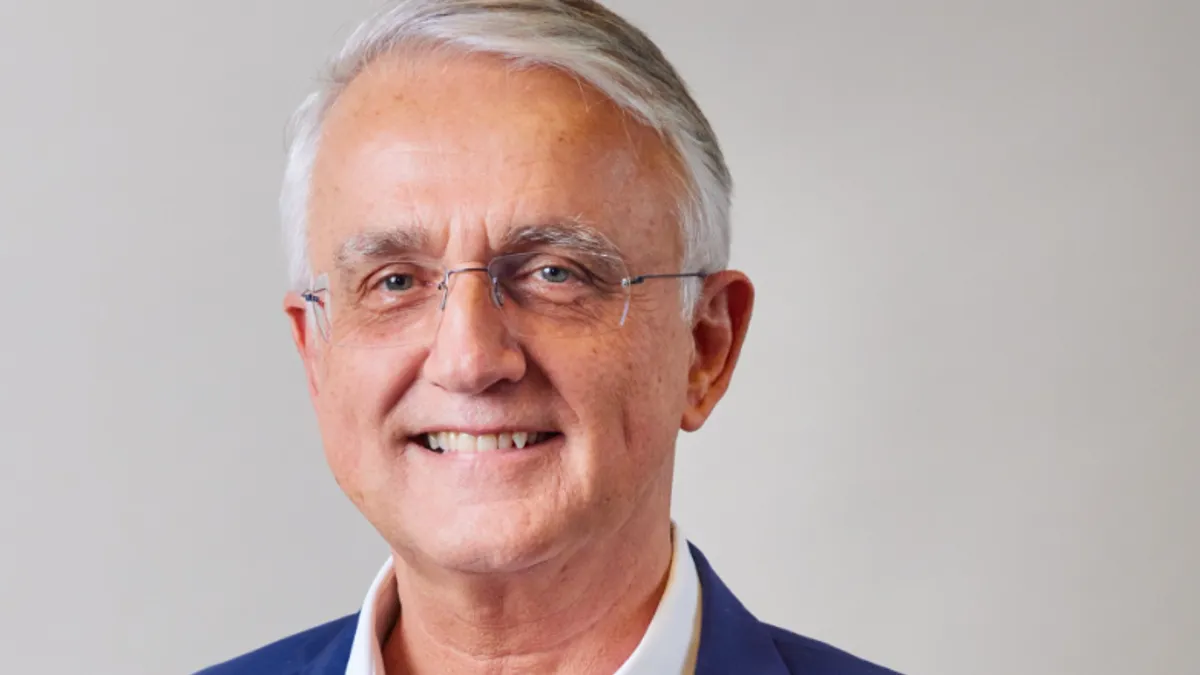
In focus with: Jeremy Gowler, CEO of Ophirex
Ophirex’s vision: Snakes bite as many as 5 million people each year, and for more than a century, treatment has remained largely the same: a species-specific antivenom that can only be administered intravenously.
But to actually get that treatment, patients need to get to a healthcare setting. Therefore, it’s no wonder that three-quarters of the 125,000 annual snakebite deaths occur before a patient can get care. Plus, antivenom is expensive, often needs to be refrigerated and carries a significant risk of severe allergic reactions, including anaphylaxis.
California-based biotech Ophirex wants to change that treatment paradigm.
“We are developing the first oral rescue treatment for snakebites, and that's been our sole focus,” Gowler said.
Founded in 2015, Ophirex’s lead candidate is varespladib, a small-molecule inhibitor that works on toxins found in the venom of more than 95% of venomous snake species. The company is developing oral varespladib for humans and dogs.
The biotech’s pipeline also includes an intravenous formulation of varespladib, as well as an oral combination therapy pairing varespladib with a metalloproteinase inhibitor that could cover more classes of snake toxins.
Why it matters: A major source of funding for Ophirex comes is the U.S. Department of Defense, which has been seeking a field-based snakebite treatment for years via its Broad-Spectrum Snakebite Antidote program, Gowler said.
The U.S. government cites specifically the importance of having a shelf-stable treatment for troops in the Indo-Pacific region, where “snakes present a significant threat to troops on the ground.”
Although Gowler said snakebites are “a relatively well-managed disease” in the U.S., that’s not always the case in other parts of the world.
“Contrast that with India, where there's two to three million bites a year, close to 60,000 deaths,” he said. Snakebites also cause 400,000 permanent disabilities every year, according to the World Health Organization.
The risk of death and disability rises if a victim can’t make it to a hospital in time.
"Snakebites sometimes occur in remote settings — places like the bottom of the Grand Canyon or the Linville Gorge,” Timothy Platts-Mills, Ophirex’s chief medical officer, said via email. “For patients who can't make a 911 call or who can't be evacuated, time becomes the critical factor. In that context, an oral field treatment that inhibits a key lethal venom toxin is extremely compelling."
The DOD agrees.
“They are almost a partner with us. They talk to FDA, independent of us, and work with us,” Gowler said. “Kind of like a co-sponsor, almost, with us for the program.”
In addition to military use, the company also envisions varespladib being a drug that civilians have on hand, especially if they live in areas where snakebites are common or plan to travel somewhere they might be at risk.
Although Ophirex is in the early stages of commercialization plans, Gowler said the company is exploring a telemedicine model that’s advertised directly to patients, in addition to more traditional commercial avenues.
What’s next: There are tricky ethical considerations when it comes to testing varespladib. Patients aren’t lining up to be experimentally bitten by snakes, and it would be unethical to withhold antivenom from a snakebite victim in the name of a double-blind, placebo-controlled study.
“The ability to do that trial doesn't really exist,” Gowler said.
That’s why in December, Ophirex announced that the FDA would allow the company to develop varespladib under its Animal Rule, which permits approval of drugs for human use with safety data from human trials and efficacy data from well-controlled animal studies.
“If you equate it to a conventional human pathway, we would be doing the phase 3 clinical trials right now,” Gowler said. “Our goal is to conduct those this year, finish them up before the end of the year, and then get ready for the NDA submission in 2027.”