Big Pharma is no longer moving in lockstep. As scientific complexity rises, drugmakers’ pipelines are starting to diverge, even if many are still hitting familiar notes, according to a recent Citeline report.
“Most companies still have fingers in most of the pies, but you can see it’s changing,” said Ian Lloyd, author of Citeline’s Pharma R&D Annual Review 2026, which has tracked pharma R&D trends annually since 1993.
The number of drugs in development as of January 2026 has held relatively stable over the prior year with companies focused on familiar targets such as cancer and weight loss. Neurological drugs picked up a little steam, rising from 13.8% to 14.4% of new candidates in pharma’s pipeline . Rare diseases hovered at around 20% of new candidates, according to the report.
But many big companies are no longer aiming at a broad swath of targets. Instead, they’re picking and choosing based on their strengths.
“We've noticed that there has been some differentiation occurring in the last few years, and some companies have been very upfront about saying [they] are going to focus on particular therapeutic areas,” Lloyd said. “Others like Merck & Co., have said [they’re] not going to be dogmatic about that, [and that they’re] just going to follow the science.”
The report showed another notable trend: The number of small companies with just one or two drugs in their portfolios skyrocketed to over 4,000.
“That number of companies has gone absolutely insane in the last few years,” Lloyd said. This shows that investors are still willing to bet on the small innovators fueling Big Pharma’s R&D coffers. This trend is becoming especially prevalent as the scientific complexity of newer drugs increases and larger companies look to acquire assets through deals rather than generate them in-house. This also helps companies specialize.
“You'll have less risk if you're focusing on areas where you have a particular strength. Whereas the old-fashioned big pharma company was supposed to develop drugs for everything,” Lloyd said.
While upstarts are surging, activity among top tier pharma companies remains stable. The 10 companies with the most drugs in development were largely the same as last year, aside from AbbVie bumping GSK off the list.
Three companies in particular illustrate the broader trends in the overall landscape.
Signs of specialization
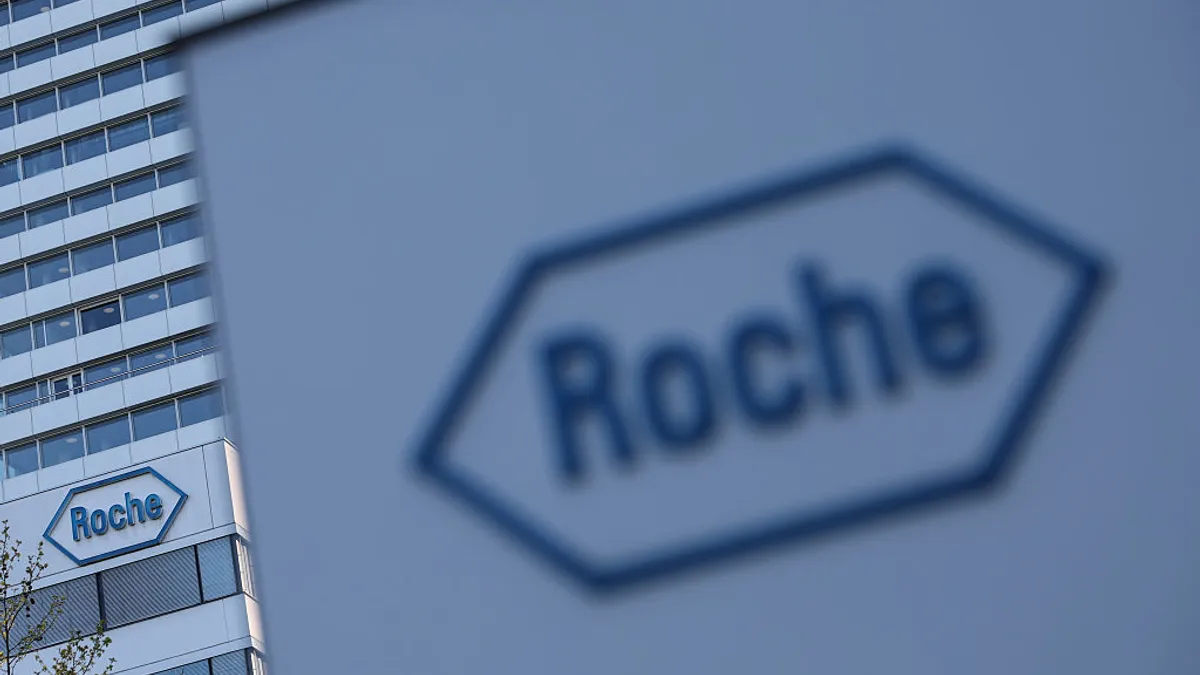
Roche has the largest drug pipeline in the 2026 report, with 262 drugs in development. It was back on top after ceding the spot to Pfizer last year. Its investigational drugs follow predictable patterns, with large concentrations in oncology and neurological indications. But a crop of smaller areas also shows a move toward specialization, Lloyd said. Roche ranked fifth among companies advancing drugs for rare diseases.
While the company’s overall pipeline has shrunk over the last five years, it remains broadly diversified. One growing priority, along with companies such as Eli Lilly and AstraZeneca, is nucleic acid-based drugs, which are RNA-targeting and gene-modulating therapies for conditions including cancer, neuromuscular diseases and bacterial infections. Roche has a number of these drugs in its pipeline, including two for Huntington’s disease.
Roche is also making moves in the neuro space with its brain shuttle technology, which is designed to ferry drugs past the blood-brain barrier. Roche’s phase 3 drug trontinemab for Alzheimer's, uses this technology to clear toxic plaques in the brain that are thought to drive the disease.
Cancer and beyond
AstraZeneca was the runner-up on Citeline’s top 10 largest drug pipeline list, but it led the pack with the most new and phase 3 candidates. Its pipeline growth was fueled in part by acquisitions, like recent buys of Icosavax and Fusion Pharmaceuticals. But the drugmaker has also strategically pruned its pipeline as part of an effort to streamline cell therapies, having dropped a drug from its $200 million acquisition of Neogene Therapeutics last summer.
The company is still anchored by its strong foothold in oncology, which comprises the largest portion of its development pipeline. But its focus extends beyond cancer with the sixth largest number, 97, of rare disease drugs in development on this year’s list.
AstraZeneca is also prioritizing several modalities, including small molecules, proteins and peptides, and antibody conjugate drugs like Datroway, which may be nearing approval for hard-to-treat, triple-negative breast cancer, while also focusing heavily on nucleic acid-based drugs.
Breaking the traditional mold
While Sanofi came in fourth in the overall drug development list this year, it distinguished itself by moving away from oncology, an area that dominates all the other Big 10 pipelines. Only 16% of Sanofi’s pipeline is in cancer and the bulk of its development is now on vaccines, including shots for chlamydia, RSV, meningitis and rabies.
“Sanofi is the company with the strongest vaccine focus, with almost a third of its candidates belonging to this classification,” states the report.
While other companies like Eli Lilly are narrowing their focus, putting heavy attention on oncology and weight loss/metabolic drugs, Sanofi has strategically focused on areas of strength while maintaining diversity. The company’s pipeline has also shrunk in the past five years.
For Big Pharma, a distinctive focus can be a marketplace differentiator. But it carries risks in the overall landscape, Lloyd said, and could lead to clinically important, but less lucrative areas, being overlooked.
“I think it's a smart move for companies, with the caveat that humanity might want to make sure that all the bases are being covered,” Lloyd said.