BeOne’s bestselling drug Brukinsa is taking the blood cancer market by storm, eclipsing strong competitors like Imbruvica from Johnson & Johnson and AbbVie in clinical trials and AstraZeneca’s Calquence in sales.
That’s just the beginning for BeOne, the Swiss drugmaker that originated in China as BeiGene before changing its name last year. With a lineup of pipeline candidates poised to follow Brukinsa, the company is aiming to make a larger impact in the crowded field of treatments for leukemia and lymphoma.
The highly-anticipated accelerated approval of sonrotoclax, which could come by the middle of next year, is part of a new wave of more effective therapies. While Brukinsa inhibits the protein BTK to keep blood cancers from spreading, sonrotoclax takes a different approach with a more potent and selective modality.
The focus on B-cell malignancies like chronic lymphocytic leukemia and small lymphocytic lymphoma puts BeOne in fierce competition with Big Pharma peers, but the company is compiling further long-term results for Brukinsa as well as readying the pivotal study for sonrotoclax’s accelerated approval.
And there’s even more in the tank with earlier drug candidates that could potentially be first in class.
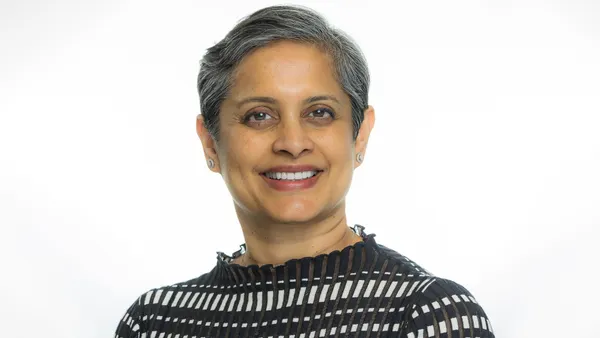
Here, we spoke to Dr. Amit Agarwal, BeOne’s chief medical officer of hematology, about challenges and opportunities in blood cancer, the company’s unique position as an oncology specialist and the trials keeping the wheels turning for hematological innovation.
This interview has been edited for brevity and style.
PHARMAVOICE: To start broadly, how do you see the state of the industry for blood cancers? What are the driving forces in the field that perhaps weren’t true a few years ago?
DR. AMIT AGARWAL: The progress that’s been made is quite remarkable. When you look at where we were for many blood cancers 10 or 15 years ago compared to where we are today, there are a few factors going into that. One is that blood cancers are typically easier to study because you have access to tissue at all times. And then when it comes to treatments, it’s quite impressive to see what technology has brought to the table, from the Gleevec [from Novartis] days and the small molecule inhibitor revolution to cell therapies and leveraging that in the form of biologics. There has also been a regulatory push in terms of allowing for these things to happen, especially with an openness to surrogate endpoints. Obviously there’s still work to be done, but there has been a lot of progress along the way.
What are the biggest mountains to climb in the next few years?
What’s perhaps the next big challenge, or the next big wave, is a move toward functional cures to either remain on a treatment or achieve a normal lifespan. We’re getting there in some places, but there is still a huge unmet need. Acute myeloid leukemia comes to mind, which is an area where there has been some progress but not enough in terms of outcomes. So there are certain pockets of disease that have not been as impacted as others, but where we have seen the benefit, we’re starting to move toward giving patients a near-normal lifespan [and] quality of life.
BeOne is very focused on B-cell malignancies. What are the particular challenges there?
With Brukinsa, we’ve made a huge impact on B-cell malignancies in five different indications. It’s proven to be a cornerstone for multiple diseases, which comes from a deep understanding of the biology. But you need to see what’s happening with these patients over a six-, seven-, eight-year horizon. That’s when you can really understand the impact, and Brukinsa has allowed us to do that with a disease like chronic lymphocytic leukemia.
We’re uniquely positioned as one of the companies that has all the assets to make progress in blood cancers as a whole. From Brukinsa as a foundational treatment, to sonrotoclax with an even broader indication base, and the same thing with the degraders. We’re able to build around the knowledge and the expertise.
You’ve talked about this overall goal of long-term survival. Can you tell me about the Sequoia trial for Brukinsa in patients with chronic lymphocytic leukemia or small lymphocytic lymphoma?
Sequoia is a study with a median follow-up of six years, and we’ve looked at what happens to patients over a prolonged period of time. We’re looking for progression events, but also what happens in subsequent lines of treatment. If you have an older patient see through the rest of their natural lifespan, that is quite powerful. The most important thing to point out is how consistent the results are, and we’re starting to see the advantages become more apparent.
Brukinsa is among a handful of BTK inhibitors on the market, and you’ve gone up against the original, which is Johnson & Johnson and AbbVie’s Imbrivica in the Alpine study. What are the opportunities you’re trying to capture?
The key point from the design of the study is that Imbruvica was considered the standard of care, and we wanted to show head-to-head that Brukinsa is superior. We’ve demonstrated that, and it speaks to the importance of why having the right BTK inhibitor for these patients is important.
What makes one BTK inhibitor better or more effective than another?
That goes back to the pharmacology, and with B-cell malignancies, sustaining inhibition is critically important. For Imbruvica, the biggest challenge were off-target effects as it was inhibiting a lot of different proteins in addition to BTK. Brukinsa is much cleaner, and that’s what makes it the leading BTK inhibitor.
Sonrotoclax is a major pipeline candidate for BeOne. Can you tell me what you’re seeing as a monotherapy in mantle cell lymphoma, particularly with the context of the current treatment landscape?
This is our first data disclosure of the mantle cell results, and thinking about it from an accelerated approval perspective, oftentimes you’re enrolling patients who have gone through all of the standard treatments available to them. In that context, we’re very encouraged by the results with a high response rate and several patients achieving a complete response with promising durability. If I think about a patient that doesn’t have a lot of treatment options, this could be an important option. The FDA has given it a breakthrough therapy designation and priority review, which is external validation of what we truly believe will be a very important treatment for MCL patients.
With that potency comes some toxicity challenges. How are you addressing those as you speak to regulators ahead of a decision next year?
Sonrotoclax is much more potent than the other BCL-2 inhibitor [Venclexta from AbbVie and Genentech] but it’s also more selective and has a shorter half-life. Those two things make it safer than Venclexta, and with more than 2,000 patients treated, we’ve seen that is the case. Unfortunately, in a study like this, if a patient dies, even if it’s related to disease progression, it’s not uncommon and they are captured as part of the treatment – an emergent death. Regulators are used to seeing this standard reporting, so they understand very clearly when a death is associated with disease progression compared to something that’s treatment-related.
That’s a reflection of how difficult this therapeutic area is. Now, you’re also combining Brukinsa and sonrotoclax in CLL and SLL. What makes them a good match?
There’s some very interesting science behind it. Brukinsa effectively leads to cancer cells coming out of their niches, like a lymph node or bone marrow — places they like to hide. It pushes them outside into the peripheral blood, where sonrotoclax has the killing mechanism. We see in the data that patients are achieving minimal residual disease much faster than any combination of a BTK and BCL, so it could be foundational for CLL in the future.